
Non-metallic Chain Sludge Scraper
Working Principle
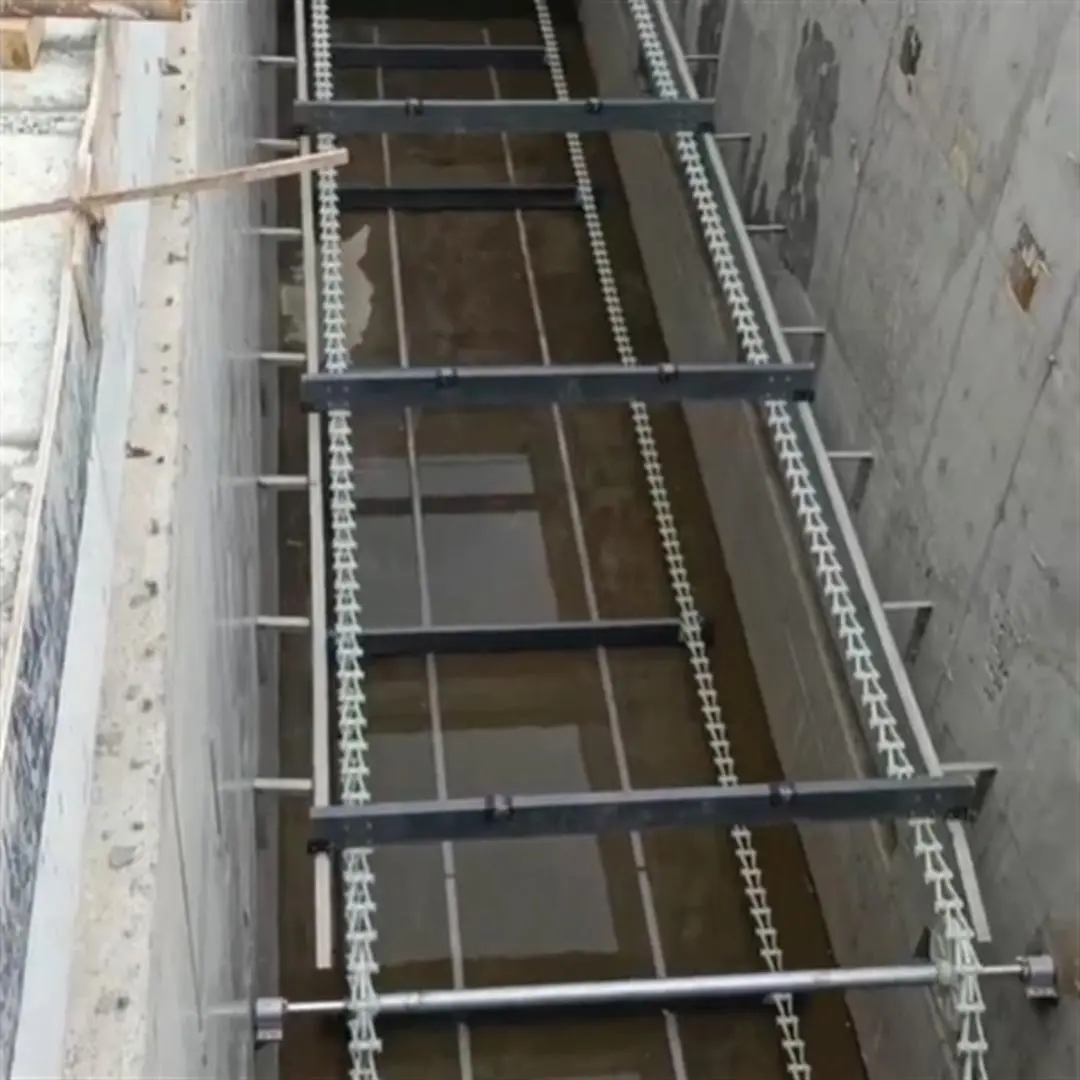
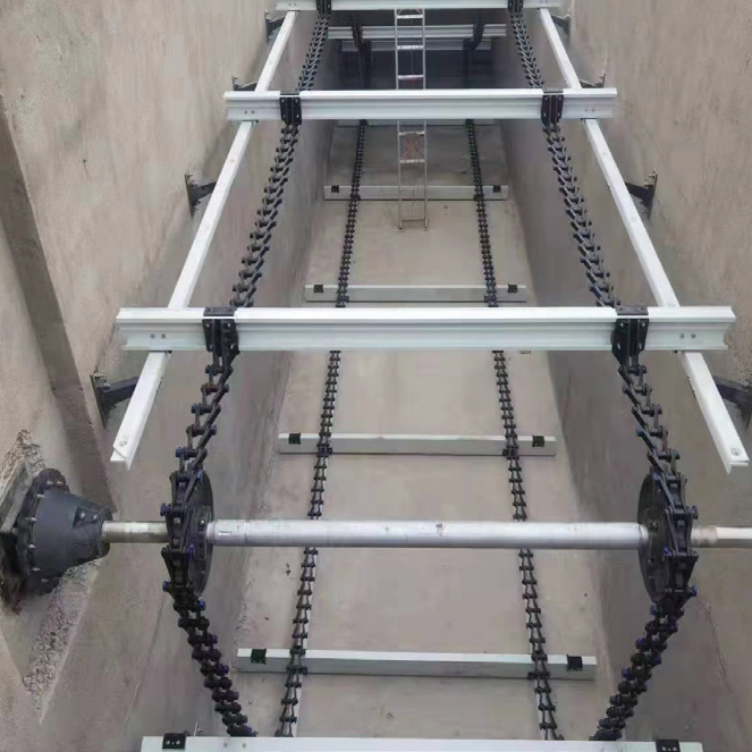
The scraper is equipped with two parallel closed-loop traction chains ftted
with multiple scraper blades. Driven by the drive unit, the chains and scrapers circulate along the rectangular track formed by upper/lower guide wheels
and rails inside the sedimentation tank.
Scum Skimming: Floating oil and scum on the water surface are collected
by the scrapers from the inlet end to the outlet end collection trough and
discharged.
Sludge Scraping: Settled sludge on the tank bottom is scraped from the inlet end to the outlet end sludge trough and discharged via drain valves, complet-ing the primary mechanical purifcation of wastewater.
Structure Overview
The non-metallic chain sludge scraper mainly consists of:
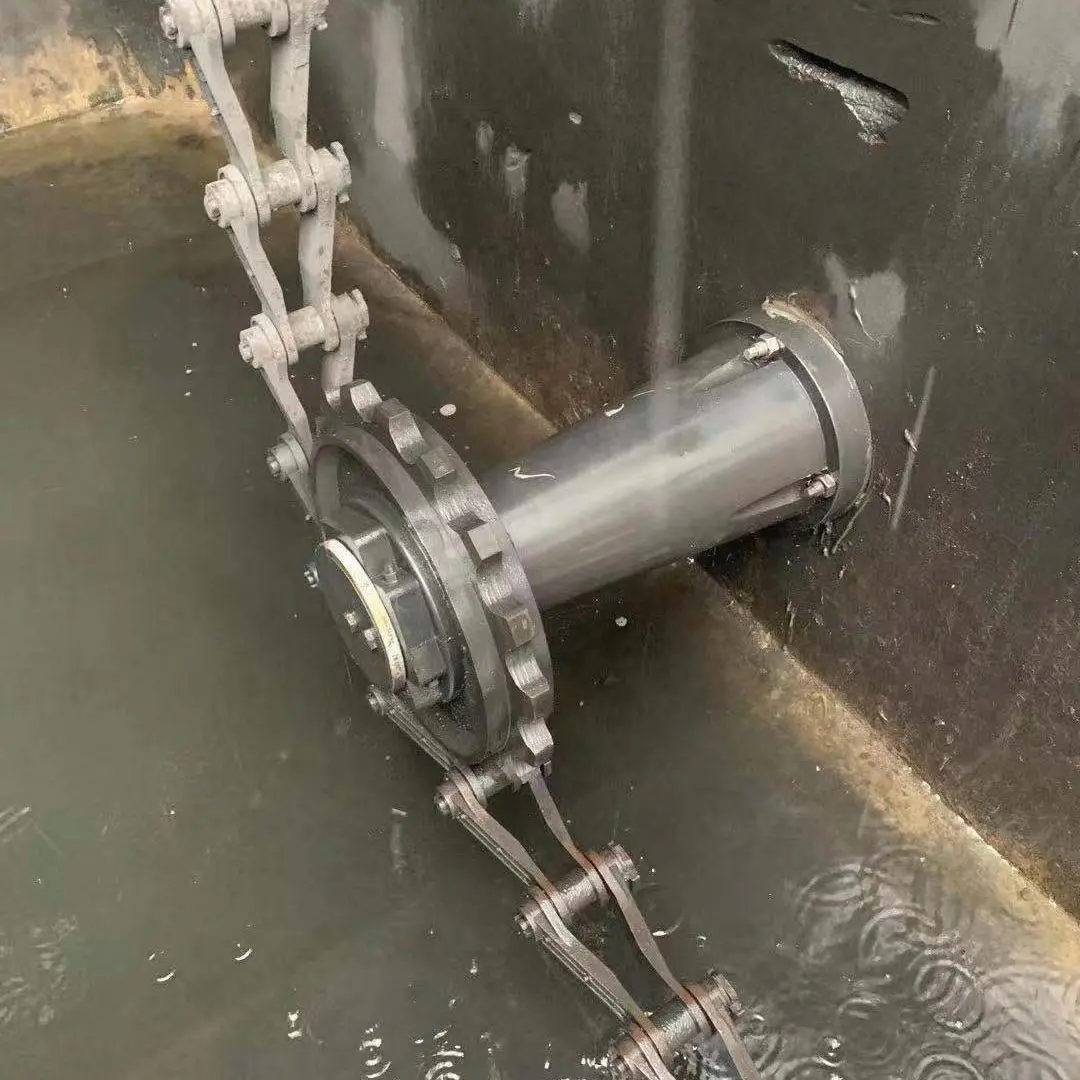
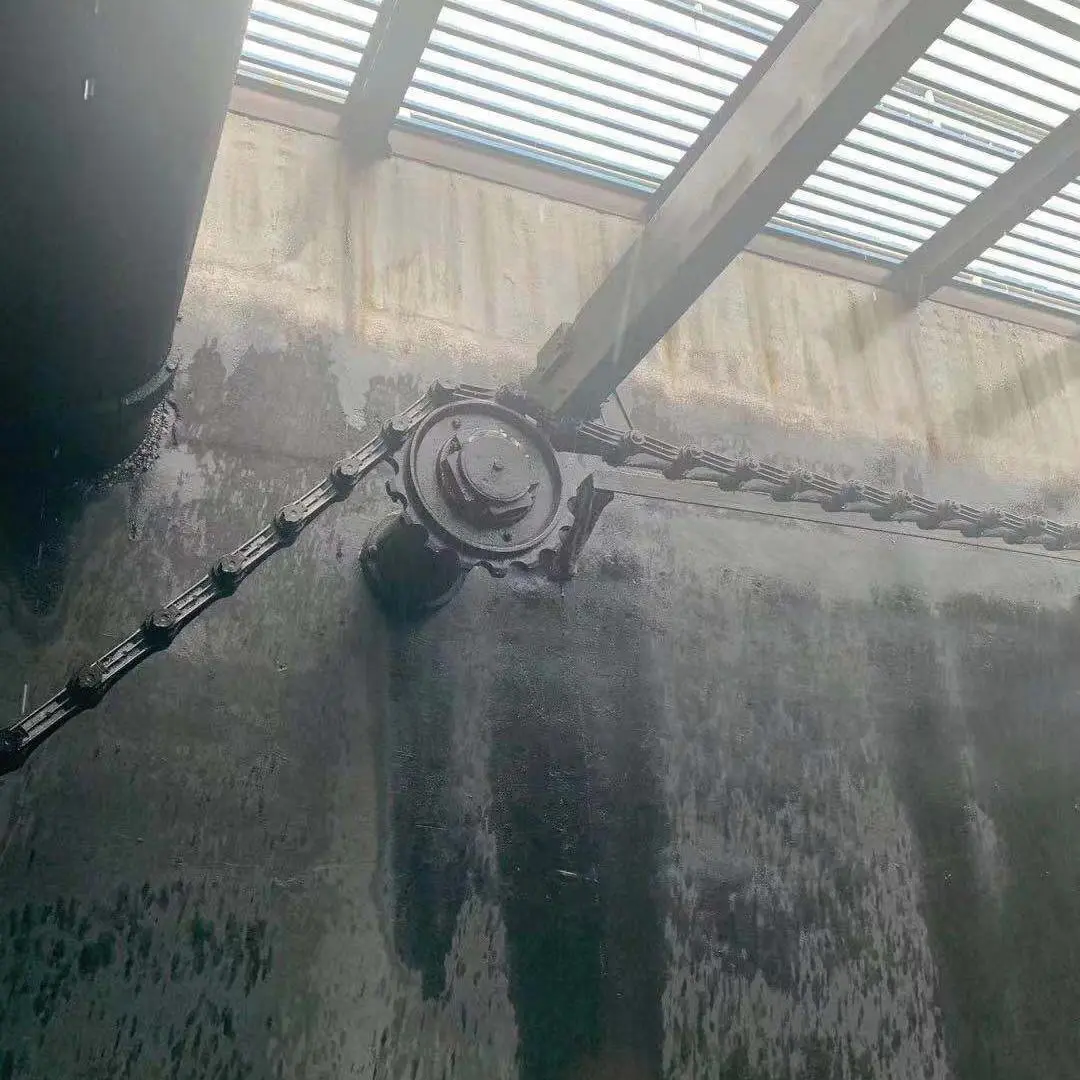
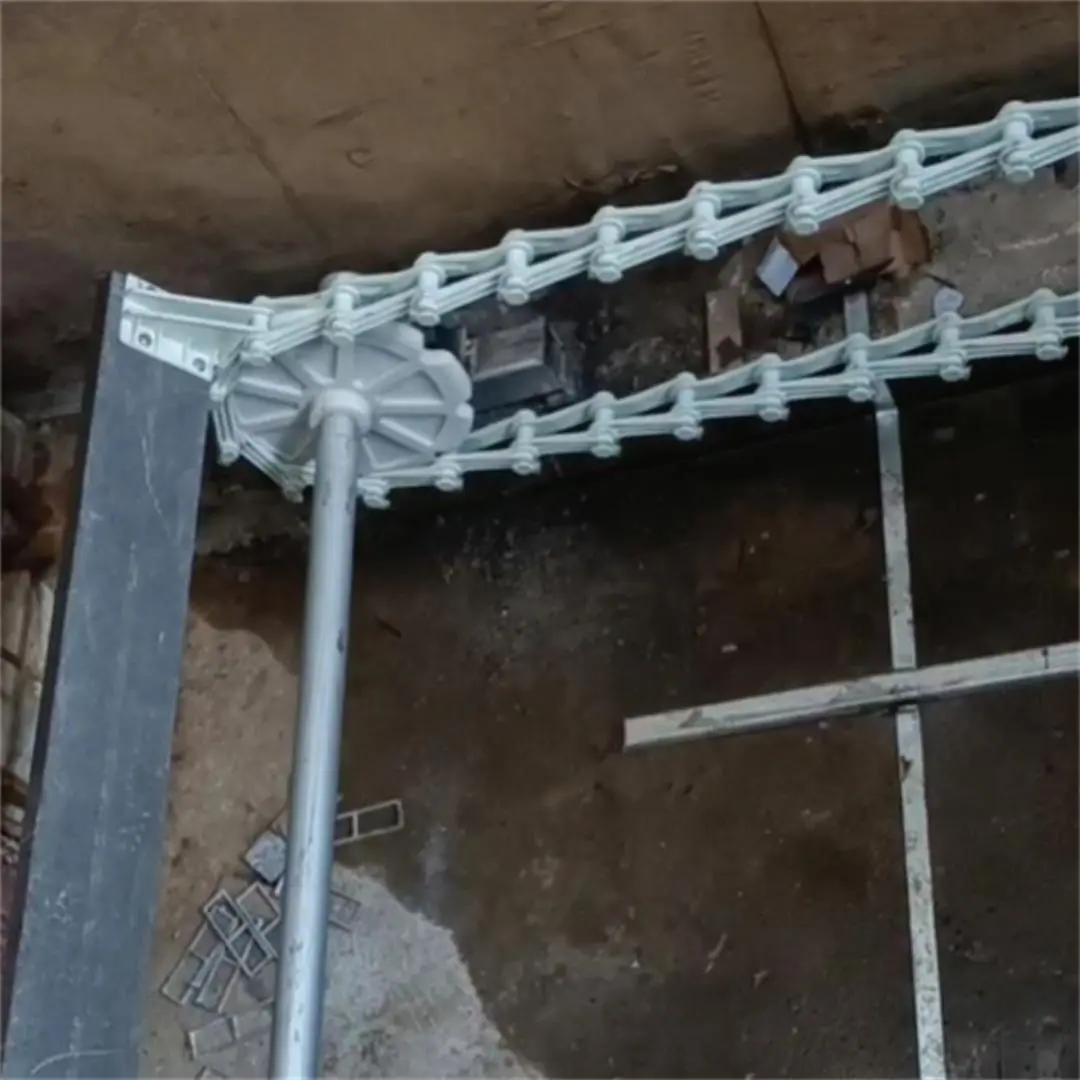
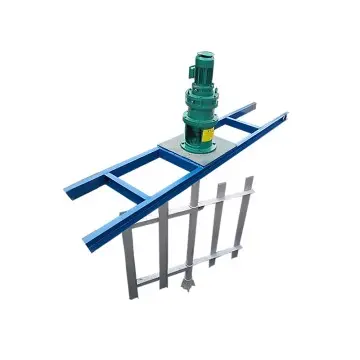
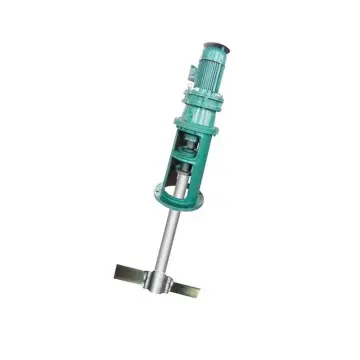
-Drive assembly (motor, reducer, and transmission chain system)-Driven wheel (shaft) assembly
-Drive wheel (shaft) assembly
-Tension wheel (shaft) assembly
-Support brackets
-Electrical control cabinet
Product Application
The non-metallic chain sludge scraper is designed for surface skimming and bottom sludge scraping in rectangular sedimentation tanks and secondary sedimentation tanks. It can also be used for surface skimming in circular tanks and various tank geometries. It is widely applied in refneries, waterworks, and wastewater treatment plants for
removing foating oil, scum, and settled grit in rectangular tanks such as sedimentation tanks, grit chambers, and
oil separation tanks.
Features
-Overload Protection: If the scraper is blocked by foreign objects or sludge accumulation exceeds limits, the built-in torque protection system automatically cuts power and triggers an alarm shutdown.
-Smooth Operation: The equipment runs stably without disturbing settled sediments.
-Integrated Design: Combines sludge scraping and scum skimming into one unit, featuring a simple structure and compact footprint.
-Easy Installation & Maintenance: The drive unit is mounted on the tank-side platform, simplifying installation and routine maintenance.
Operation & Commissioning
1.Lubrication: Apply specifed lubricating oil and grease to all drive components, reducers, transmission chains,
rolling bearings, and moving parts.
2.Power Check: After powering on, verify that the rotation direction of all drive units is consistent and wiring meets requirements; adjust immediately if errors are found.
3.Tank Preparation: Remove construction debris and foreign objects from the sedimentation tank before operation.
4.Dry Run: Perform multiple no-load runs before flling the tank with water to check drive mechanism operation.
5.Clearance Check: During no-load operation, confrm that scraper blades do not collide with tank walls; repeat
tests until operation is stable.
6.Wet Commissioning: Fill the tank to design water level and conduct a trial run. Stable operation confrms the
equipment is ready for service.