


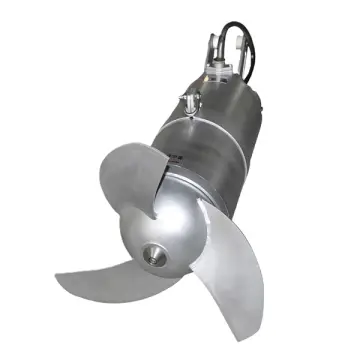
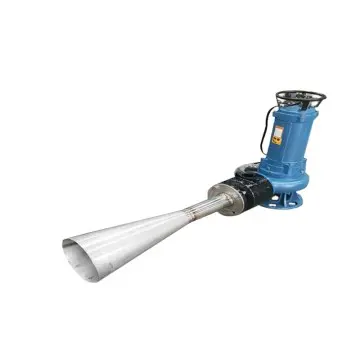
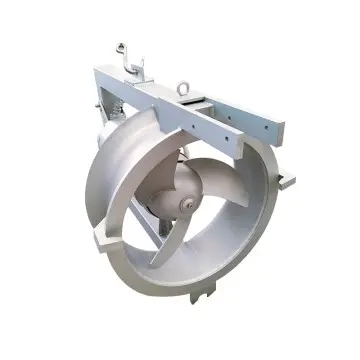
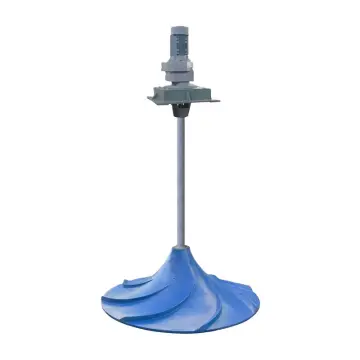
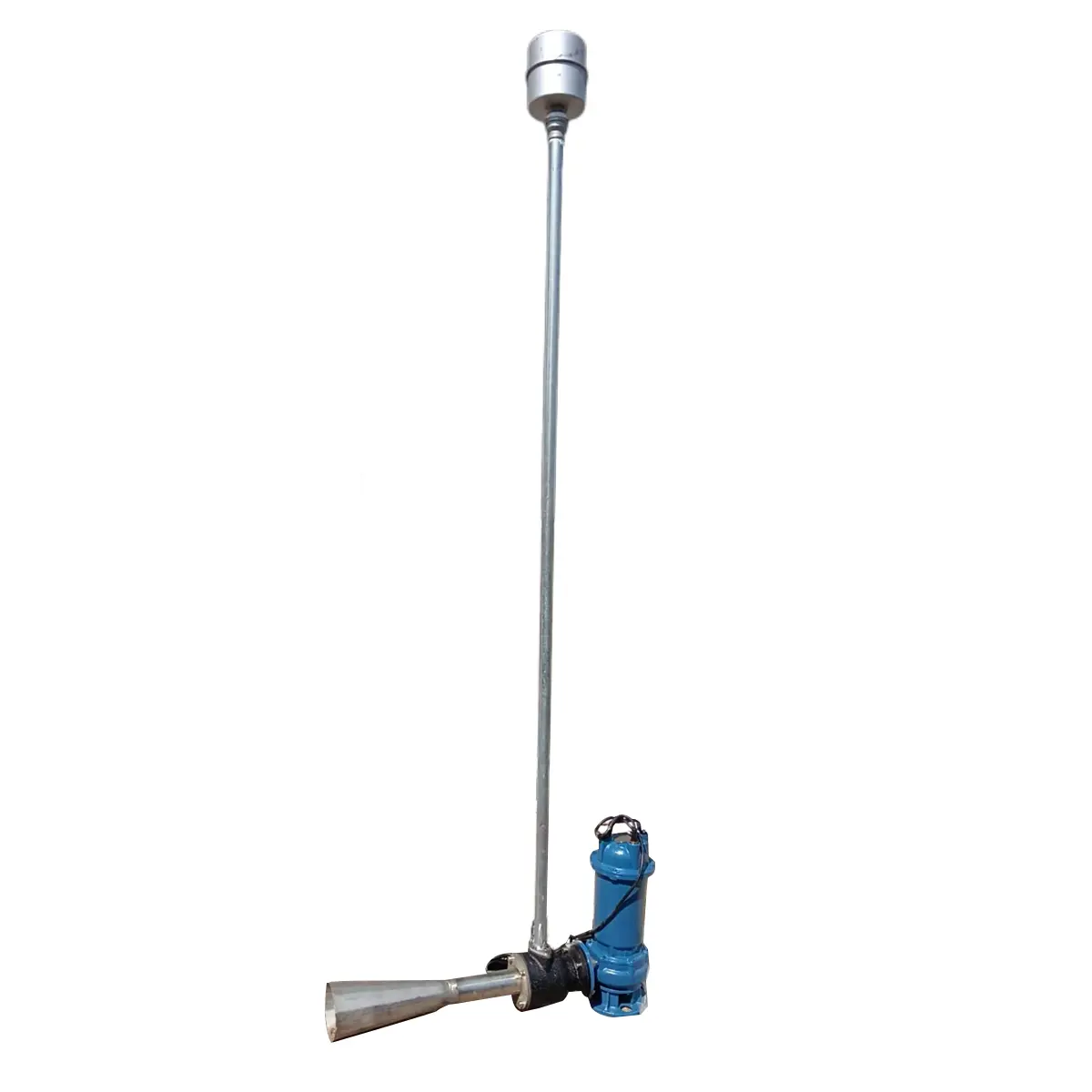
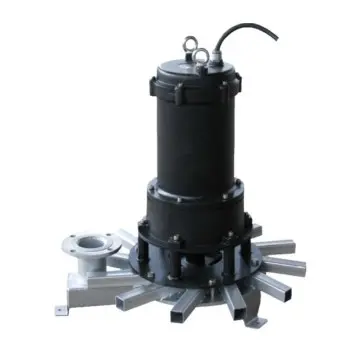


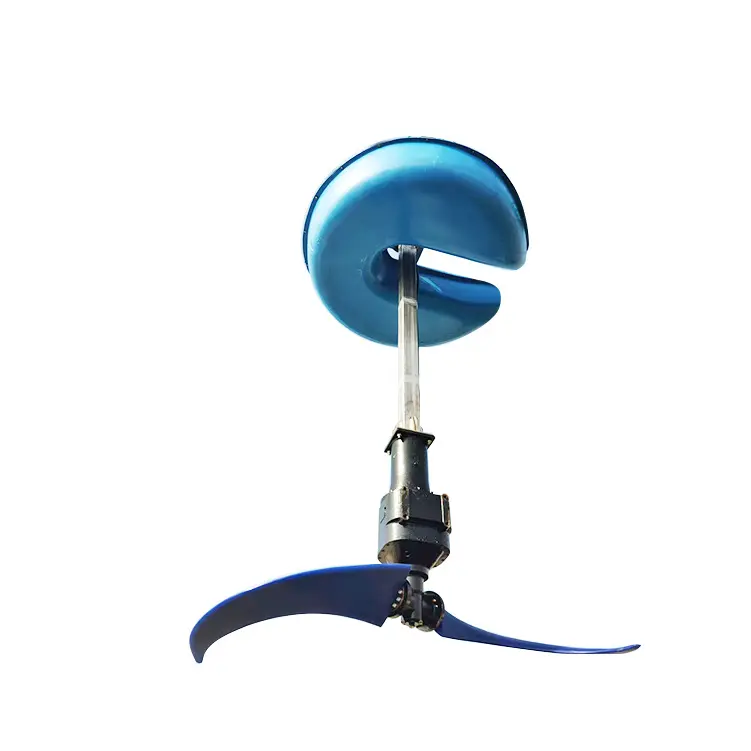
Vertical Circulation Mixer
Features
1. The mixer effectively breaks down the flocculent structure of the activated sludge flocs, providing gentle and uniform mixing. This effectively reduces or even eliminates dead zones and does not damage the flocculent structure of the activated sludge flocs.
2. The large-circulation flow scheme ensures thorough mixing of the sludge. It is suitable for water depths of 2-9m and covers a wide area. 100~800㎡
3. Powered by a submersible motor, coaxial with the mixer, it operates submerged in liquid, providing excellent cooling, a wide operating depth range, and eliminating noise and other secondary pollution. Its mechatronic structure reduces mechanical wear and improves unit efficiency.
4. The motor’s main seal is a double-stage tandem mechanical seal, employing a multi-stage auxiliary dynamic sealing system. It also features multiple early warning and protection systems for oil leakage, stator overheating, phase loss, and short circuits, ensuring the motor’s safety and reliability.
5. The vertical circulating mixer is easy and flexible to install, allowing for various installation methods. Floating installation eliminates the need for specialized workshops and installation platforms, resulting in lower overall investment and convenient installation, use, and maintenance.
6. The mixer is not limited by tank type or size; one mixer per tank or multiple mixers per tank are possible, and customization is available to meet specific customer process requirements.
Vertical Circulating Agitators Classification
Based on application, vertical circulating agitators can be classified into medium-high speed agitator series and low-speed agitator series:
Medium-high speed vertical circulating agitators have relatively high rotation speeds and a relatively small service range, but provide gentler agitation. They are suitable for anaerobic or facultative anaerobic treatment in wastewater treatment plants.
Low-speed vertical circulating agitators have low rotation speeds, a large service range, high hydraulic efficiency, and uniform agitation. They are suitable for use in equalization tanks of various wastewater treatment projects, as well as in anaerobic or facultative anaerobic tanks.
Product Naming Convention
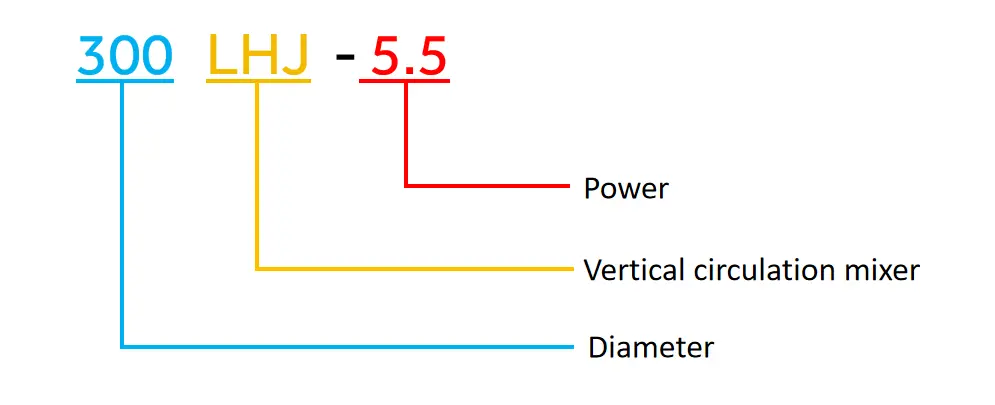
Model Specification Table
| Series | Model | Power kW | Current A | Service Range Max Area (m2) | Service Range Max Width (m) | Service Range Max Depth (m) | Weight kg |
| Medium &High Speed | 300HLJ-2 | 2.2 | 6 | 100 | 10 | 2~6 Adjustable | 250 |
| 300HLJ-3 | 3 | 7.8 | 170 | 13 | 2~6 Adjustable | 300 | |
| 300HLJ-4 | 4 | 10 | 225 | 15 | 2~6 Adjustable | 350 | |
| 400HLJ-5.5 | 5.5 | 13.3 | 300 | 17 | 2~8 Adjustable | 400 | |
| 400HLJ-7.5 | 7.5 | 17.7 | 400 | 20 | 2~8 Adjustable | 420 | |
| 450HLJ-11 | 11 | 26 | 670 | 26 | 2~9 Adjustable | 460 | |
| 450HLJ-15 | 15 | 36 | 800 | 28 | 2~9 Adjustable | 480 | |
| Low Speed | 1100HLJ-2.2-87 | 2.2 | 5.5 | 170 | 13 | 3~10 Adjustable | 280 |
| 1800HLJ-2.2-55 | 2.2 | 5.5 | 170 | 13 | 3~10 Adjustable | 280 | |
| 1100HLJ-3-16 | 3 | 6.5 | 225 | 15 | 3~10 Adjustable | 300 | |
| 1800HLJ-3-56 | 3 | 6.5 | 225 | 15 | 3~10 Adjustable | 300 | |
| 1800HLJ-4-56 | 4 | 9 | 300 | 19 | 3~10 Adjustable | 320 | |
| 2500HLJ-4-42 | 4 | 9 | 300 | 20 | 3~12 Adjustable | 320 | |
| 1800HLJ-5.5-63 | 5.5 | 11 | 400 | 22 | 3~12 Adjustable | 360 | |
| 2500HLJ-7.5-56 | 7.5 | 15 | 625 | 25 | 3~12 Adjustable | 400 |
Installation Method
Based on process requirements and actual site conditions, users can choose from the following installation methods:
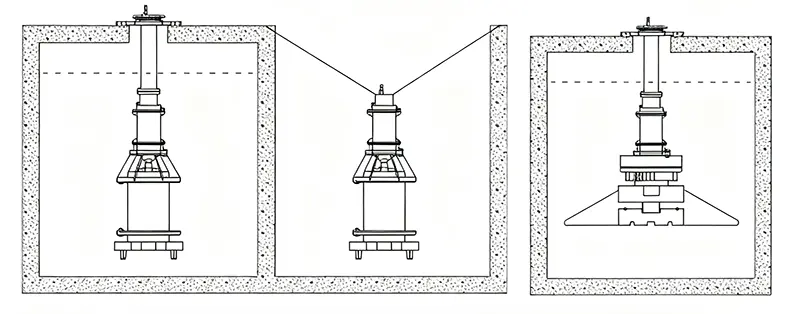
(I) Fixed Installation (Platform Installation and Bottom Installation)
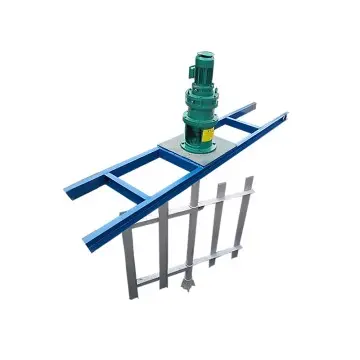
1. Platform Installation: Construct a dedicated installation platform and directly mount the main unit onto the platform for fixation. This installation method is suitable for fixed water levels.
2. Bottom Installation (Currently only applicable to medium- and high-speed mixers): Place the mixer directly on the bottom of the pool, connect one end of a steel wire to the main unit, and fix the other end to the pool wall. The advantage of this method is that it does not affect the overall aesthetics and has lower investment costs. However, it is only suitable for pool bottoms with a certain degree of hardness.
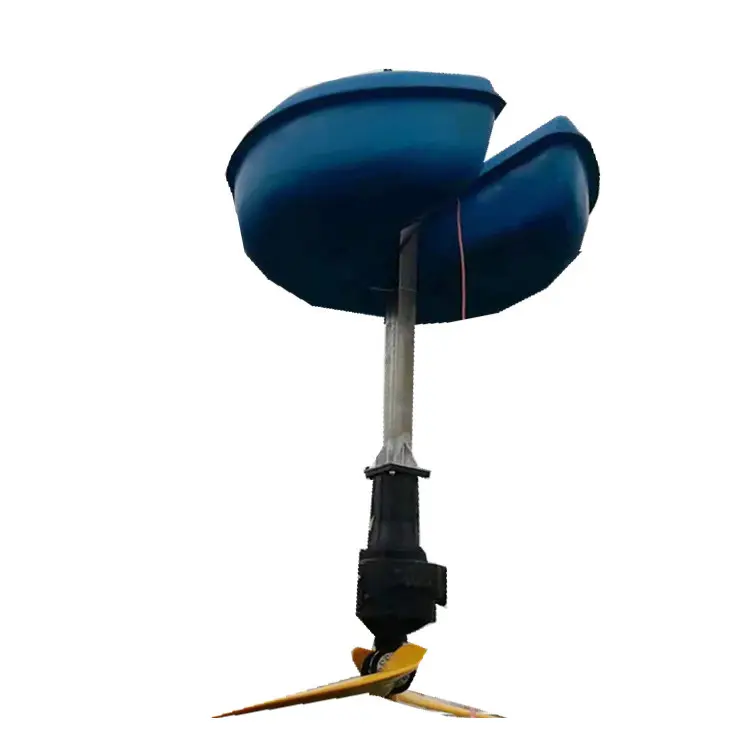
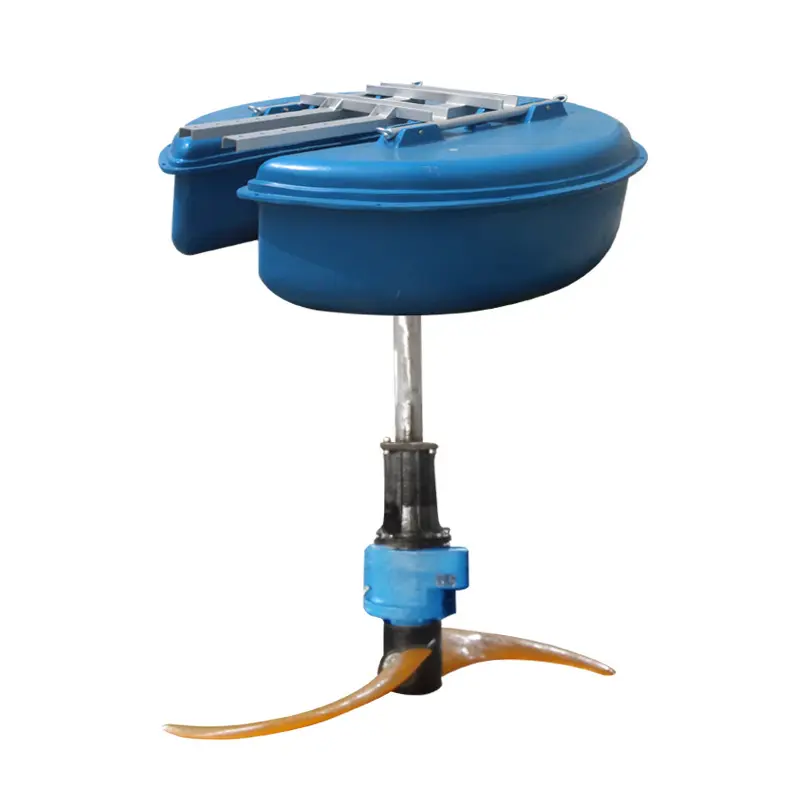
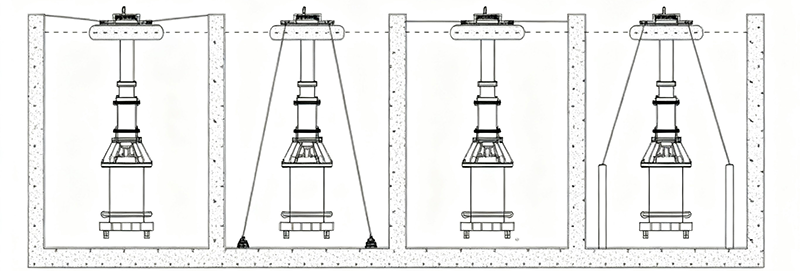
(II) Float Installation No platform is required; the main unit is directly mounted on the float. The float can be secured in several ways:
1. Cable Fixing: Secure one end of the cable to the float’s eye bolt, and the other end to the pool edge. To accommodate water level fluctuations, a stainless steel spring wire rope sleeve is provided, supporting water level changes of up to 5 meters. During machine operation, the machine will slightly rotate, changing the water flow direction and resulting in more uniform sludge mixing.
2. Anchor Fixing (Only suitable for medium- and high-speed mixers): Secure one end of the cable to the float and the other end to an anchor. Place the anchor on the pool bottom approximately 5 meters from the center of the mixer. This method is generally suitable for larger bodies of water (such as oxidation ponds and lakes). Water level changes should not be too large during installation using this method, otherwise the cable may break. This method is also unsuitable for concrete pools.
3. Cantilever Fixing: Secure a rigid metal pipe to the float, with the other end fixed to the pool wall.
4. Piling fixation (only applicable to medium and high speed mixers): This method is similar to anchoring fixation, except that the anchor is replaced with a pile. The length of the pile is determined by the soil quality at the bottom of the pool.
Precautions
- Inspect the product for any damage during transportation, storage, and preservation; check for any loosening or detachment of fasteners.
- Check the oil level in the submersible motor’s oil chamber and ensure the oil quality is good.
- Electrical parameters: Voltage 380±5%, Frequency 50±1% HZ. Before each startup, check the power supply for safety and reliability, ensuring the voltage and frequency meet specifications, and that the grounding device is clearly marked.
- The power supply line should be a four-core YZW rubber-sheathed flexible cable. A 15-meter YCW heavy duty rubber-sheathed cable is included; cable lengths can be supplied according to the contract if the buyer has special requirements. Do not immerse the cable joints or ends in water or expose them to rain.
- This equipment is not suitable for use in flammable or explosive environments, nor in highly corrosive media or flammable liquids.
- Before use, check the insulation of the motor and control cabinet. The insulation resistance of the motor and control cabinet to ground should be greater than 50 megohms; otherwise, dehumidification treatment is required. If the insulation resistance is less than 2 megohms, disassembly and repair are necessary. First, check the power cable, then the cable junction box, and finally the motor windings. Before use, also check that the motor’s grounding is secure and reliable.
- The submersible motor’s lead-out cables must be strictly sealed. Before each submersion, check for cracks or breaks in the cables and ensure the cable inlet seal is intact. Address any potential leaks immediately. Never use the cables as slings to prevent accidents.
- The equipment rotates counter-clockwise when viewed from the inlet during normal operation. If reverse rotation occurs, simply swap the wiring positions of any two of the three cables.
- This equipment is equipped with a dedicated control cabinet that can alarm and display faults such as stator overheating, oil leakage, overload, phase loss, and short circuit in the submersible motor, and implement shutdown protection based on the fault condition. If the control cabinet displays the above faults during operation, immediate repair is required. When purchasing this equipment, please select our company’s control cabinet for effective equipment protection.
- The impeller of this equipment has limited capacity to handle particles of debris. Avoid allowing plastic bags, metal wires, firewood, and other debris to enter the tank to prevent impeller entanglement and malfunction.
- During use, regularly observe whether the equipment operates smoothly; whether there are any mechanical friction noises or other sounds; and whether the current value changes. If any problems are found, address and resolve them promptly.