7 Shaftless Conveyor Buying Tips for Global Buyers
A Shaftless Conveyor can look simple on a drawing: a spiral, a trough, a drive, and a discharge point. Buying one for an operating plant is less simple. Global buyers need to match the equipment to the material, layout, duty cycle, and available maintenance support. That sounds obvious. In practice, wet screenings may bridge differently from dry plastic flakes, while long fibers can cling to the liner.
The useful questions begin with real operating details. What are the material’s bulk density, moisture range, temperature, and largest particle size? How many tonnes per hour must move, and over what distance or incline? A supplier should explain how these inputs shape spiral diameter, trough geometry, drive torque, liner selection, and inlet design. Ask for a documented operating basis, not only a headline capacity. Comparing numbers is easy. Comparing assumptions is harder.
This guide presents seven buying considerations for buyers comparing suppliers across borders. It covers application checks, construction, controls, cleaning access, testing, shipping, documentation, and after-sales support. Photos of an existing installation, a clear general arrangement drawing, and agreed acceptance criteria can prevent avoidable surprises. Still, no checklist replaces a site review. Conditions change, and early estimates may need revision. That is worth admitting. A careful purchase process cannot promise a perfect conveyor; it can reduce uncertainty before delivery and give both buyer and supplier a practical basis for decisions.
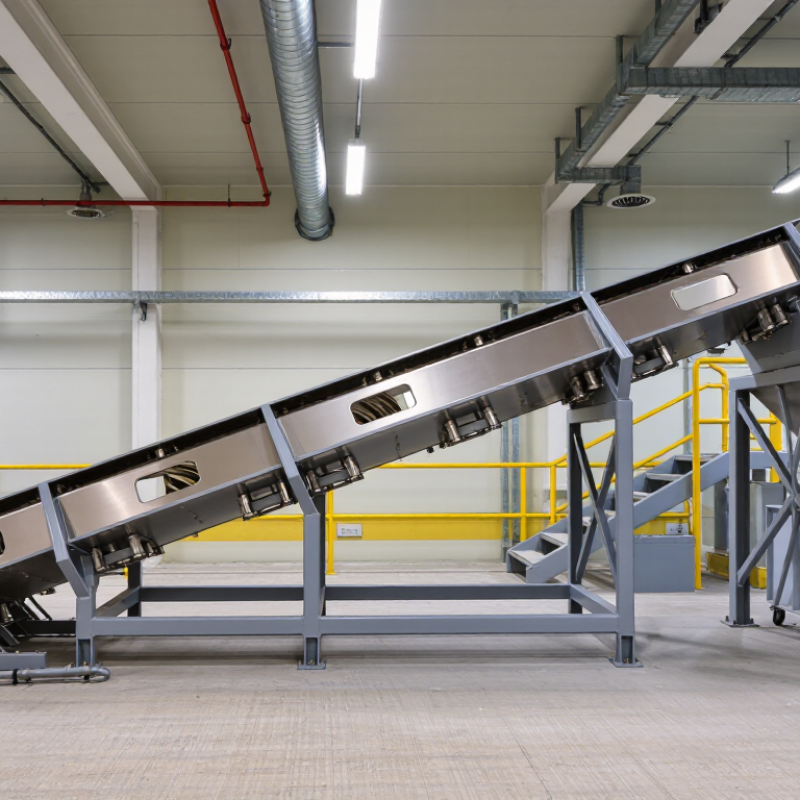
Understand Shaftless Conveyor Design and Application Needs
A shaftless conveyor uses a helical flight without a central shaft, leaving more room for bulky or stringy material. This design can suit screenings, food-processing residues, and damp waste that may wrap around a conventional screw. It is not automatically the better choice. Free-flowing granules may need a different conveying arrangement.
Start with the material. Record its moisture, temperature, particle size, abrasiveness, and tendency to bridge or mat. Then check the route: conveyor length, incline, number of inlets, and discharge position all affect capacity and drive load. Small details matter. A sharp bend or poorly placed feed opening can create buildup, even when the conveyor is correctly sized.
Ask how the trough liner, flight, and drive are selected for the actual duty. Abrasive material may wear components faster, while sticky material can leave residue that complicates cleaning. Request operating limits and maintenance access details, not just a rated capacity. A common buying mistake is estimating throughput from average flow alone; short surges can overload the system. Measure peak feed rates where possible. Also, revisit assumptions about material behavior after washing or seasonal changes. Real material is rarely as consistent as a spreadsheet suggests.
Define Capacity, Material, and Operating Requirements
7 Shaftless Conveyor Buying Tips for Global Buyers
Define capacity from the real material, not a catalogue maximum. Record average and peak flow in tonnes per hour, then confirm bulk density, moisture, particle size, abrasiveness, and temperature. USDA Federal Grain Inspection Service standards assign test weights of 56 pounds per bushel for corn and 60 pounds for wheat and soybeans. These are grading benchmarks, not substitutes for measuring loose bulk density at your site. That distinction matters: the same hourly mass can occupy different volumes and require a different conveyor configuration.
Small detail, big effect. Ask suppliers to size the conveyor using your actual material data and duty cycle. Include start-stop frequency, operating hours, incline, inlet conditions, and the space available for maintenance. For wet screenings, for example, sticky buildup may reduce usable capacity even when the motor rating appears sufficient. Specify the required throughput during peak periods, not just the daily average. CEMA’s Screw Conveyors for Bulk Materials provides engineering guidance for conveyor selection and design; use it alongside site measurements and material tests. One assumption often needs revisiting: “free-flowing” material can behave differently after storage or rain. Request the sizing assumptions in writing, including any limits on fill level, wear, and feed consistency.
7 Shaftless Conveyor Buying Tips for Global Buyers — Define Capacity, Material, and Operating Requirements
Typical Bulk-Density Ranges for Selected Materials
Bulk density affects the relationship between volumetric and mass capacity. These indicative ranges vary with moisture, particle size, compaction, and handling conditions. Confirm the properties of your actual material before specifying conveyor capacity.
Assess Construction, Materials, and Maintenance Access
A shaftless conveyor should be assessed as a complete assembly, not just by its rated capacity. Check the trough stiffness, weld quality, and support spacing against the expected load. Poor alignment can accelerate wear and create uneven material flow. Small details matter. Ask for drawings that show access covers, inlet geometry, and the points where liners can be replaced. These details are easy to overlook during quotation.
Material choice depends on the conveyed product and site conditions. Abrasive sludge may wear a liner quickly, while moisture and temperature can affect corrosion resistance and polymer performance. Request documented material specifications, and compare them with the actual operating environment. Avoid choosing by price alone. Maintenance access deserves equal attention: can a technician remove a cover, inspect the spiral, and clear a blockage without dismantling nearby equipment? Check the space needed for tools and replacement parts. A neat layout on a drawing may feel cramped in a real plant. Buyers should also confirm spare-part availability and service support at the installation location. No checklist catches every site constraint, so leave room for a final review with the maintenance team.
Verify Supplier Expertise, Standards, and Global Support
Choosing a shaftless conveyor starts with checking the supplier’s practical experience. Ask whether they have handled materials like yours, such as wet screenings, sticky sludge, or abrasive scraps. Request drawings, operating references, and clear answers about capacity and wear. Show the evidence. A polished brochure alone cannot prove that a conveyor will suit your site.
Standards matter, but requirements can vary by destination and application. Ask which design and safety standards apply, and request relevant declarations, inspection records, and test documents. Check that these match the equipment being quoted, not a similar model. For a difficult installation, review the trough material, spiral design, drive sizing, and access for maintenance. Small details count. A mismatch may only become obvious after startup.
Global support should be practical and specific. Confirm response times, available spare parts, installation guidance, and technical help across time zones. Ask how the supplier handles a damaged liner or an unexpected change in feed material. I would also check who will answer after commissioning; sales contacts may not be service contacts. Even a careful supplier cannot predict every site condition, so clear limits and honest discussion are valuable. That conversation may feel less impressive than a big promise, but it is usually more useful.
Compare Total Cost, Delivery, Installation, and Service
For global buyers, a shaftless conveyor quote is only a starting point. Compare the total cost of ownership, not just the equipment price. Include freight, import handling, installation labor, commissioning, training, and recommended spare parts. Request a written breakdown of what is excluded. Small details matter. A low quote may omit support for site measurements or startup adjustments, leaving your team to absorb the cost later.
Delivery dates need the same scrutiny. Ask when production starts, what could delay dispatch, and whether the quoted date means shipment or arrival at your site. MHI’s 2024 Annual Industry Report found that 55% of respondents planned to increase supply-chain technology investment. That makes dependable material flow a practical buying concern, not just a specification-sheet detail. Check whether the conveyor’s capacity and layout match your actual feed rate and waste stream. A neat drawing can still miss a difficult transfer point.
Installation and service can decide whether a system performs as expected. Confirm who supervises installation, what utilities and access are required, and how faults are handled across time zones. Request response-time targets, parts availability, and clear warranty terms. Ask for references from comparable applications, then verify the operating conditions. It is easy to overlook this. We should also admit that estimates can change when site conditions differ from drawings; build contingency into the budget rather than treating every early figure as final.