2026 Top Type Push Flow Submersible Aerator Price?
The 2026 market for a Type Push Flow Submersible Aerator is becoming more specification-driven. Buyers want reliable oxygen transfer, stable circulation, and manageable operating costs. Yet price alone cannot show whether a unit fits a pond, tank, or wastewater application.
A realistic price comparison should include motor power, flow rate, oxygen transfer efficiency, materials, cable length, and control equipment. Stainless steel components may cost more, but they often withstand wet environments better. Installation depth also matters. A small difference in depth can affect performance and energy use. Check the details.
From practical equipment evaluations, suppliers commonly provide different prices for similar-looking aerators. Warranty length, testing documents, spare parts, shipping terms, and after-sales support can change the final investment. A low quotation may exclude control panels or installation accessories. That is where confusion begins.
This article explores expected 2026 pricing and the technical factors behind it. It also explains how to compare supplier offers without relying on attractive headline numbers. Product data should be verified through test reports, operating references, and clear specifications. Some market estimates may remain uncertain because exchange rates, raw material costs, and regional demand can shift quickly. Therefore, the most dependable decision combines current quotations with lifecycle analysis.
The right aerator is not always the cheapest. It should deliver consistent mixing, safe operation, and reasonable maintenance over time. Careful judgment matters.
What Is a Push-Flow Submersible Aerator?
2026 Top Type Push Flow Submersible Aerator Price?
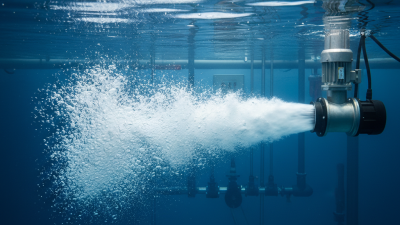
A push-flow submersible aerator combines oxygen transfer with horizontal water movement. Installed below the surface, its motor drives an impeller while a diffuser releases fine bubbles. The impeller pushes oxygen-rich mixed liquor across the basin. This action helps reduce stagnant zones and supports more even biological treatment.
It is not simply an underwater air pump. Performance depends on basin depth, wastewater strength, solids concentration, and required dissolved oxygen. The U.S. EPA reports that aeration can consume 45–75% of a wastewater plant’s total energy. Therefore, a cheaper unit may create higher operating costs. In price comparisons, check motor efficiency, power demand, corrosion-resistant materials, control panels, lifting equipment, and installation labor. The International Energy Agency also links water and wastewater services with about 4% of global electricity use. Small efficiency gains matter.
Tips: Ask for field test data, not only catalogue oxygen-transfer values. Compare standard oxygen-transfer efficiency, mixing radius, and noise levels. A 7.5 kW unit may suit one basin but fail in another. That judgment needs testing.
Operators often focus on purchase price first. That is understandable, but incomplete. Real costs include electricity, maintenance access, replacement parts, and downtime. Manufacturer claims can be optimistic under clean-water conditions. Actual wastewater results may differ. A site survey and pilot test remain safer than a quick online quotation. Industry reports provide useful benchmarks, not guarantees.
How Push-Flow Submersible Aerators Work
Push-flow submersible aerators combine water movement with oxygen transfer below the surface. A sealed motor drives an impeller or propeller. The rotating unit pulls surrounding water toward the intake and pushes it outward through the basin. Low pressure can draw air through an intake tube. The impeller then breaks air into smaller bubbles. More contact time usually means better oxygen transfer.
The U.S. Environmental Protection Agency reports that aeration can consume 45–75% of a wastewater plant’s total energy. That figure makes motor efficiency important when comparing 2026 aerator prices. A cheaper unit may demand more electricity, especially in deep tanks or high-solids ponds. The Water Environment Federation also emphasizes oxygen-transfer testing under site conditions, not only laboratory ratings. Real ponds are less tidy. Temperature, sludge buildup, salinity, and water depth can change performance. I would treat advertised flow figures as estimates, not promises.
Tips: Check oxygen demand, basin depth, and required circulation before requesting a price. Ask for wire-to-water efficiency and measured oxygen-transfer data. Inspect the intake screen regularly. A blocked intake reduces flow and can raise motor temperature. Select corrosion-resistant materials for saline or industrial water. The final purchase price should include installation, lifting equipment, controls, and yearly power use. This broader calculation often reveals a different “best value” than the lowest quotation.
2026 Top Type Push Flow Submersible Aerator Price? - How Push-Flow Submersible Aerators Work
| Equipment Class |
Motor Power |
Typical Air/Oxygen Transfer Capacity* |
Recommended Tank Volume |
Estimated 2026 Price Range (USD) |
Typical Application |
Operating Principle |
| Compact top-type push-flow aerator |
0.75–1.5 kW |
Approximately 0.8–2.0 kg O₂/h |
50–250 m³ |
$1,200–$2,800 |
Small wastewater tanks, equalization basins, aquaculture ponds |
A submerged impeller draws liquid downward and discharges it horizontally, creating circulation while entraining atmospheric air near the liquid surface. |
| Standard top-type push-flow aerator |
2.2–4.0 kW |
Approximately 2.2–5.5 kg O₂/h |
150–700 m³ |
$2,000–$4,500 |
Municipal treatment, food-processing wastewater, livestock effluent |
The motor rotates a high-efficiency propeller or impeller. Axial flow pushes oxygenated water across the basin and reduces stagnant zones. |
| Medium-duty high-flow aerator |
5.5–7.5 kW |
Approximately 5.5–10.0 kg O₂/h |
500–1,500 m³ |
$3,800–$7,500 |
Activated-sludge basins, industrial wastewater, large aquaculture systems |
A larger impeller produces stronger horizontal thrust and turbulent mixing, increasing the contact between air, water, and microorganisms. |
| Heavy-duty top-type push-flow aerator |
11–15 kW |
Approximately 10–20 kg O₂/h |
1,000–3,000 m³ |
$7,000–$13,500 |
Deep aeration basins, high-load industrial treatment, large oxidation ponds |
High torque is converted into sustained axial flow. The unit simultaneously transfers oxygen, maintains solids suspension, and promotes basin-wide circulation. |
| Large-capacity push-flow aerator |
18.5–30 kW |
Approximately 18–38 kg O₂/h |
2,500–6,000 m³ |
$12,000–$24,000 |
Large municipal and industrial biological treatment plants |
The submerged rotor creates a high-volume circulation loop. Oxygen transfer depends on rotor speed, immersion depth, wastewater characteristics, and mixing intensity. |
| Technical and Pricing Factor |
Typical Range or Requirement |
Effect on Selection and Price |
| Electrical supply |
Three-phase, 380–415 V, 50 Hz is common; other voltages are available |
Non-standard voltage, explosion-proof construction, or variable-frequency control generally increases the total price. |
| Installation depth |
Usually about 1.0–4.0 m below the liquid surface |
Greater depth improves hydrostatic contact pressure but may require stronger lifting equipment, longer cables, and reinforced supports. |
| Construction materials |
Painted carbon steel, stainless steel, or corrosion-resistant coated components |
Stainless steel and enhanced coatings are preferred for saline, corrosive, or chemically aggressive wastewater and cost more. |
| Protection and service life |
Submersible motor protection commonly uses IP68-rated construction; service life depends on duty and maintenance |
Higher sealing standards, thermal sensors, leakage detection, and premium bearings increase reliability and purchase cost. |
| Energy consumption |
Approximately 0.75–30 kWh per operating hour, depending on motor size |
Correct sizing and variable-speed control can reduce unnecessary mixing and lower long-term operating costs. |
| Price basis |
Indicative equipment-only market range in USD for 2026 |
Actual quotations vary with motor efficiency, impeller material, cable length, controls, freight, taxes, installation, and project quantity. |
*Oxygen-transfer figures are indicative clean-water or standard wastewater ranges. Actual oxygen transfer depends on wastewater temperature, dissolved-solids concentration, organic loading, immersion depth, basin geometry, and test conditions.
Key Types and Technical Features in 2026
In 2026, push-flow submersible aerators are gaining attention for wastewater ponds, equalization tanks, and industrial treatment basins. Their main types include propeller aerators, aspirating aerators, and hybrid mixing aerators. Propeller models create strong horizontal circulation. Aspirating designs pull air through submerged tubes and disperse it near the impeller. Hybrid units combine oxygen transfer with solid suspension.
Key technical features deserve closer inspection. A reliable unit should offer an IP68 motor housing, corrosion-resistant wetted parts, and overload protection. Variable-frequency control can adjust thrust and oxygen demand during changing treatment loads. High-efficiency motors reduce electricity use, but published efficiency figures need practical verification. Site depth, water temperature, sludge concentration, and basin shape can change results significantly. Small details matter.
They matter a lot.
Price in 2026 may range from several hundred to several thousand US dollars for equipment alone. Larger systems require stronger motors, lifting frames, control panels, and installation support. I would not select a unit by price per kilowatt only. A low-cost aerator may consume more power or require frequent seal replacement. In field use, blocked air passages and worn bearings remain common problems. One design choice still deserves debate: maximum thrust is not always the best oxygen-transfer strategy. Performance testing at the actual site is safer than trusting a catalog number.
Factors That Determine Submersible Aerator Prices
In 2026, top-type push-flow submersible aerator prices depend on more than motor size. Power matters. A 1.5 kW unit usually costs less than a 5.5 kW model, but energy use can dominate long-term spending. Buyers should compare oxygen transfer efficiency, not only purchase price. A unit that moves water aggressively may still perform poorly in deeper tanks or heavily loaded wastewater.
Construction materials strongly affect the quotation. Stainless steel components resist corrosion better than ordinary coated metals, especially in salty or chemically active water. Seal quality also matters. A damaged seal can allow moisture into the motor and create expensive downtime. In practical equipment evaluations, reliable thermal protection, balanced impellers, and accessible lifting systems often justify a higher initial price. The cheapest quote misleads.
Tank depth, flow pattern, and installation conditions add further costs. A longer cable, lifting frame, control cabinet, or frequency control system may be necessary for safe operation. Electrical requirements should be checked before ordering. Otherwise, an apparently affordable aerator may need rewiring or extra protection. Installation can surprise. Maintenance access deserves attention too, because removing a heavy submerged unit without proper handling equipment increases labor risk. Some quotations also exclude freight, commissioning, spare seals, and operator training. Those omissions make direct price comparisons unreliable. A careful buyer should request performance data, warranty terms, tested power consumption, and service availability in writing. Even then, performance claims need site-specific verification.
How to Compare Models, Performance, and Total Cost
2026 Top Type Push Flow Submersible Aerator Price?
Comparing push-flow submersible aerators requires more than checking the quoted unit price. Model capacity, motor power, oxygen transfer, installation depth, and control options affect real performance. The U.S. Environmental Protection Agency identifies aeration as one of the largest energy loads in wastewater treatment. Reports from the European Commission’s Joint Research Centre place aeration energy near 45–75% of total plant electricity in some facilities.
Look beyond the nameplate.
Request test conditions based on ASCE/EWRI 2-06 oxygen-transfer procedures. Ask for airflow, dissolved oxygen results, water temperature, and test depth. A model delivering strong mixing may still provide weak oxygen transfer in cold or heavily loaded water. Field fouling also changes results. That detail is often missed.
Total cost needs a simple five-year worksheet. Suppose a 2.2 kW unit replaces a 3 kW unit, operating 8,000 hours yearly at $0.12 per kWh. The energy difference is about $768 annually, before maintenance. The U.S. Department of Energy notes that pumping systems can consume 25–50% of industrial facility electricity, reinforcing the value of efficient motors and controls. Add cables, lifting equipment, seals, labor, spare parts, and downtime. Cheap equipment can become expensive equipment. I would also challenge every claimed efficiency figure, because laboratory results rarely match a dirty tank.
2026 Top Type Push Flow Submersible Aerator Price: How to Compare Models, Performance, and Total Cost
This comparison uses generic push-flow submersible aerator configurations. The estimated three-year total cost includes the initial equipment price, electricity at $0.12/kWh, 6,000 operating hours per year, and routine maintenance estimated at 3% of the purchase price annually. Higher-power units provide greater airflow and oxygen-transfer capacity, but their energy consumption has a major effect on lifecycle cost.
| Generic Model |
Motor Power |
Airflow |
Oxygen Transfer Rate |
Initial Price |
3-Year Total Cost |
| Model A |
1.5 kW |
2.5 m³/min |
1.0 kg O₂/h |
$900 |
$4,221 |
| Model B |
2.2 kW |
3.8 m³/min |
1.5 kg O₂/h |
$1,200 |
$6,060 |
| Model C |
3.7 kW |
6.0 m³/min |
2.5 kg O₂/h |
$1,800 |
$9,954 |
| Model D |
5.5 kW |
9.0 m³/min |
3.8 kg O₂/h |
$2,600 |
$14,714 |