Leave Your Message

2026 Best Industrial Paddle Mixer Types How to Choose?

The 2026 selection of an Industrial Paddle Mixer should begin with the product, not the machine brochure. Powder moisture, particle size, bulk density, and heat sensitivity can change the correct design. A dry fertilizer blend may need aggressive folding. A fragile food powder may need gentler movement. Both materials can look similar inside a catalog.

MarketsandMarkets identifies food, chemicals, pharmaceuticals, and plastics as major industrial mixer applications, with automation and process consistency supporting market growth through 2029. Grand View Research also reports continued demand for industrial mixing equipment, especially where manufacturers seek higher throughput and repeatable quality. These findings matter on the factory floor. A mixer running at 20 revolutions per minute may still create poor uniformity if loading is uneven or residence time is short.

Professor James Bridgwater, widely recognized for his work on powder and granular mixing, offers a useful practical warning. A paraphrase of his published position is: “A moving powder is not necessarily a mixed powder.” That distinction is easy to miss. It separates visible agitation from verified blend quality.

This guide compares single-shaft, twin-shaft, continuous, batch, and heated paddle mixers. It examines capacity, filling ratio, torque, discharge design, cleanability, and energy use. Testing remains essential. No report can predict every material’s behavior. Some recommendations may need revision after pilot trials, which is an uncomfortable but reliable part of equipment selection.

2026 Best Industrial Paddle Mixer Types How to Choose?

Industrial Paddle Mixer Basics and Working Principles

2026 Best Industrial Paddle Mixer Types: How to Choose?

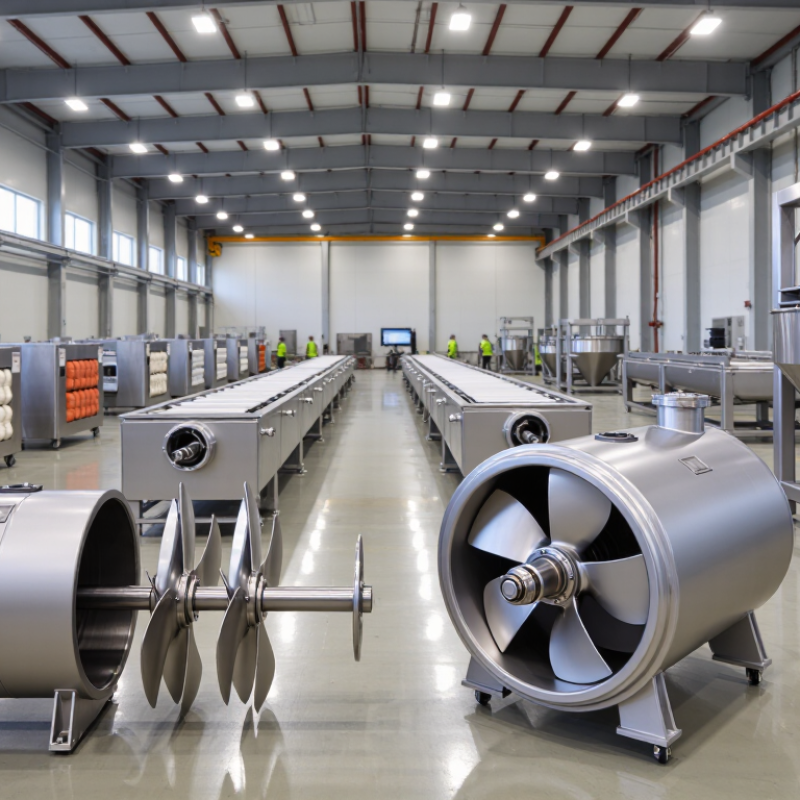
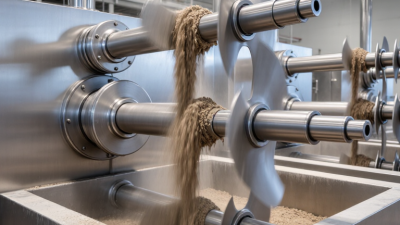
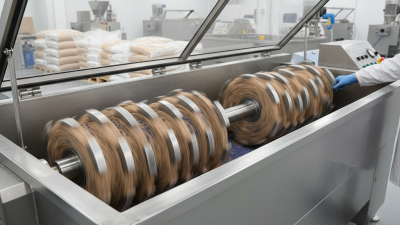
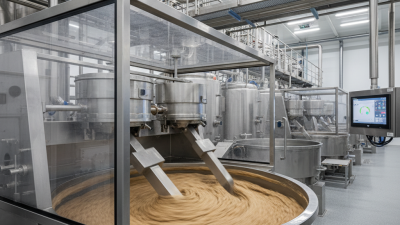
Industrial paddle mixers work through controlled convective movement. A horizontal shaft carries paddles through a trough. Each paddle lifts, folds, and redirects material across the batch. Twin-shaft designs create stronger cross-flow and reduce stagnant zones. Single-shaft models usually offer simpler maintenance and lower mechanical complexity.

The working principle depends on speed, fill level, paddle angle, and material behavior. Dry powders may need gentle movement, while moist granules require greater torque. Practical tests often use 30–70% vessel filling, but this range is not universal. Mixing time may fall between three and ten minutes. Particle size, bulk density, and moisture can change everything. The U.S. Department of Energy reports that motor-driven systems consume about 69% of industrial electricity. Therefore, motor efficiency and correct load selection deserve serious attention, not just purchase price.

Tips: Test the hardest recipe first. Measure blend uniformity from several sampling points. Check shaft torque during startup. Ask for cleanout access, because residue hides under paddle joints. A mixer can look efficient and still waste power. I have seen specifications focus heavily on capacity while ignoring discharge time. That is a costly blind spot. Review the Powder and Bulk Solids process guidance, then confirm results through a witnessed factory trial. Even a good calculation can be wrong when powders behave unexpectedly.

2026 Best Industrial Paddle Mixer Types: How to Choose?

Typical operating ranges for common industrial paddle mixer configurations. Use fill ratio, mixing time, and solids handling capability as initial selection criteria; final sizing should be confirmed through material trials.

Single-shaft paddle mixers are suitable for straightforward batch blending. Twin-shaft paddle mixers generally provide faster cross-mixing and better handling of cohesive materials. Continuous paddle mixers are preferred when a steady feed and consistent throughput are required.

Main Types of Industrial Paddle Mixers Explained

Industrial paddle mixers are designed for controlled blending of powders, granules, fibers, and damp solids. Their paddles move material horizontally, creating gentle folding rather than aggressive grinding. This action helps protect fragile particles and limits heat buildup during mixing.

Single-shaft paddle mixers suit simple, batch-based production. They usually need less space and can handle dry powders with moderate moisture. Twin-shaft mixers create stronger circulation between two paddle sets. They work well with sticky compounds, uneven ingredients, and short mixing cycles. In plant trials, operators often inspect dead zones near the discharge gate. Poor paddle spacing can leave unmixed material behind.

Continuous paddle mixers feed and discharge material without stopping. They fit stable, high-volume production lines. However, feed rates must remain consistent, or blend accuracy may suffer. Batch mixers offer better control for changing formulas and smaller production runs. For abrasive materials, inspect paddle edges, liners, seals, and shaft supports regularly. Stainless steel contact surfaces may be suitable for hygienic processing, but surface finish still matters. Do not select equipment from capacity alone. Bulk density, moisture, particle size, residence time, cleaning access, and discharge behavior can change the real result. A larger mixer is not always better. Sometimes, it only makes cleaning harder.

Key Performance Factors for Comparing Paddle Mixer Types

Choosing the best industrial paddle mixer starts with measurable performance, not equipment appearance. Single-shaft mixers suit gentle blending and moderate loads. Twin-shaft designs provide stronger dispersion and shorter mixing cycles. Continuous paddle mixers support steady production, while batch units offer tighter recipe control. The right choice depends on powder flow, moisture, bulk density, and required output.

Grand View Research estimated the global industrial mixers market at about USD 8 billion in 2023, with continued growth through 2030. This expansion reflects stronger demand for repeatable, energy-efficient processing. Yet capacity alone can mislead. A mixer rated for 5,000 liters may perform poorly at low fill levels. Compare useful volume, not only vessel volume. Track blend uniformity, discharge time, shaft torque, and specific energy consumption. The U.S. Department of Energy reports that motor-driven systems can represent roughly 70% of industrial electricity use. Efficient drives and correct shaft loading therefore matter financially.

In plant trials, a coefficient of variation below 5% often indicates practical uniformity for many dry blends. Product sensitivity can change that target. Test it. Paddle tip speed, blade clearance, and residence time also affect heat buildup and particle damage. A gentle mixer may preserve fragile granules but require longer cycles. A high-shear configuration may reduce cycle time, yet create unwanted fines. This trade-off is easy to underestimate. Pilot testing with the actual material remains more reliable than catalog figures, especially when moisture changes during seasonal production.

How to Choose the Right Industrial Paddle Mixer

Choosing the right industrial paddle mixer starts with the material, not the catalog photograph. Grand View Research estimated the global industrial mixer market at about USD 2.3 billion in 2023, with continued growth through 2030. That expansion reflects wider processing needs, but bigger equipment is not always better.

Check bulk density, moisture, particle size, and target mixing time. A single-shaft paddle mixer suits many free-flowing powders and granules. A twin-shaft design often handles heavier loads and improves movement across the chamber. For heat-sensitive products, select moderate shear and controlled discharge. For sticky materials, test torque carefully. Small details matter.

Batch volume should match the working capacity, not the vessel’s total volume. Leave space for product circulation. Review motor power, gearbox torque, shaft sealing, wear protection, and cleaning access. Hygienic applications should follow recognized sanitary design guidance, including smooth welds and drainable surfaces. A 2024 powder-processing report from the International Society for Pharmaceutical Engineering stresses that containment, cleanability, and repeatable validation affect equipment selection.

Pilot testing is essential. Two powders with similar moisture can behave very differently. I have seen an apparently suitable mixer form dead zones near the outlet. That mistake is expensive. Ask for torque data at startup, full-load tests, residence-time results, and samples from several chamber locations. Do not rely on one successful trial. Testing can still miss seasonal changes in raw materials.

Installation, Operation, and Maintenance Considerations

2026 Best Industrial Paddle Mixer Types: How to Choose?

Installation determines how reliably an industrial paddle mixer performs. Place it on a level, rigid foundation with enough clearance for inspection. Check anchor bolts, shaft alignment, discharge height, and access to the motor. Keep electrical connections protected from dust and moisture. Before starting, verify that guards are installed and the emergency stop works correctly. A small alignment error can create vibration, noise, and premature bearing wear.

During operation, follow the recommended filling range rather than chasing maximum capacity. Add materials gradually when possible. Watch motor current, mixing time, temperature, and discharge consistency. Stop the mixer if paddles contact the vessel or vibration suddenly increases. Overloading may seem efficient, but it often produces uneven blending and expensive downtime. The best settings may change with moisture, particle size, and bulk density. Do not assume yesterday’s recipe still fits today’s material.

Tips: Keep a simple inspection log. Record unusual sounds, seal leakage, motor readings, and cleaning dates. Inspect paddles, liners, bearings, and seals at planned intervals. Remove hardened buildup before it changes the mixing pattern. Lubricate only according to the equipment manual and use the correct amount. A perfect maintenance schedule is unrealistic; missed checks should trigger a practical review, not hidden paperwork. Clean safely after isolating power, and confirm the chamber is empty before maintenance.

2026 Best Industrial Paddle Mixer Types: How to Choose? — Installation, Operation, and Maintenance Considerations

Mixer Type Typical Applications Typical Technical Data Installation Considerations Operation Considerations Maintenance Considerations
Working Capacity Typical Speed Recommended Fill Level Foundation and Clearance Material and Utility Connections Strengths Limitations Routine Tasks Inspection Focus
Single-Shaft Batch Paddle Mixer Dry powders, granules, animal feed, fertilizers, minerals, and premixes 0.1–20 m³ per batch; commonly 50–80% of gross volume 20–60 rpm, depending on product density and paddle design Approximately 30–70% of gross volume; follow the supplier’s validated loading range Install on a level, rigid base. Provide access for top covers, discharge gates, drive components, and cleaning. Use correctly sized inlet, discharge, dust-extraction, grounding, and electrical connections. Add heating or cooling jackets only when required. Simple layout, moderate energy demand, gentle mixing, and good suitability for batch production. May require longer mixing time than a twin-shaft unit for difficult or cohesive products; potential dead zones if overloaded. Check paddle wear, shaft seals, bearings, gearbox oil level, discharge-gate movement, and residue buildup. Monitor vibration, abnormal noise, motor current, seal leakage, shaft alignment, and paddle-to-trough clearance.
Twin-Shaft Batch Paddle Mixer High-uniformity blending of powders, granules, additives, and products with different particle sizes 0.2–30 m³ per batch; commonly 50–75% of gross volume 15–45 rpm per shaft, selected according to bulk density and shear requirement Approximately 30–70% of gross volume; avoid filling beyond the validated working level Requires a rigid, accurately leveled base and sufficient side clearance for two drive assemblies and shaft-seal access. Provide separate feed, discharge, dust-control, grounding, and electrical systems. Confirm the discharge opening is large enough for rapid emptying. Fast, homogeneous mixing; strong axial and cross-flow movement; suitable for fragile and moderately cohesive materials. Higher purchase and maintenance complexity than a single-shaft unit; two drive trains require synchronized inspection. Inspect both gearboxes, bearings, seals, coupling elements, paddles, liners, and discharge components. Check shaft synchronization, differential vibration, motor-load balance, seal condition, and clearance between paddles and trough.
Continuous Twin-Shaft Paddle Mixer Continuous production of fertilizers, construction materials, minerals, biomass, and bulk solids Typically 5–200 t/h, depending on bulk density, residence time, and equipment size 20–80 rpm; speed is normally adjusted with a variable-frequency drive Controlled by feed rate and residence time rather than batch fill; maintain a stable material bed Requires accurate support alignment, stable upstream feeders, downstream receiving equipment, and adequate maintenance platforms. Install synchronized metering, dust extraction, instrumentation, emergency stops, grounding, and interlocked guards. High throughput, consistent residence time, compact process layout, and easy integration into automated lines. Less flexible for frequent product changes; feed-rate fluctuations can affect uniformity and residence time. Verify feeder calibration, inspect paddles and liners, lubricate bearings, check seals, and remove accumulated material. Monitor feed-rate stability, torque, motor current, discharge consistency, vibration, temperature, and dust leakage.
High-Shear Paddle Mixer Cohesive powders, agglomeration, controlled granulation, wet mixing, and products requiring intensive dispersion 0.05–10 m³ per batch; capacity depends strongly on product cohesiveness 40–150 rpm for the main shaft; optional high-speed choppers may operate at several hundred to several thousand rpm Often 30–60% of gross volume to provide sufficient working space and prevent excessive torque Use a reinforced foundation, verify torque reaction, and provide safe access to spray systems, choppers, and inspection ports. May require liquid dosing, compressed air, dust extraction, temperature monitoring, and appropriately rated electrical equipment. Handles cohesive materials and can shorten mixing or granulation cycles when process parameters are properly controlled. Greater power demand, increased wear, higher heat generation, and greater risk of over-processing sensitive materials. Inspect chopper blades, paddles, liners, spray nozzles, seals, bearings, gearbox, and torque-limiting devices. Track product temperature, motor current, torque, particle size, liquid-flow rate, vibration, and wear-part thickness.
Sanitary or Wash-Down Paddle Mixer Food ingredients, nutraceutical powders, pharmaceutical excipients, and hygiene-sensitive products 0.1–15 m³ per batch; working capacity is limited by cleaning and validation requirements 15–50 rpm, selected to limit heat, dust, and product degradation Approximately 30–65% of gross volume, subject to cleaning and product-flow validation Use hygienic supports, sloped surfaces, drainable piping, accessible inspection points, and sufficient clearance for sanitation work. Select compatible product-contact materials, hygienic seals, cleanable valves, wash-down electrical protection, and validated cleaning connections. Reduces contamination risk and supports repeatable cleaning when the equipment is designed for the required sanitation method. Higher initial cost; improper cleaning, trapped moisture, or incompatible chemicals can damage seals and surfaces. Perform documented cleaning, inspect seals and welds, verify drainability, lubricate non-product-contact points, and replace damaged gaskets. Check surface condition, gasket integrity, residual moisture, microbial-control records, foreign-material risk, and cleaning effectiveness.
Jacketed Temperature-Control Paddle Mixer Temperature-sensitive powders, crystallization, moisture control, warming, cooling, and reaction-assisted blending 0.2–25 m³ per batch, depending on heat-transfer area and process residence time 15–60 rpm; slower operation is often used for heat-sensitive or fragile products Approximately 30–70% of gross volume to maintain product movement and heat-transfer contact Allow space for thermal-fluid piping, insulation, expansion, drain points, sensors, and safe access to jacket connections. Provide correctly rated heating or cooling media, pressure relief, temperature sensors, control valves, insulation, and condensate or drain management. Provides controlled product temperature and can reduce moisture or improve process consistency. Thermal response may be slow; excessive temperature gradients or poor control can cause caking, degradation, or condensation. Inspect jacket pressure, valves, hoses, insulation, temperature sensors, seals, bearings, and internal buildup. Verify temperature uniformity, heating or cooling rate, pressure, flow, condensation, energy use, and product discharge temperature.
Selection note: Actual capacity, speed, power, fill level, residence time, and wear rate depend on bulk density, particle-size distribution, moisture, cohesiveness, abrasiveness, target uniformity, and required batch or continuous throughput. Confirm final dimensions and operating parameters through material testing and process validation.