7 Best Single Paddle Mixers for Global Buyers
A mixing line can look simple: a stainless-steel vessel, a motor, and one rotating shaft. Yet the wrong paddle can leave dry pockets, damage fragile ingredients, or extend cleaning and changeover times. For buyers comparing the 7 Best Single Paddle Mixers for Global Buyers, the useful question is not simply which machine has the highest horsepower. It is whether its paddle geometry, speed control, vessel design, and discharge arrangement match the material and production routine.
Industry reports help frame the decision, but they do not replace process testing. Grand View Research’s Industrial Mixers Market report segments demand by product, application, and region, reflecting how varied mixer requirements are across industries. Buyers should treat broad market forecasts as context, not proof that one mixer suits every plant. A free-flowing powder and a sticky paste behave differently. So do small trial batches and full production loads.
This guide compares seven single-shaft options through practical buying criteria: working capacity, construction, drive performance, operator access, cleaning, and available technical support. Check whether stated capacity refers to the vessel or the usable batch, and request material-specific test results when possible. A shiny brochure is not a process guarantee. Even reliable specifications may leave questions about wear, noise, or real-world mixing time. That uncertainty deserves attention. The right Single Paddle Mixer should fit the product, the facility, and the people who will operate and maintain it.
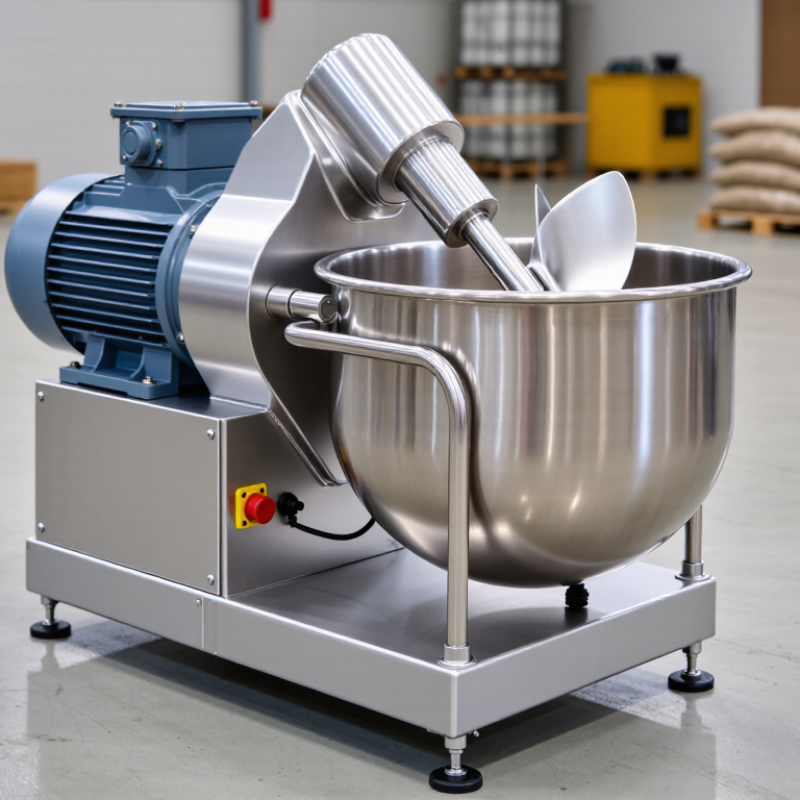
Single-Paddle Mixer Fundamentals: 20–10,000 cP Viscosity and Batch Size
7 Best Single Paddle Mixers for Global Buyers
Single-paddle mixer selection starts with viscosity, not appearance. Materials from 20 to 10,000 cP behave very differently during processing. A 20 cP liquid may circulate easily, while a 10,000 cP paste can resist movement near the vessel wall. Paddle diameter, clearance, motor torque, and shaft strength must match the fluid. More speed is not always better. Excessive speed can introduce air, heat, or uneven flow.
Batch size also changes mixer performance. A vessel rated for 1,000 liters may process only 600 liters effectively, depending on paddle design and fill level. For small batches, a 5-liter vessel needs accurate speed control and a properly sized shaft. For larger batches, operators should check torque at startup, not only during steady mixing. A heavy material may move slowly at first. That moment matters.
Real trials are valuable. Measure viscosity at the actual processing temperature, because cold material may be far thicker. Watch for dry pockets beneath the paddle and stagnant material along the wall. These details often expose weak mixing patterns. I have seen specifications look suitable on paper, yet the finished batch remained inconsistent. That is a useful warning. Request a test with the intended batch size, loading order, and mixing time. Leave room for adjustment.
Selection Criteria: 0.5–30 kW Power, RPM, Torque, and Mixing Shear
Choosing a single paddle mixer starts with the material, not the motor rating.
The International Energy Agency’s 2011 report, Energy-Efficiency Policy Opportunities for Electric Motor-Driven Systems, estimates that motor-driven systems use about 45% of global electricity. That makes correct sizing more than a purchasing detail. A 0.5 kW unit may suit small batches or low-viscosity liquids, while 30 kW can support larger, more demanding duties. But power alone tells little. At 300 rpm, 0.5 kW corresponds to roughly 16 Nm of shaft torque; at 60 rpm, 30 kW corresponds to about 4,775 Nm, before transmission losses. Check the gearbox output, not just the motor nameplate.
RPM also needs context.
A fast paddle may move thin liquid effectively, yet struggle with a thick batch or introduce unwanted air. Shear depends on paddle diameter, speed, clearance, and fluid behavior. For example, a 300 mm paddle turning at 100 rpm has a tip speed near 1.6 m/s. Useful, but not a complete measure of mixing quality. Ask suppliers for operating curves or test data using a similar viscosity and batch size. Small details matter. A spreadsheet can still miss cold-start torque, changing viscosity, or a vessel with awkward corners. I would record those uncertainties rather than pretend the selected speed is exact.
Global Purchasing Guide: CE, UL, IEC 60034-1, Voltage, and Spare Parts
7 Best Single Paddle Mixers for Global Buyers
Selecting the seven best single paddle mixers requires more than comparing mixing speed. Global buyers should check CE documentation, electrical ratings, and service support before ordering. CE confirms conformity with applicable European requirements, but it is not a universal quality certificate. Request the Declaration of Conformity and review the marked model number carefully.
UL certification or listing may be important for North American projects. Ask whether it covers the complete mixer or only selected electrical parts. IEC 60034-1 provides useful guidance for motor ratings, temperature rise, duty, and performance. Confirm voltage, frequency, phase, plug type, and motor power on the nameplate. A 400V, 50Hz motor may not suit a 230V, 60Hz site. Small details matter. I have seen otherwise suitable equipment delayed because the spare control switch was unavailable. Check replacement paddles, seals, bearings, cables, and gear components before payment. A lower purchase price can become expensive after one failure.
Tips: Request test records, wiring diagrams, installation instructions, and spare-parts prices in writing. Confirm the mixer’s material compatibility with your batch, especially when handling abrasive powders or corrosive liquids. Ask about IP protection and continuous-duty limits. Do not rely only on catalogue photographs. A perfect shortlist rarely stays perfect after freight, customs, and local installation are considered.