



Belt Conveyor
Structure and Working Principle
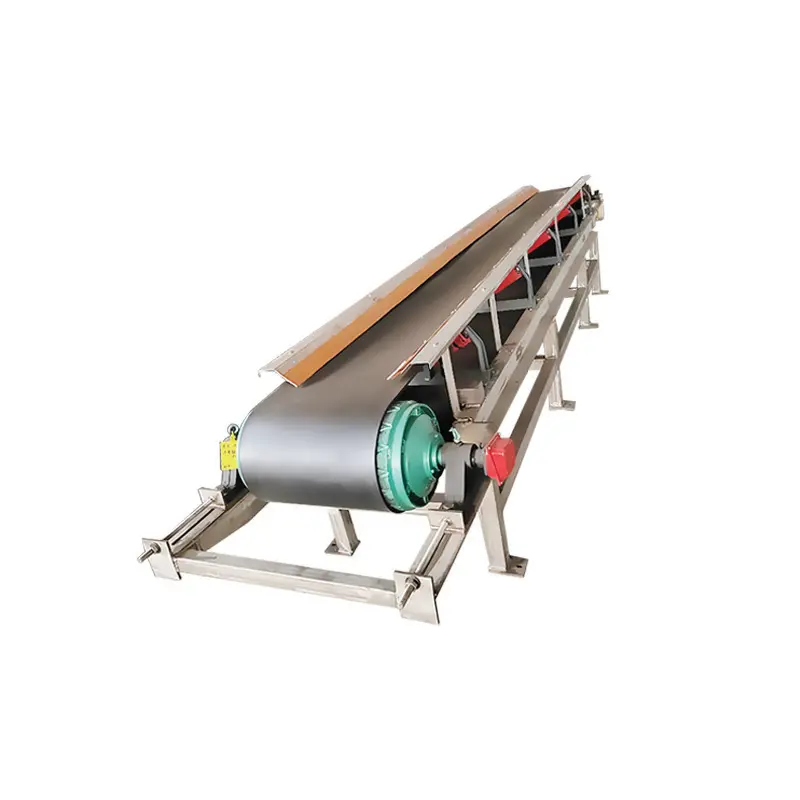
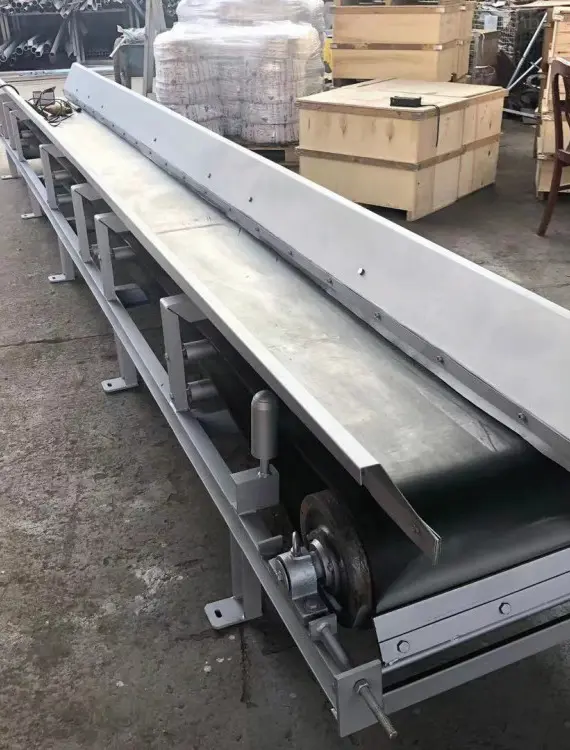
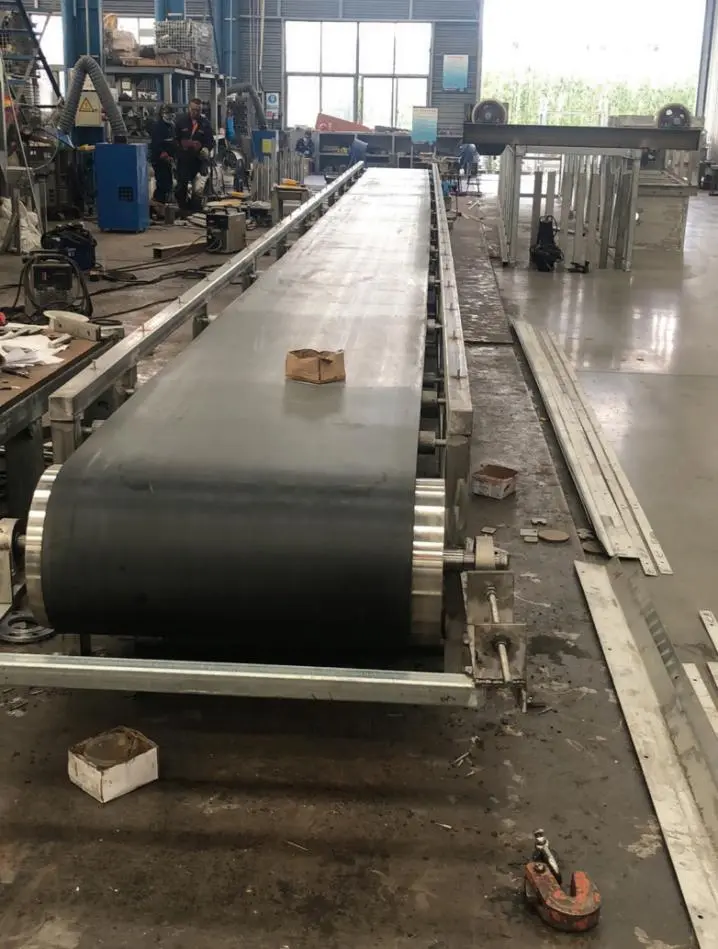
The belt conveyor mainly consists of a frame, belt, idlers, drive unit, tensioning device, bend pulley, brake device and plough cleaner.
The equipment adopts a continuous trough-type design. Materials fall onto the belt
from the discharge port of the bar screen or dewatering machine. Driven by the
electric roller, materials are transported from one end to the other, where they are
discharged to a garbage bin for further processing.
Features
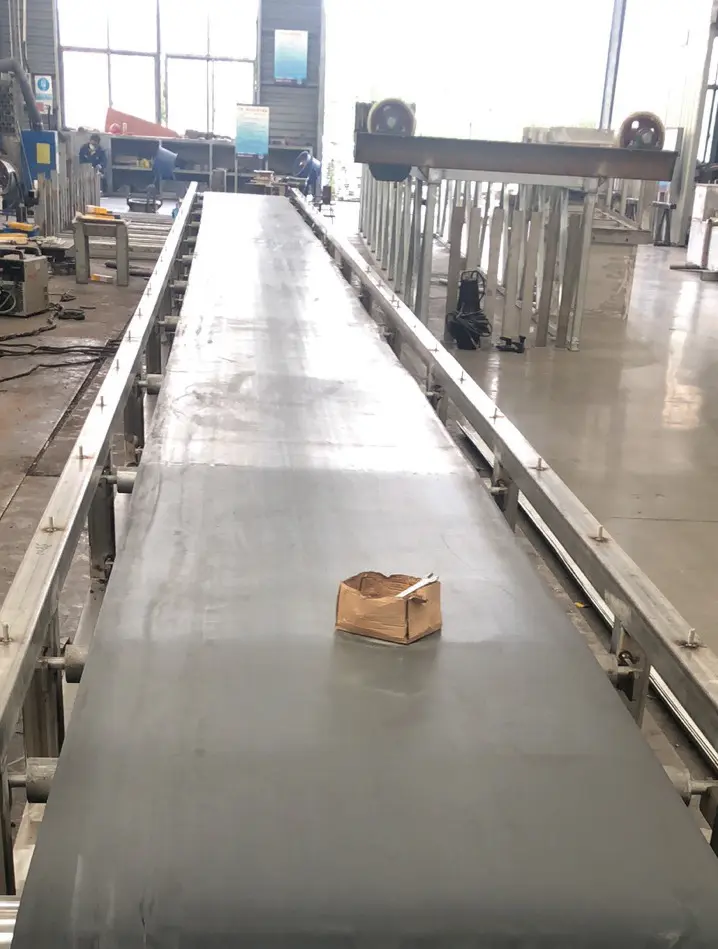
-Reliable operation, large conveying capacity, long conveying distance, suitable for multi-point loading and continuous conveying.
-Oil-cooled electric drive roller with IP55 protection class, compact structure, small footprint, easy maintenance.
-Screw tensioning device ensures safe and reliable belt operation.
-The belt is made of oil-resistant rubber with vulcanized joints, equipped with cleaning devices, corrosion-resistant and long
service life.
-Baffle plates on both sides of the upper trough idlers prevent sludge sewage from overflowing, maintaining a clean working
environment.
-Easy operation, no blockage, convenient maintenance. Can be installed horizontally or at an inclined angle, making it an ideal
equipment for conveying screenings
-Can be linked with other equipment for convenient control, or equipped with local control cabinets for independent operation.
Main Components
1.Belt: The core component, serving as both the carrying and traction element. It is divided into ordinary PVC belts, foodgrade PU belts, anti-slip belts, material flow special belts, fluorine rubber belts, high-temperature resistant belts, etc.
2.Idlers: Support the belt and reduce friction. They include trough idlers, flat idlers, impact idlers and self-aligning idlers. Common diameters include 25.4mm, 38.1mm, 50.8mm, 76.2mm, etc.
3.Drive Unit: Power source; the motor drives the drive roller via couplings and reducers, using friction between the roller and
belt to drive the belt.
4.Tensioning Device: Ensures sufficient belt tension for friction. Screw tensioners are suitable for short-distance, low-power
conveyors; heavy-weight tensioners maintain uniform tension and are suitable for long-distance, high-power conveyors.
5.Bend Pulley: Changes the belt direction to form a closed loop. It can also serve as the tail pulley or tensioning roller. Available
in lagged or bare styles.
6.Brake Device: Prevents backward rotation of the belt on inclines exceeding the angle of repose (typically 40°~60°), which
could cause material spillage or equipment damage.
Product Naming Convention
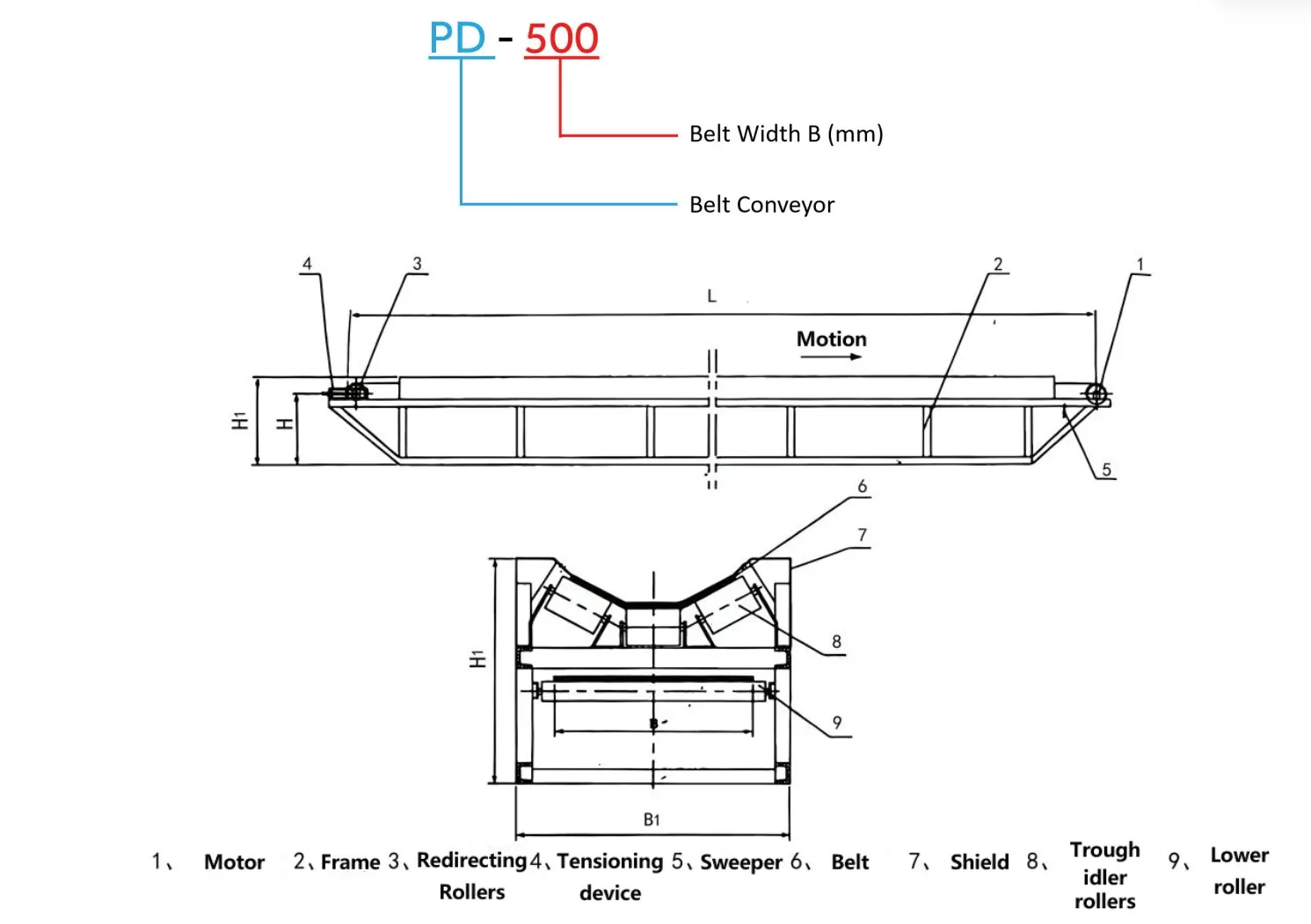
Model Specification Table
Model |
Parameter |
Pd-500 |
Pd-650 |
Pd-800 |
Pd-1000 |
Belt Width B (mm) |
500 |
650 |
800 |
1000 |
|
Capacity Q (m3/h) |
at angle 0° |
25 |
320 |
50 |
75 |
at angle 10° |
22.5 |
28.8 |
45 |
67.5 |
|
at angle 15° |
18.75 |
24 |
37.5 |
56.25 |
|
at angle 20° |
15 |
19.2 |
30 |
45 |
|
Belt Speed V (m/s) |
0.6 - 1.0 |
||||
Motor Power N (kW) |
0.75 - 22.0 (Depends on length L) |
||||
Electric Roller Diameter D (mm) |
220/240/400/500 (Depends on length L) |
||||
Installation Dimensions (mm) |
B1 |
≥B+250 |
|||
L |
Customized per user requirements |
||||
H |
Customized per user requirements |
||||
H1 |
H + 80 + (D/2) |
||||