




Rotary Disc Aerator

Working Principle
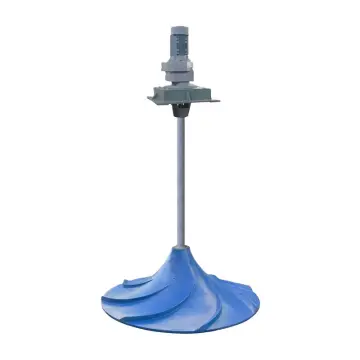
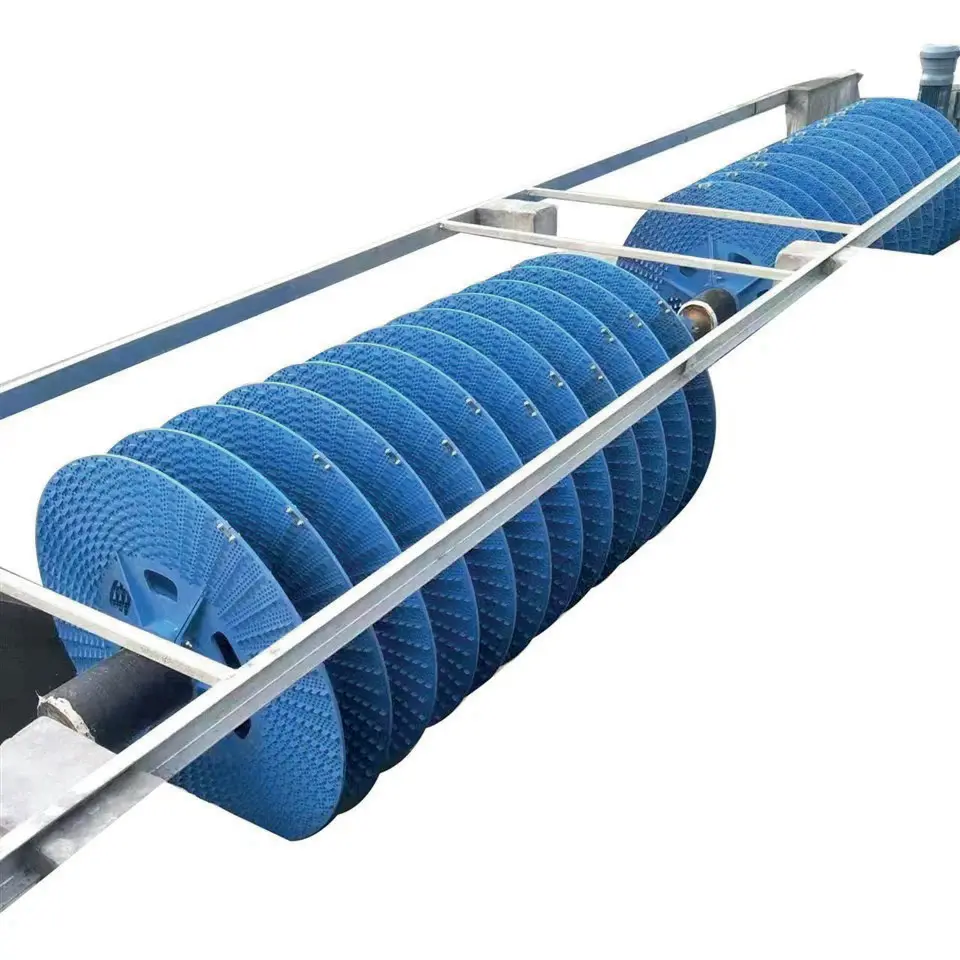
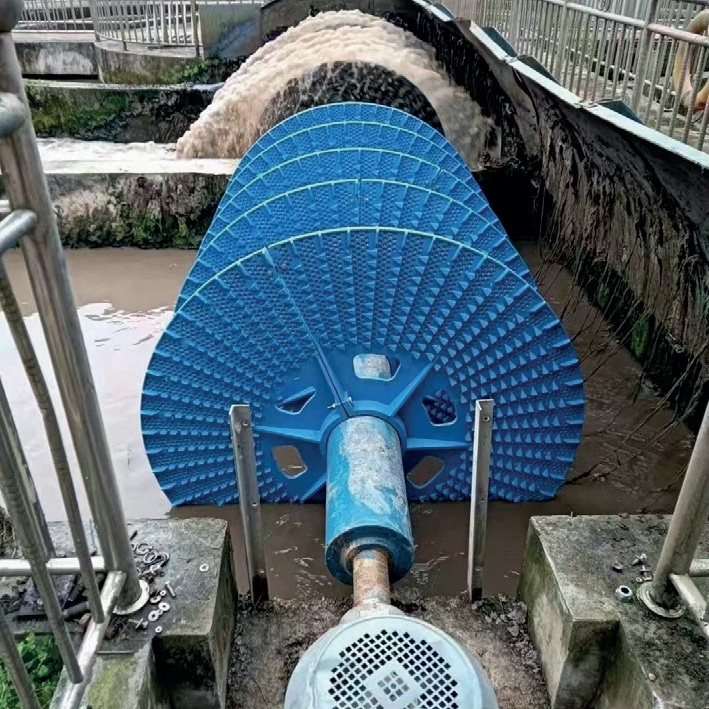
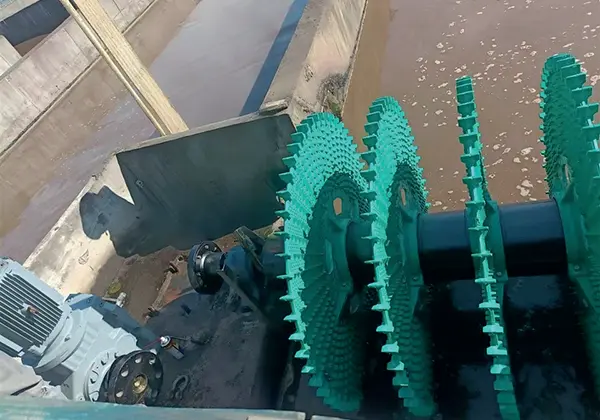
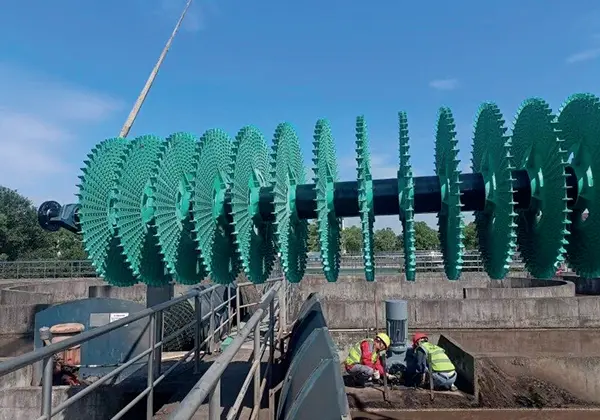
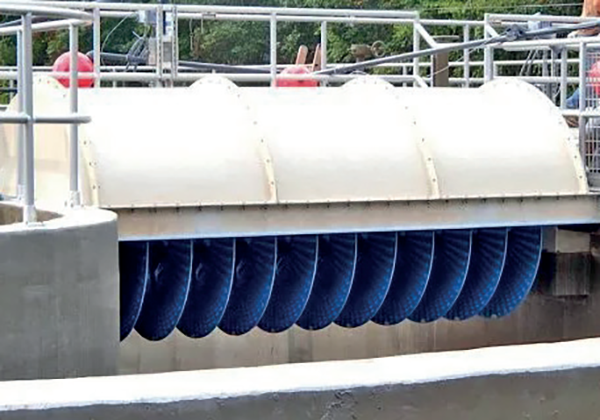
The rotary disc aerator mainly consists of a drive unit, flexible coupling, rotating shaft, discs, and bearing seats. The horizontal output shaft of the gearbox driven by the motor rotates the aerator disc. As the discs rotate, they form numerous small water curtains, entraining air into the water. Simultaneously, the blind hole structure on the discs allows a large amount of air to be introduced and thoroughly mixed with the treated water. The oxygen in the air then dissolves into the water, resulting in oxygenation of the water body. The rotating discs propel wastewater forward in the oxidation ditch, keeping the activated sludge in a suspended state.
Product Features
-Small footprint, convenient process layout.
-The rotating discs are made of lightweight, high-strength fiberglass-reinforced polypropylene, offering strong corrosion resistance.
-The optimized hydraulic design of the protrusions on the discs, with varying heights and densities, increases the contact area between the gas and liquid phases, resulting in high oxygenation capacity and excellent flow propulsion. Under the same conditions, its aeration and oxygenation capacity is more than 10% higher than similar domestic products, and it is suitable for working water depths up to approximately 5 meters.
Structural Overview
The rotating disc aerator mainly consists of a drive unit, flexible coupling, rotating shaft, discs, and bearing housing.
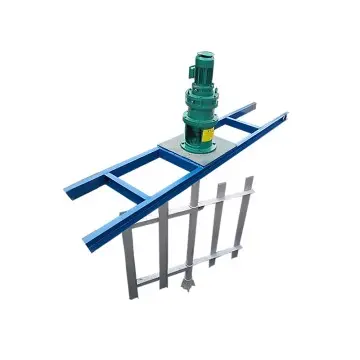
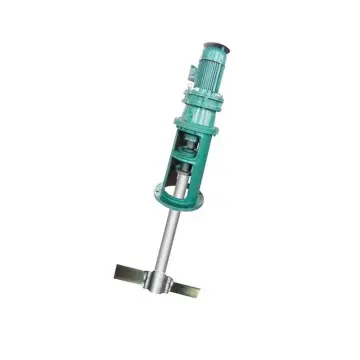
•Drive Unit: Composed of a motor and a reducer. The motor can be single-speed, dual-speed, or variablespeed (single-speed motors are provided unless otherwise specified). Drive motors are available in vertical and horizontal installation types. Driven by a vertical motor and equipped with a spiral bevel or cylindrical gear reducer, this system features a small footprint, ease of installation, and minimal impact of wastewater mist on motor insulation.
•Flexible couplings: Available in two types—flexible pin couplings and rubber contact flexible couplings—these are used to transmit power, absorb vibration, and compensate for angular misalignment.
•Shafts: Constructed from thick-walled seamless steel tubing, with surfaces treated with fiberglass (thermocured die-cast in one piece) or heavy-duty anti-corrosion, zinc spraying, or stainless steel spraying. They are lightweight, high-strength, and highly corrosion-resistant.
•Discs: Made of lightweight, high-strength fiberglass-reinforced polypropylene, these discs are covered with teeth, water-spraying flaps, oxygen storage channels, and centrifugal channels. Their functions are as follows:
1.Teeth: Primarily for propulsion;
2.Water-spraying flaps: Ensure water mist and oxygen are fully mixed and saturated before falling into the pool;
3.Oxygen storage channels: Force air into the water and break it up, ensuring thorough mixing and emulsification with the pool water;
4.Centrifugal channels: “Dead water” at the disc housing is ejected along the channels under centrifugal force and oxidized upon contact with air.
5.If oxygenation capacity is insufficient, additional discs can be added to increase it. The aeration disc is divided into two halves, allowing for easy mounting on the shaft in any situation, and is equipped with antiloosening devices to prevent the disc from loosening during operation.
•Bearing housings: Support the weight of the aerator, withstand operating loads, and compensate for changes in shaft length due to thermal expansion and contraction.
Model Specification Table
Shaft Length m |
No of Discs |
400–530 mm Oxygenation Capacity kgO₂/h |
Power kW |
3 |
12 |
12.60–19.56 |
11 |
4 |
17 |
17.85–27.71 |
15 |
5 |
21 |
22.0–34.23 |
18.5 |
6 |
25 |
26.25–40.75 |
22 |
7 |
33 |
34.65–53.79 |
30 |