












How Do Surface Aerators Improve Wastewater Treatment Efficiency? Working Principles and Applications
In wastewater treatment projects, the aeration process directly affects the growth environment of aerobic microorganisms and the overall performance of biological treatment systems. For municipal wastewater treatment plants, industrial wastewater treatment facilities, and aerated lagoons, selecting suitable aeration equipment according to actual operating conditions is an important consideration during engineering design and equipment procurement.
A surface aerator is a mechanical device designed to provide oxygen transfer and water mixing through rotational movement. Unlike conventional aeration systems that deliver air through blowers, a surface aerator primarily uses an electric motor to drive an impeller, creating continuous water agitation and circulation. This increases contact between air and wastewater, promoting the transfer of oxygen into the water.
As wastewater treatment projects place increasing emphasis on equipment reliability, installation requirements, and long-term maintenance, surface aerators continue to offer practical value in various water treatment applications.
1. What Role Does a Surface Aerator Play in a Wastewater Treatment System?
During aerobic biological treatment, microorganisms require oxygen to break down organic pollutants in wastewater. Insufficient aeration may result in low dissolved oxygen levels, which can negatively affect normal microbial metabolism.
Surface aerators mainly perform two important functions.
1.1 Supplying Oxygen to Wastewater
During operation, the electric motor drives the impeller to rotate, continuously agitating the surrounding water. The rotating impeller pushes water outward and creates surface turbulence, increasing contact between air and wastewater and promoting oxygen transfer.
For aerobic treatment zones that require a continuous oxygen supply, properly selected and installed surface aerators help maintain the dissolved oxygen conditions required by the biological treatment system.
1.2 Improving Water Circulation Within the Tank
In addition to oxygen transfer, surface aerators generate water circulation within the treatment tank. This helps promote the mixing of wastewater and activated sludge while reducing areas where water movement may be insufficient.
Therefore, in treatment processes suitable for mechanical aeration, surface aerators can provide both oxygen transfer and mixing functions.
2. How Are Surface Aerators Used in Different Wastewater Treatment Applications?
Surface aerators are not limited to a single wastewater treatment process. Depending on tank design, treatment capacity, and wastewater characteristics, they can be used in various engineering applications.
2.1 Municipal Wastewater Treatment Projects
Municipal wastewater generally contains organic matter, suspended solids, and other pollutants. It typically undergoes several treatment stages, including preliminary treatment, biological treatment, and subsequent treatment processes.
In aerobic treatment processes suitable for mechanical aeration, surface aerators can supply the oxygen required by microorganisms while improving mixing conditions within the treatment tank.
2.2 Industrial Wastewater Treatment Projects
Industrial wastewater is generated by various industries, including food processing, textile manufacturing, paper production, and certain chemical manufacturing processes.
Because wastewater characteristics vary between industries in terms of pollutant concentration, biodegradability, and oxygen demand, equipment configurations should not simply follow those used in municipal wastewater treatment projects.
Engineers should consider wastewater quality, treatment processes, tank dimensions, and actual oxygen requirements when determining the appropriate equipment model and motor power.
2.3 Aerated Lagoons
For aerated lagoons with relatively large water surface areas, floating surface aerators are one equipment option worth considering.
These units operate on the water surface with the support of floats, reducing their dependence on fixed installation platforms. Depending on water flow conditions and lagoon structures, appropriate fixing or anchoring systems can also be installed.
3. What Are the Structural Features of Floating Surface Aerators?
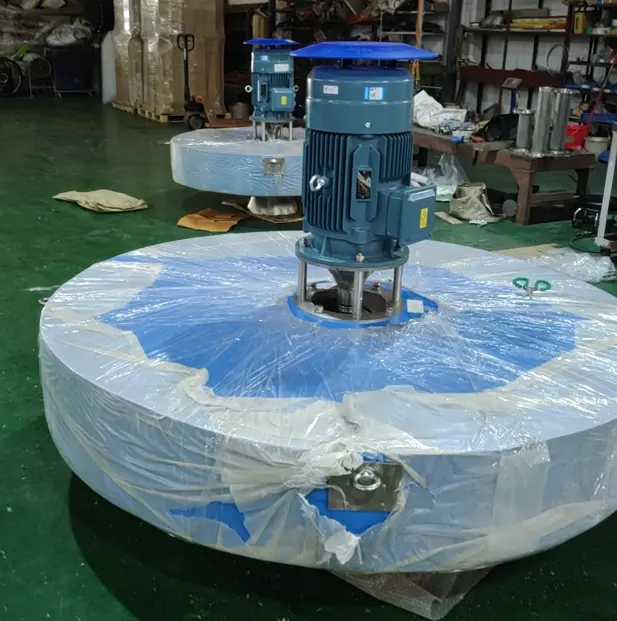
A floating surface aerator typically consists of an electric motor, impeller, transmission components, floats, and associated connecting structures.
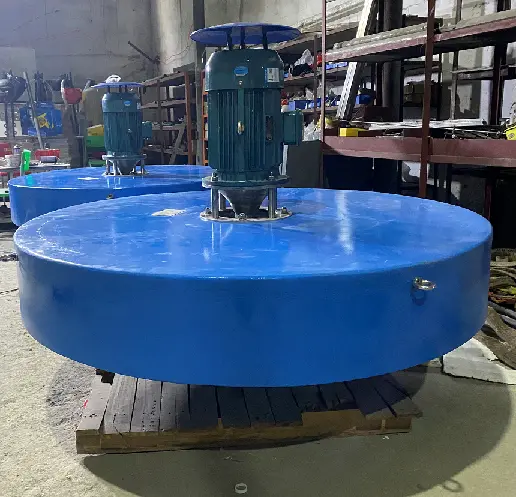
The motor provides the driving power, the impeller generates water movement and agitation, and the floats provide buoyancy to support the equipment on the water surface.
- 1. Power Configuration: Motor power should be determined according to the treatment process and actual operating conditions.
- 2. Impeller Design: The impeller configuration affects water circulation and aeration performance. Selection should be based on the equipment design and project requirements.
- 3. Float Structure: Check the integrity, load-bearing capacity, and overall stability of the floats.
- 4. Equipment Materials: Select suitable materials according to wastewater corrosiveness and the surrounding operating environment.
- 5. Motor Protection: Pay attention to the motor protection rating, electrical configuration, and sealing requirements.
4. How Should You Choose Between Surface Aerators and Fine Bubble Diffusers?
In wastewater treatment engineering, mechanical surface aeration and fine bubble aeration are two different methods of supplying oxygen. A surface aerator uses an electric motor to drive an impeller, creating water turbulence and increasing contact between water and air. A fine bubble aeration system, on the other hand, requires supporting equipment such as blowers, air pipelines, and disc or tube diffusers.
- The wastewater treatment process and actual oxygen requirements.
- Tank depth, surface area, and structural conditions.
- Initial equipment investment and supporting system costs.
- Operating energy consumption and long-term maintenance expenses.
- Wastewater characteristics and on-site installation conditions.
5. What Project Information Should Be Prepared Before Purchasing a Surface Aerator?
For wastewater treatment engineering companies, environmental equipment distributors, and overseas project contractors, providing complete project information before purchasing equipment helps improve the accuracy of equipment selection.
Basic Project Information
- Wastewater treatment capacity and daily treatment volume.
- Wastewater source and main water quality indicators.
- The wastewater treatment process being used.
Tank Design Parameters
- Length and width of the aeration tank, and effective water depth.
- Planned equipment quantity and installation positions.
- Whether floating or fixed installation is required.
6. Why Is Routine Maintenance Important After Installation?
Surface aerators operate in humid wastewater treatment environments for extended periods. Regular inspection and maintenance are therefore essential for maintaining stable equipment operation.
- Check motor operating temperature and overall operating condition.
- Observe whether abnormal vibration or noise occurs during operation.
- Inspect the impeller and rotating components for signs of wear.
- Regularly inspect electrical connections and protection devices.
7. Lan Jiang Pump: Surface Aeration Equipment Support
Lan Jiang Pump specializes in wastewater treatment equipment and related products, providing equipment support for municipal wastewater treatment, industrial wastewater treatment, and environmental engineering projects.
Whether for a newly constructed wastewater treatment plant or equipment replacement in an existing treatment system, communicating project parameters in advance helps identify a more suitable equipment solution.
Official Website: https://www.lanjiangequip.com/