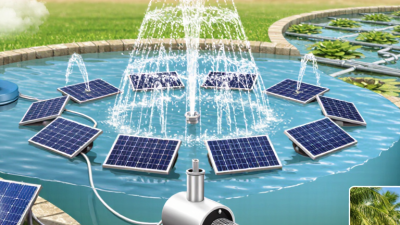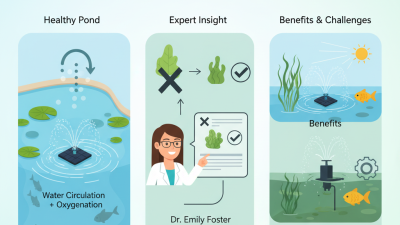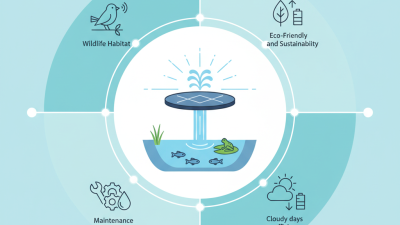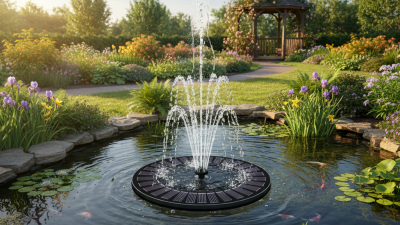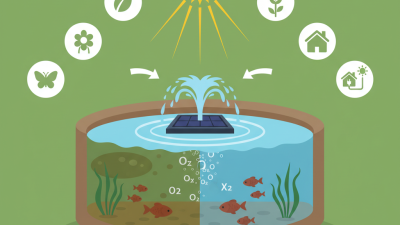
Choosing a pond aerator is about more than finding the largest spray pattern or lowest price. A healthy pond needs reliable water movement, and the right equipment depends on its size, depth, fish load, and sunlight. A Floating Solar Powered Pond Aerator can circulate surface water without a nearby electrical connection. On a bright afternoon, a visible plume can also make a quiet pond feel more lively.
Performance varies with cloud cover, season, and placement. Some models slow down or stop when sunlight fades, so they may not provide continuous aeration overnight. That detail matters. A fountain’s spray can look impressive, but appearance alone does not show how effectively it supports oxygen levels throughout the pond. Depth and circulation patterns matter too.
This guide to top floating solar powered pond aerators for sale focuses on practical features buyers can compare: panel size, float stability, pump output, battery or backup options, and ease of cleaning. A unit that suits a shallow garden pond may be inadequate for a larger pond with fish. Check the manufacturer’s stated coverage and operating conditions, then compare them with your actual site. Leaves, algae, and mineral buildup can also affect performance over time. Small maintenance tasks add up.
No single model fits every pond. The most useful choice is one that matches local sunlight and pond conditions, with clear product specifications and realistic expectations. Even a well-reviewed aerator may need seasonal adjustments. That is worth considering before purchase.
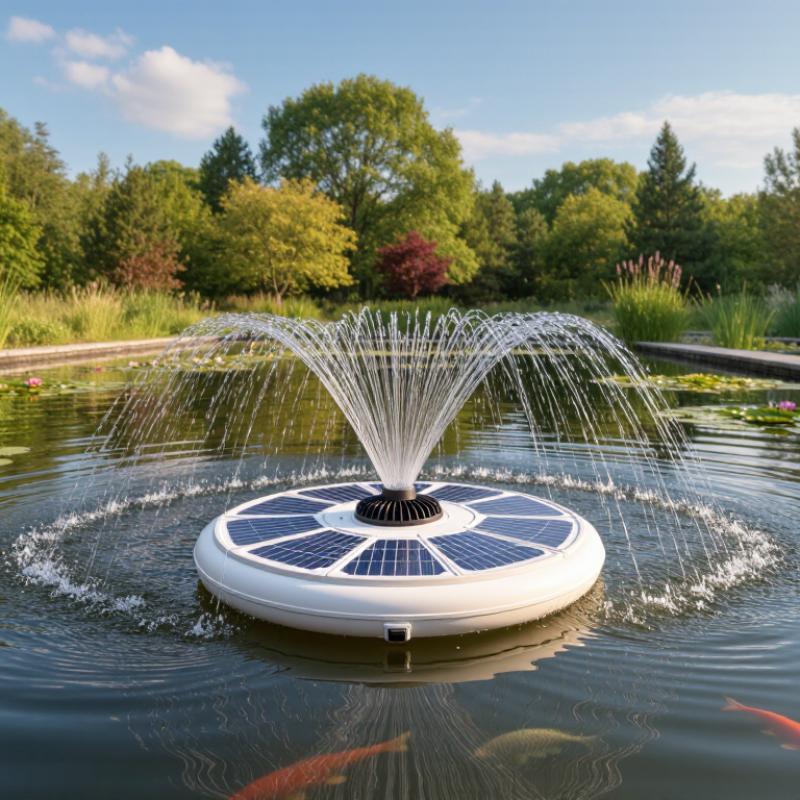
A floating solar-powered pond aerator uses sunlight to move air or water, helping increase oxygen exchange without a wired power supply. Its solar panel converts light into electricity, which runs a small pump or motor mounted on a buoyant platform. The unit rests on the pond surface, while its working parts operate below or beside the float.
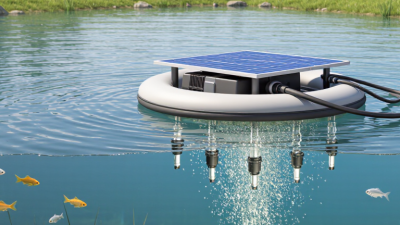
In a common design, an air pump pushes air through a hose to a diffuser near the pond bottom. The diffuser releases a stream of fine bubbles. As they rise, they move water and help bring oxygen-rich surface water into circulation. Other models use a small spray or circulation pump instead. The effect depends on pond depth, aerator placement, sunlight, and the unit’s output. Clouds and shade can reduce performance. No magic here.
During a sunny afternoon, you may see steady bubbles or a gentle surface ripple; at night, a basic unit may stop unless it includes battery storage. Check the diffuser and hose for debris, and keep the panel clear of leaves. Pond owners should also match the aerator to pond size and depth, following the manufacturer’s rated capacity. Clear bubbles are not proof that oxygen levels are adequate. For fish-sensitive ponds, a dissolved-oxygen meter gives a more reliable check, especially during hot weather.
Sunlight produces DC electricity in the floating solar panel, which powers the aerator’s motor to move and circulate water. This chart shows an idealized estimate for a 100 W panel: output scales with solar irradiance, reaching its 100 W rating at 1,000 W/m² under standard test conditions. Actual output varies with panel temperature, angle, shading, and system losses. Without battery storage, aeration output generally changes with available sunlight.
A floating solar aerator typically combines a buoyant platform, photovoltaic panel, motor, intake, and water outlet. The float keeps the working parts near the surface, while a mooring line helps limit drifting in wind. Some systems include a controller or battery, but many run only when sunlight is available. Check the panel’s position and keep it clear of leaves and bird droppings. Small details matter.
Aeration usually works through surface agitation or a submerged diffuser. A spray-style unit lifts water and breaks it into droplets, adding oxygen near the surface and creating visible movement. A diffuser sends air through a hose to a weighted base, where bubbles rise and circulate deeper water. These methods are not interchangeable: pond depth, shape, and fish load all affect performance. Measure twice. A bright afternoon can make a unit look stronger than it will be on cloudy days, so avoid judging capacity from appearance alone. Match the aerator’s output to the pond, and observe oxygen levels where fish actually gather. An awkward truth: more circulation is not always better if it disturbs sediment or leaves quiet areas untouched.
| System Type | Key Components | Aeration Method | Typical Pond Application | What to Check Before Buying |
|---|---|---|---|---|
| Direct-Solar Floating Fountain Aerator | Photovoltaic panel, DC pump, float platform, screened water intake, riser and fountain nozzle; some models include a controller. | The pump sends pond water through a nozzle. The spray exposes water to air, while the returning water creates surface movement. | Ornamental and relatively shallow ponds where a visible fountain and surface circulation are desired. | Confirm pump flow and lift are suitable for the nozzle, check the required water depth, and expect operation to vary with sunlight. Inspect the intake screen and nozzle regularly for debris. |
| Floating Fountain with Battery Storage | Solar panel, charge controller, rechargeable battery, DC pump, float, intake screen and nozzle. | Uses the same spray-and-surface-agitation method as a direct-solar fountain; stored energy can support operation when sunlight is reduced, subject to battery capacity and system controls. | Ponds where more consistent operating periods are preferred than a direct-solar system can provide. | Check battery type, usable capacity, charging requirements, battery replacement access and any low-voltage protection. Battery storage does not guarantee continuous operation in prolonged cloudy weather. |
| Floating Solar Surface Agitator | Solar panel, DC motor, propeller or paddle-style impeller, protective guard, float and, on some systems, a controller or battery. | Moves and agitates surface water, increasing contact between water and air and helping circulate water near the unit. | Open pond areas where surface movement is the priority and a spray display is not required. | Review the manufacturer’s rated water movement and operating conditions. Check that the impeller guard is appropriate for the pond and that the unit can be secured against wind or drift. |
| Solar Air Pump with Floating Platform and Submerged Diffuser | Solar panel, DC air pump, floating or bank-mounted support, airline tubing, check valve and submerged diffuser; battery storage may be optional. | The pump sends air through tubing to a diffuser. Rising bubbles promote water movement and gas exchange along their path to the surface. | Ponds where circulation from below the surface is useful, including installations that need a submerged aeration point. | Check the pump’s airflow at the diffuser’s operating depth, tubing length, diffuser maintenance needs and whether the package includes a check valve. Verify whether the air pump is designed to be mounted on the float or on shore. |
| Solar Aerator with Grid-Power Backup | Solar panel, DC aeration unit, controller and a compatible grid-powered backup or switching arrangement; components vary by system. | Uses a fountain, surface-agitation or diffuser method, with backup power intended to maintain aeration when solar energy is insufficient. | Ponds where reduced aeration during extended low-sun periods could be a concern and a suitable mains supply is available. | Confirm that the backup equipment and changeover controls are included and compatible. Follow electrical safety requirements for outdoor and wet locations, and check the system’s stated operating limits. |
Selection note: Aeration performance depends on the complete system, pond depth and shape, water temperature, sunlight and operating schedule. Compare documented pump flow, air output or water movement under the stated conditions; do not rely on panel wattage alone as a measure of oxygen transfer.
Floating solar pond aerators typically use surface fountains, paddlewheels, or diffused-air systems. A fountain lifts water into the air, creating visible spray and surface turbulence. It suits small ponds where surface circulation is the main need. But wind can push spray aside, and a busy-looking surface does not prove oxygen is even throughout the pond.
Paddlewheel units move water horizontally with rotating blades. They can circulate broad areas, though their motors may demand more power than a small solar panel provides. Diffused-air models use a floating compressor and weighted tubing. Rising bubbles stir deeper water with less splash. In either design, battery storage can help bridge cloudy periods, but it adds cost and maintenance.
Sizing should follow pond depth, area, fish load, and measured dissolved oxygen. The US EPA’s 1986 aquatic-life criteria give 5 mg/L as a 30-day mean minimum for warmwater biota when early life stages are absent; it is not a universal equipment target. The World Bank, ESMAP, and SERIS estimated in their 2019 floating-solar report that covering 1% of suitable global reservoir surfaces could represent about 400 GW of solar capacity. That figure describes solar potential, not aerator output. Not every pond. Check oxygen at dawn, when levels can be lowest.
Compare floating solar aerators by the pond they must serve, not by panel wattage alone. Record surface area, maximum depth, shape, fish load, and existing circulation. A narrow pond with a deep, still corner may need different circulation from a shallow, open basin. Measure dissolved oxygen near dawn, when overnight respiration can leave levels low. Measure more than once.
The USGS reports that dissolved oxygen below 5 mg/L can stress fish, while levels below 3 mg/L generally cannot support fish. These are warning thresholds, not a sizing formula. Readings vary by season, weather, and location. I would not trust one afternoon measurement. Check the deepest area too, where oxygen may differ from the surface.
Solar conditions matter as much as pond dimensions. NREL’s National Solar Radiation Database provides hourly solar irradiance data, useful for estimating local operating time rather than relying on peak-watt claims. Compare stated airflow or oxygen-transfer performance, operating depth, and coverage assumptions. Ask whether the unit includes energy storage and how it performs through cloudy periods. A broad coverage claim can be misleading; pond shape and circulation obstacles matter. The fit is rarely perfect.
Choose a floating solar aerator by matching its rated airflow to your pond’s size and depth. Check whether the rating assumes full sunlight; cloudy days can reduce output. A larger panel or battery may help maintain operation, but neither guarantees steady aeration overnight. Look for a stable float, protected air lines, and replacement parts that are easy to obtain. Small details matter.
Place the unit where sunlight reaches the panel for much of the day, away from overhanging branches and heavy shade. Keep the intake clear of weeds and floating debris. Before installation, confirm that the aerator can operate at your pond’s depth, then secure hoses so they cannot snag or kink. Watch the bubbles after startup. Weak airflow may point to a blocked diffuser or a loose connection, not a faulty panel. Sizing is not an exact science; pond shape and fish load also affect oxygen needs.
Clean the panel with a soft cloth when dust or bird droppings build up. Inspect the float, tubing, and diffuser every few weeks, especially during warm weather, when oxygen levels can fall quickly. Remove algae gently rather than forcing debris into the pump. Solar aeration can improve circulation, but it will not correct every water-quality problem. That distinction is easy to overlook. Check fish behavior and water conditions, and adjust the setup if the pond remains stagnant.