Leave Your Message

How to Choose the Best Floating Solar Pond Oxygenator?

Choosing the right Floating Solar Pond Oxygenator requires more than comparing panel size or advertised airflow. A pond may look calm while oxygen levels change sharply overnight. Warm water, algae growth, fish density, and organic debris all affect aeration needs. A reliable selection begins with the pond’s surface area, average depth, and local sunlight conditions.

The best Floating Solar Pond Oxygenator should match the water environment and daily oxygen demand. Check the diffuser design, pump output, floating stability, and corrosion-resistant materials. A unit with a simple intake can reduce clogging near leaves and sediment. Battery storage may support operation during cloudy periods, but battery quality and replacement costs deserve close attention. Safety features also matter, especially around children, livestock, and maintenance workers.

Real-world testing often reveals details that product pages overlook. Observe whether the unit remains balanced after wind or rain. Listen for unusual vibration. Check if bubbles reach deeper water instead of spreading only across the surface. Bigger is not always better. An oversized aerator may waste energy or disturb fish habitats. That assumption can fail.

A dependable choice should include clear specifications, practical maintenance guidance, and responsive technical support. Look for transparent performance data rather than vague promises. No model suits every pond. Careful observation remains essential after installation. Recheck water clarity, fish behavior, and operating time across changing seasons. This approach supports a more informed purchase and leaves room to improve the system when actual pond conditions differ from expectations.
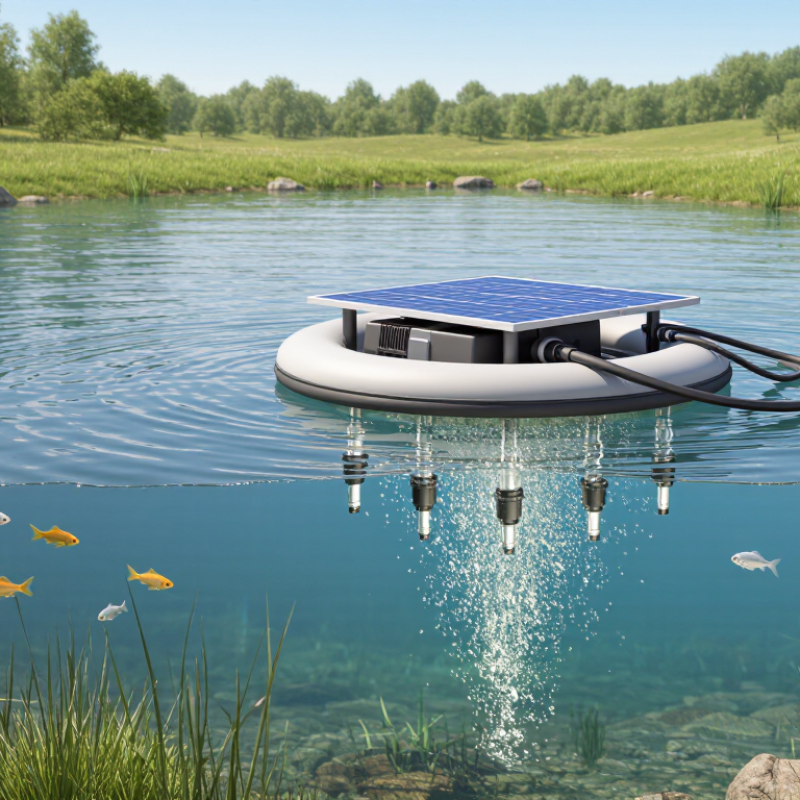
How to Choose the Best Floating Solar Pond Oxygenator?

Assess Pond Oxygen Demand Against the 5–8 mg/L Dissolved Oxygen Target

How to Choose the Best Floating Solar Pond Oxygenator?

Assess Pond Oxygen Demand Against the 5–8 mg/L Dissolved Oxygen Target

A floating oxygenator should match measured oxygen demand, not pond size alone. Dissolved oxygen changes hourly. Pre-dawn readings often reveal the lowest concentration, especially after warm, cloudy weather. The U.S. EPA reports that protective oxygen criteria vary by species and life stage, with several freshwater benchmarks near 5 mg/L or higher. For managed ponds, a practical operating target is usually 5–8 mg/L.

Estimate pond volume, fish biomass, feeding rates, and organic deposits before selecting equipment. Heavy feeding increases biochemical oxygen demand. Decomposing leaves can consume oxygen overnight. A 6 mg/L reading at noon may look safe, but it can fall sharply before sunrise. The Southern Regional Aquaculture Center recommends maintaining dissolved oxygen above 5 mg/L for many cultured aquatic systems (SRAC Publication No. 282). That guidance is useful, but not universal. Species, temperature, salinity, and altitude still matter.

Tips: Install a calibrated meter at the deepest active zone. Record readings before sunrise and late afternoon for at least seven days. Compare hot and cool weather. Choose an oxygenator with verified oxygen-transfer data, then allow capacity for fouling, wind, and aging panels. Real ponds are inconsistent. One perfect measurement should not control the whole decision.

Sources: U.S. EPA, Aquatic Life Ambient Water Quality Criteria; Southern Regional Aquaculture Center, Publication No. 282.
Compare Aeration Methods by SOTR and 1.0–2.5 kg O₂/kWh Efficiency

How to Choose the Best Floating Solar Pond Oxygenator?

Compare Aeration Methods by SOTR and 1.0–2.5 kg O₂/kWh Efficiency

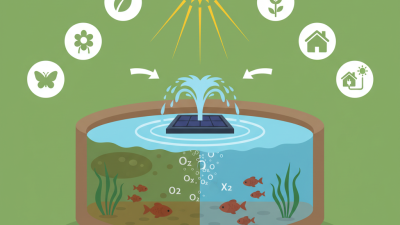
Choosing a floating solar pond oxygenator requires more than comparing motor size. Start with SOTR, or Standard Oxygen Transfer Rate, measured under controlled conditions. Then examine field efficiency, expressed as kilograms of oxygen transferred per kilowatt-hour. A practical range is 1.0–2.5 kg O₂/kWh, but actual results depend on water depth, temperature, salinity, and organic loading.

Surface agitators can create visible circulation and rapidly repair oxygen shortages near the top. Aspirating units may transfer oxygen more efficiently in deeper zones. Diffused air systems often distribute oxygen quietly, although clogged diffusers can reduce performance. Look closely at the test conditions. A laboratory SOTR value may not match a wind-exposed pond with heavy algae.

Measure dissolved oxygen at several depths, especially before sunrise. That reading often reveals hidden oxygen stress. Use a calibrated meter, and record power consumption during operation. Small differences matter over a full season. For example, a unit transferring 2.0 kg O₂/kWh may outperform a larger unit rated at 2.5 if it operates more consistently.

The spreadsheet is not the pond.

Floating equipment also needs stable anchoring, corrosion resistance, and safe cable routing. Solar availability changes daily, so battery storage or timed operation may be necessary. I would avoid selecting equipment from SOTR alone. The best choice balances oxygen transfer, energy use, maintenance access, and real pond conditions. Even careful comparisons contain uncertainty. Recheck performance after installation.

Size Solar Capacity Using 15–23% PV Efficiency and Seasonal Irradiance

Choosing a floating solar pond oxygenator starts with its daily energy demand, not its panel size.

Record motor wattage, operating hours, and starting power. A 120-watt oxygenator running 10 hours needs about 1,200 watt-hours daily. Add 15–25% for inverter losses, wiring, dust, and battery charging. That adjustment is easy to underestimate. Field conditions are rarely clean.

PV efficiency between 15% and 23% affects the required panel area.

A higher-efficiency module produces more power from the same floating surface. However, efficiency ratings come from controlled laboratory conditions. Heat, reflected water light, shading, and cloudy weather reduce real output. Use local seasonal irradiance, not an annual average alone. For example, winter may provide only three peak sun hours daily, while summer may provide six. Size the system for the weakest important season.

Divide the oxygenator’s adjusted daily demand by usable peak sun hours. Then account for battery depth of discharge and several cloudy days. A practical design may need 500 watts of PV for a small pond, but the number must follow measured load data.

Watch dissolved oxygen at dawn, when levels often drop lowest. If oxygen readings remain weak, more panels may not solve the problem. Diffuser placement, water depth, algae, and clogged air lines deserve inspection. The spreadsheet may look exact. The pond will still challenge it.

Evaluate Float Stability, IP68 Protection, and Wind-Load Resistance

How to Choose the Best Floating Solar Pond Oxygenator?

A floating oxygenator must stay level when waves, rain, and algae collect around its frame. During pond inspections, I check freeboard after loading, not only when the unit is new. A stable float should resist tipping when one corner is pressed by hand. That simple test reveals weak balance. Ask for buoyancy calculations, material specifications, and long-term UV testing. Foam can lose performance. Sealed chambers may be safer, but they still need inspection points.

IP68 protection matters around spray, submerged cables, and sudden pond-level changes. However, IP68 is not a universal promise of unlimited immersion. Confirm the tested depth, duration, and electrical conditions behind the rating. Examine cable glands, connector seals, and junction covers for compression marks. One missed seal can invite moisture. I prefer documented tests from accredited laboratories, supported by maintenance records and clear warranty terms. Field evidence is stronger than a sales claim.

Wind-load resistance needs a site-specific review. Measure the pond’s exposure, fetch, seasonal gusts, and anchoring depth. A unit that survives calm water may twist during a storm. Check the anchor layout, mooring lines, fasteners, and emergency retrieval method. I have seen operators underestimate wind because the pond looked sheltered. That judgment was wrong. Request calculations for uplift, sliding, and rotation, then compare them with local engineering requirements. Leave room for imperfect data, because water levels and weather rarely behave exactly as predicted.

How to Choose the Best Floating Solar Pond Oxygenator?

Evaluate float stability, IP68 protection, and wind-load resistance before installation. The chart shows the calculated dynamic wind pressure acting on exposed equipment at different wind speeds.

Float Stability

Check buoyancy reserve, center of gravity, tilt under asymmetric loading, and secure anchoring. Lower heel angles indicate better stability.

IP68 Protection

IP6X means dust-tight protection. IPX8 indicates continuous immersion under conditions specified by the enclosure manufacturer and test agreement; there is no single universal immersion depth.

Wind-Load Resistance

The plotted pressure uses q = 0.5ρV² with air density ρ = 1.225 kg/m³. Actual force also depends on projected area, drag coefficient, anchoring, and site exposure.

Verify Oxygenator Output Through DO Testing, SOTR, and Energy Monitoring

How to Choose the Best Floating Solar Pond Oxygenator?

Verify performance with dissolved oxygen testing, standard oxygen transfer rate, and energy monitoring. A visible splash is not proof of oxygen delivery. Measure DO at several depths and locations, including near the oxygenator and at the pond’s far edge. The U.S. EPA commonly references 5 mg/L as a protective dissolved oxygen level for many fish, but species, temperature, and season can change the target. Record readings before operation, during peak sunlight, and after sunset.

Use SOTR to compare oxygenators under controlled conditions. The ASCE/EWRI 18-18 guideline provides a recognized framework for in-process oxygen transfer testing. SOTR reports kilograms of oxygen transferred per hour, while SAE reports oxygen delivered per kilowatt-hour. For solar systems, measure panel output, battery charging, inverter losses, and motor consumption separately. A strong daytime reading may hide weak night performance.

Keep a field log. It exposes patterns. DO probes need calibration, cleaning, and adequate response time. Wind can also distort surface readings. I have found that one sampling point often creates false confidence. Pond conditions rarely match laboratory assumptions. That limitation deserves attention. Compare weekly averages, weather conditions, water temperature, and runtime before selecting equipment. Data should guide the purchase, not a louder motor or a larger spray pattern.

How to Choose the Best Floating Solar Pond Oxygenator? - Verify Oxygenator Output Through DO Testing, SOTR, and Energy Monitoring

Floating Oxygenator Configuration Typical Rated Power
(kW)
Typical SOTR Range
(kg O₂/h)
Typical SAE Range
(kg O₂/kWh)
Expected DO Increase
(mg/L·h)
Best-Suited Pond Condition Verification Priority
Floating Paddlewheel Aerator 0.60–1.20 0.80–1.80 1.20–2.00 0.8–2.0 Shallow ponds requiring strong surface circulation and mixing. Confirm SOTR at the actual water depth and measure power during steady operation.
Floating Propeller Aspirator 0.80–1.80 1.00–2.50 1.10–1.80 1.0–2.8 Ponds needing rapid oxygen transfer and high local circulation. Check DO at several distances from the unit to verify that oxygen is distributed beyond the surface zone.
Solar DC Airlift with Diffuser 0.15–0.40 0.15–0.45 0.80–1.50 0.2–0.7 Small or remote ponds with limited electrical infrastructure. Log solar input, battery state of charge, operating hours, and DO recovery after low-light periods.
Floating Venturi Aspirator 0.40–1.00 0.50–1.40 1.00–1.70 0.5–1.6 Medium ponds where circulation and oxygen transfer must be balanced. Verify inlet blockage, flow rate, DO increase, and energy consumption under normal pond loading.

Recommended Verification Data Table

Measurement Item Recommended Method Target or Acceptance Guidance Why It Matters
Dissolved Oxygen Before Test Use a calibrated optical or membrane DO meter at multiple pond locations and depths. Record the baseline; low-oxygen conditions are commonly below 5 mg/L. Establishes the starting condition for calculating actual oxygen improvement.
Dissolved Oxygen After Test Repeat measurements at the same locations after a fixed operating period. Compare the DO increase with the pond’s biological oxygen demand. Confirms whether oxygen reaches the areas that require treatment.
Standard Oxygen Transfer Rate (SOTR) Determine oxygen transfer under standardized clean-water conditions, or use a verified field test adjusted for temperature and elevation. Higher SOTR indicates greater oxygen transfer capacity, but it must be compared at the same test conditions. Provides a comparable oxygen-output figure between different designs.
Specific Aeration Efficiency (SAE) Calculate: SAE = SOTR ÷ electrical power input. Use kg O₂/kWh to compare oxygen output per unit of energy. Identifies the most energy-efficient oxygenator rather than simply the highest-powered unit.
Electrical Energy Consumption Use a DC power meter or AC energy logger to record voltage, current, power, and operating hours. Record daily kWh and compare it with measured DO improvement. Reveals real operating cost and the effect of cloud cover, battery losses, and control cycles.
Solar Energy Availability Log solar irradiance or photovoltaic output together with battery charging and discharge data. Verify that required runtime is maintained during low-irradiance periods. Prevents oversizing or selecting a unit that cannot operate through the night or poor weather.
Water Temperature and Depth Record temperature, water depth, weather, and pond level during every DO test. Repeat tests under comparable conditions whenever possible. Oxygen solubility and transfer performance change with temperature, depth, and atmospheric conditions.
Testing note: SOTR values should only be compared when water temperature, dissolved oxygen concentration, atmospheric pressure, water depth, and test duration are consistent. Field DO results represent actual pond performance, while SOTR and SAE are standardized comparison metrics.