Leave Your Message
Choosing the right Float Type Submersible Centrifugal Aerator begins with understanding real water conditions. Pond depth, oxygen demand, sludge levels, power access, and wave movement can change equipment performance. A unit that works well in a clear farm pond may struggle in a heavily loaded treatment basin. That difference matters.
Dr. Claude E. Boyd, a respected aquaculture water-quality specialist, states, “Aeration is the most important water quality management practice in aquaculture.” His observation remains practical today. Effective aeration supports dissolved oxygen, improves circulation, and helps reduce stagnant zones. However, performance depends on more than motor power. Impeller design, float stability, intake protection, spray pattern, and maintenance access all deserve careful review.
This guide examines the Top 10 Float Type Submersible Centrifugal Aerator Types for different operating environments. Some models prioritize oxygen transfer. Others emphasize mixing, energy efficiency, corrosion resistance, or easy installation. Small details matter. A loose float can shift the discharge direction. A blocked intake can reduce output quickly. Poor cable placement can create unnecessary safety concerns.
No ranking is perfect. Site testing still matters. Manufacturer data may not reflect every pond, basin, or seasonal condition. Operators should compare measured oxygen performance, warranty terms, service support, and total operating cost. The strongest choice is not always the largest machine. It is the aerator that delivers stable circulation, reliable oxygenation, and manageable maintenance over time. Expect useful guidance here, but leave room for field evidence.
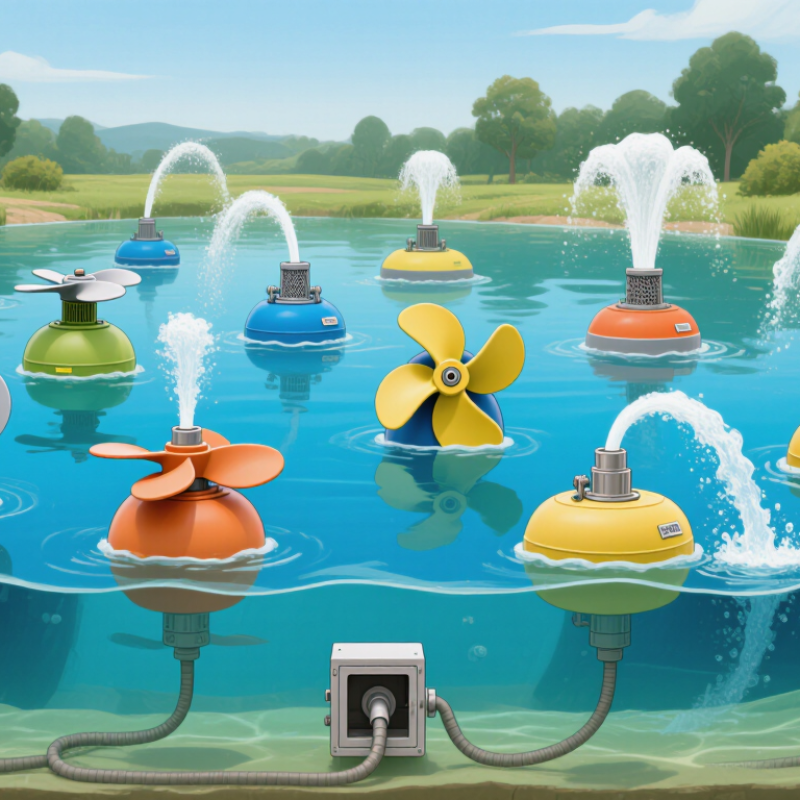
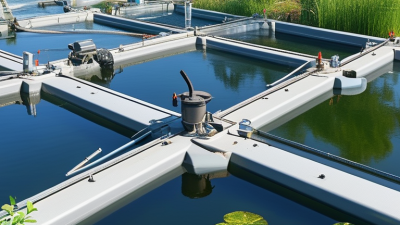
A float type submersible centrifugal aerator is a floating treatment device with a submerged motor and centrifugal impeller. Its buoyant frame keeps the unit stable on ponds, lagoons, and industrial wastewater basins. Unlike surface splash aerators, it pulls water below the surface before discharging it horizontally or upward.
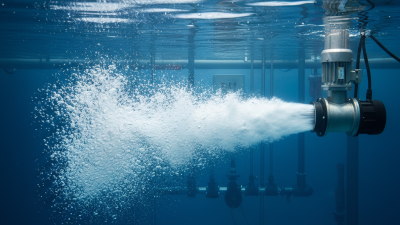
The working principle is straightforward. The motor rotates the impeller inside a protective housing. Water enters through the lower intake and moves outward under centrifugal force. As the water jet reaches the surface, it creates turbulence, breaks into droplets, and captures air from the atmosphere. This increases oxygen transfer and improves circulation around the floating unit. The moving water also reduces stagnant zones near the pond floor.
Several configurations are available, including open-impeller, enclosed-impeller, high-speed, low-speed, and directional discharge types. Selection depends on pond depth, organic loading, required oxygen demand, and solids content. During field inspections, operators should check float balance, cable protection, intake blockage, and unusual vibration. Small changes matter. A clogged screen can reduce flow quickly. Excessive turbulence may also disturb settled solids, which is not always desirable. In practice, performance is rarely perfect, because wind, temperature, water chemistry, and changing wastewater loads affect aeration efficiency. Oxygen testing at different locations provides more reliable guidance than judging surface movement alone.
A float type submersible centrifugal aerator is a floating wastewater or water-treatment unit in which a submerged centrifugal impeller draws surrounding liquid into the pump chamber and discharges it at high velocity. The discharge creates turbulence, liquid circulation, and air entrainment at or near the water surface, increasing oxygen transfer without requiring a fixed tank installation.
| No. | Aerator Type | Core Configuration | Working Principle | Typical Oxygenation or Mixing Function | Suitable Applications | Main Advantages | Important Design Considerations |
|---|---|---|---|---|---|---|---|
| 1 | Vertical-Draft Submersible Centrifugal Aerator | Vertically mounted motor and impeller suspended below a float platform. | The impeller draws water upward or downward through the submerged chamber and discharges it radially, producing a turbulent surface plume that entrains atmospheric air. | General-purpose oxygen transfer with strong vertical circulation and surface renewal. | Equalization basins, oxidation ponds, lagoons, and municipal wastewater tanks. | Simple layout, compact footprint, and effective circulation around the floating unit. | Impeller submergence, float stability, water depth, and protection against vortex formation must be controlled. |
| 2 | Radial-Flow Impeller Float Aerator | A floating frame supports a submersible centrifugal impeller that discharges primarily in a horizontal or radial direction. | Liquid is accelerated radially by the impeller. The high-velocity discharge spreads across the surface, breaks the water into waves and droplets, and promotes air-water contact. | High surface agitation and broad horizontal mixing. | Large lagoons, industrial wastewater ponds, and open treatment basins. | Good horizontal distribution of oxygenated water and reduced dead zones. | Requires sufficient open water area and should be positioned to avoid directing flow into embankments. |
| 3 | Axial-Flow Submersible Float Aerator | Uses a propeller-like or axial-flow impeller mounted beneath a floating platform. | The impeller moves a large volume of water mainly parallel to the shaft. Surface disruption and circulation expose more liquid to the atmosphere. | High-volume circulation and moderate oxygen transfer per unit of power. | Shallow ponds, aquaculture systems, storage reservoirs, and mixing zones. | Moves large water volumes efficiently and helps maintain uniform temperature and dissolved oxygen distribution. | It may provide less intense aeration than a high-speed radial impeller and may need adequate basin width for circulation loops. |
| 4 | Venturi-Assisted Float Centrifugal Aerator | A centrifugal discharge is combined with a venturi passage or air-induction inlet. | High liquid velocity through the venturi creates a local pressure drop that draws atmospheric air into the water stream. The air-water mixture is dispersed below or near the surface. | Enhanced air entrainment and localized oxygen transfer. | Wastewater polishing, aquaculture tanks, and applications requiring increased oxygenation in a compact area. | Can improve air intake without a separate blower and may produce finer bubbles than surface-only agitation. | Air passages must remain free of clogging; performance depends on water cleanliness, venturi geometry, and discharge velocity. |
| 5 | Eductor-Jet Float Aerator | A submerged centrifugal pump feeds one or more eductor nozzles installed below the floating unit. | The pressurized liquid jet entrains surrounding water and air through an eductor effect, creating a mixed liquid-air plume and directional circulation. | Combined oxygen transfer, jet mixing, and solids suspension. | Equalization tanks, sludge-holding basins, industrial wastewater, and odor-control applications. | Strong directional mixing and useful solids-suspension capability. | Nozzle wear, clogging, hydraulic losses, and the number and orientation of jets affect performance. |
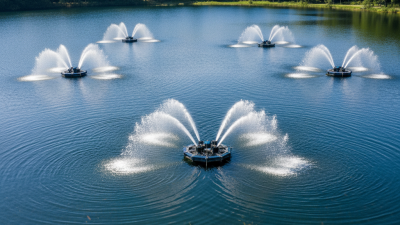
| 6 | Spray or Fountain-Type Float Aerator | The centrifugal impeller discharges water through a riser, spray head, or fountain outlet above the water surface. | Water is lifted and divided into droplets or thin sheets. The increased exposed surface area promotes atmospheric oxygen absorption before the water returns to the basin. | Visible surface aeration, oxygen transfer, and decorative or odor-control circulation. | Open ponds, landscape water bodies, aquaculture ponds, and polishing lagoons. | Easy visual confirmation of operation and effective surface renewal. | Wind, evaporation, spray drift, ambient temperature, and floating debris can reduce performance or increase maintenance. |
| 7 | Self-Aspirating Submersible Float Aerator | A submerged centrifugal impeller uses an integrated air inlet rather than a separate air blower. | Negative pressure generated around the impeller or discharge passage draws air through an air pipe. The rotating impeller disperses the air into the circulating water. | Simultaneous liquid circulation and entrained-air oxygen transfer. | Biological treatment basins, aquaculture systems, and remote installations where blower equipment is undesirable. | Fewer external components, straightforward installation, and independent operation on a floating platform. | Air intake noise, fouling, changing water level, and the relationship between impeller speed and air draw require attention. |
| 8 | Low-Speed High-Volume Float Aerator | Uses a larger-diameter, lower-speed impeller or rotor mounted beneath a float assembly. | The impeller moves a large quantity of water with relatively low shear. Oxygen transfer occurs through broad surface movement and repeated circulation through the aerated zone. | Energy-conscious mixing and maintenance of dissolved oxygen uniformity. | Large facultative lagoons, reservoirs, aquaculture ponds, and low-to-moderate oxygen-demand systems. | Lower shear, reduced risk of excessive foaming, and effective basin-wide circulation when correctly positioned. | Usually needs more space and may not meet high oxygen demand without multiple units or supplemental aeration. |
| 9 | High-Speed Fine-Dispersing Float Aerator | A compact centrifugal impeller operates at relatively high rotational speed to create intense turbulence and air dispersion. | The impeller breaks the water surface and entrained air into smaller bubbles or droplets, increasing interfacial area and accelerating oxygen transfer. | High localized oxygen transfer and rapid response to oxygen depletion. | High-strength industrial wastewater, aquaculture emergency aeration, and compact treatment basins. | High aeration intensity from a relatively compact unit. | Higher shear, noise, power demand, and potential foaming may occur; biological floc sensitivity should be evaluated. |
| 10 | Multi-Impeller or Multi-Discharge Float Aerator | A single floating platform carries multiple centrifugal impellers or distributes flow through several discharge outlets. | Several circulation and aeration zones operate together, improving coverage and reducing local oxygen concentration differences across a large basin. | Distributed oxygen transfer, broad mixing, and improved control of basin dead zones. | Large treatment ponds, industrial equalization basins, reservoirs, and systems with irregular hydraulic geometry. | Flexible flow distribution and better coverage than a single-point aerator. | Higher structural complexity, flotation-load balance, cable management, maintenance access, and synchronized operation must be considered. |