Leave Your Message

What Is the Best Small Floating Water Fountain in 2026?

A Small Floating Water Fountain can bring movement, sound, and extra surface circulation to a compact pond. In 2026, the best choice is not automatically the largest or most powerful model. It should suit the pond’s dimensions, water depth, and available power. A fountain that looks impressive in a product photo may create too much spray in a small garden basin.

Aquascape founder and pond designer Greg Wittstock offers a useful perspective on matching features to a water garden. A practical paraphrase of that approach is: “Match the fountain to the pond, not the other way around.” This is an editorial paraphrase, not a verified verbatim quotation. It captures an important buying principle: consider fit before appearance.

Look closely at float stability, pump flow, nozzle options, cord length, and cleaning access. These details matter when leaves gather around the intake or the unit drifts toward the pond edge. Check the manufacturer’s stated minimum water depth and operating conditions before buying. A solar model may be convenient, but shade can reduce its run time. A corded model may provide steadier operation, yet require more careful placement.

There is no perfect pick. Even a well-reviewed fountain can disappoint if its spray pattern does not suit the space. This guide compares small floating fountains by practical performance, ease of care, and value, while noting where each option may fall short. The aim is a calmer, clearer choice—not a promise of effortless pond care.
What Is the Best Small Floating Water Fountain in 2026?

What Defines a Small Floating Water Fountain

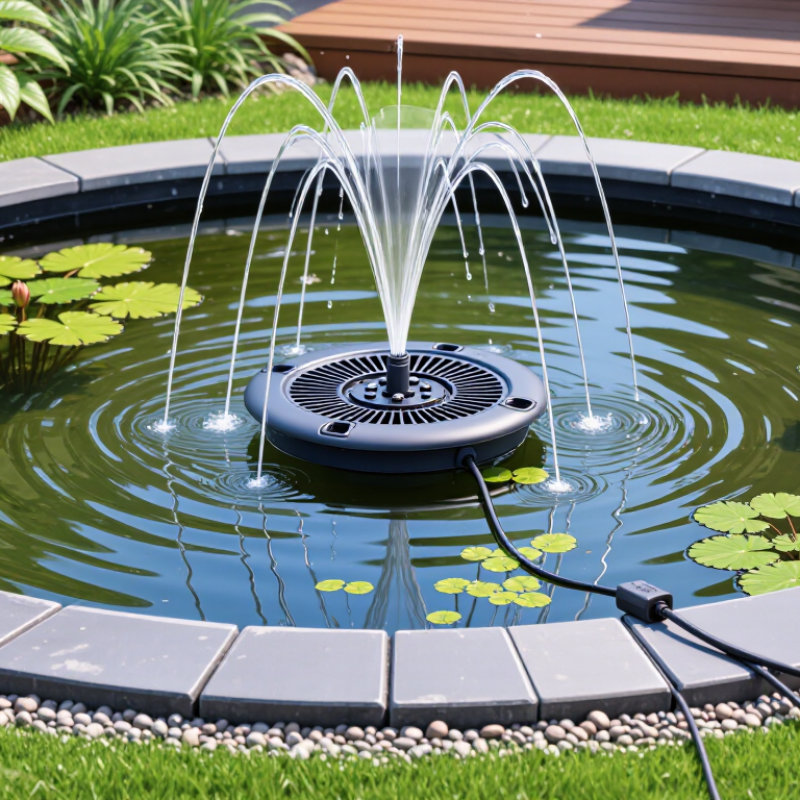
A small floating water fountain is defined less by a fixed measurement than by its scale and purpose. It rests on a buoyant base, draws water through a compact pump, and sends it back as a modest spray. There is no universal size cutoff. In a garden pond, “small” usually means the unit leaves room for plants and open water instead of dominating the surface.

Consider the fountain’s footprint, flow rate, and spray height together. A narrow pond may suit a low, centered plume; a broader pond can accommodate a wider pattern. Wind can push even a short spray onto nearby paving, so compare its stated height with the pond’s width. Check the minimum operating depth, too. A fountain that floats well in deep water may tilt or run dry over a shallow shelf. That matters.

Small can also describe upkeep and power demand, not just appearance. A compact intake is easy to rinse, but leaves and algae may clog it quickly. Solar models can slow in cloud or shade; corded models need a safe, tidy cable route. Neither is automatically better. The slightly awkward truth is that the smallest fountain may look neat but move too little water for the effect you want. Choose for the pond, then observe the spray on a breezy day.
How Floating Fountain Systems Work

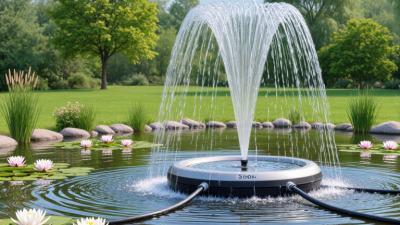
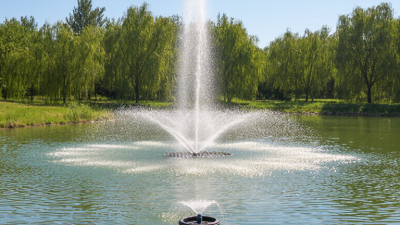
A small floating fountain uses a submerged motor to draw water through an intake and push it upward through a nozzle. The jet breaks into droplets, increasing contact between water and air. A float keeps the pump near the surface, while an anchor or power cable limits drift. Simple mechanics. Nozzle shape changes the spray, but not every pattern moves water effectively at depth.

Penn State Extension’s pond-aeration guidance identifies about 5 mg/L of dissolved oxygen as a useful target for many fish ponds. A fountain can add oxygen, but its strongest mixing often occurs near the surface. A dramatic plume does not prove deeper water is well oxygenated. Warm weather, algae, and still nights can also lower oxygen levels. Check dissolved oxygen with a meter, especially before dawn, when readings may be lowest. This distinction is easy to overlook.

Tips: Match the pump to pond size and depth, and keep the intake clear of leaves. Watch the spray on a calm day; weak flow or an uneven pattern may signal blockage. Avoid assuming a small fountain alone can solve persistent low oxygen. It may not. If fish gather at the surface, test the water and seek local pond-management advice.

How Floating Fountain Nozzle Speed Affects Jet Height

Ideal maximum jet height calculated from nozzle exit speed, assuming no air resistance or energy losses.

A floating fountain’s pump sends water through a nozzle, converting pressure into upward flow. The chart uses the ideal relation h = v² ÷ 2g, where h is height, v is nozzle exit speed, and g is gravitational acceleration (9.81 m/s²). Real jet heights are lower because of flow losses, nozzle design, and air resistance; actual performance also depends on the pump and installation.

Which Features Affect Fountain Performance

A small floating fountain can look impressive in a product photo and still perform poorly in a real pond. Pump flow rate matters, but so does spray height. A tall jet may lose water to wind, leaving the pond edge wet and the display uneven. For a compact basin, a lower, steady pattern often works better. Small details matter.

Power supply affects consistency. Solar models may slow under cloud or shade, while battery-supported units can keep running after sunlight fades. Check how the panel is positioned and whether nearby trees block it during the day. Pump intake design matters, too. Leaves and fine debris can restrict flow, even when the water looks mostly clean. I sometimes give spray height too much weight; runtime and easy cleaning are less exciting, but often more useful.

Float stability and water depth also shape performance. A fountain that tilts can send water in one direction, and a shallow pond may expose the pump intake as water levels change. Look for clear depth requirements, adjustable spray settings, and accessible parts for routine rinsing. Materials should tolerate repeated wetting and sunlight without becoming brittle quickly. No single feature guarantees a good result. The pond’s size, shade, wind, and upkeep all play a part.

How to Compare Models for Different Water Features

A small floating fountain should match the shape and job of your water feature. In a compact garden pond, a modest spray can add movement without soaking nearby stones or plants. In a broad, shallow basin, look for a unit that stays stable as water levels change. A tall plume may look impressive, but wind can scatter it beyond the water. Looks can mislead.

Compare pump flow, spray patterns, and operating conditions rather than relying on advertised height alone. A gentle, adjustable spray is often easier to live with near seating or delicate plants. Check how much sunlight a solar model needs, and whether shade from trees will interrupt operation. For a pond with leaves or floating debris, inspect the intake and cleaning instructions. A blocked screen can quickly weaken the display.

Also measure the water depth and the clear space around the fountain before choosing. Confirm that the float can move freely and that the pump remains submerged at the lowest expected water level. For wildlife ponds, quieter flow and limited splash may matter more than dramatic height. I’d still double-check real-world performance; product figures rarely describe every pond, and wind changes the result.

What Is the Best Small Floating Water Fountain in 2026? - How to Compare Models for Different Water Features

Fountain Type Power and Operation Best-Suited Water Feature Spray and Water Movement Key Advantages Limitations to Check What to Compare Before Buying
Direct-solar floating fountain A solar panel powers the pump; operation generally depends on available sunlight. Many basic units have no energy storage. Small, open ponds or birdbaths that receive direct sun and do not need scheduled operation. Creates a visible spray while the pump receives sufficient power; spray height can change with sunlight and nozzle choice. No mains power connection is needed at the pond; typically simple to place and move. Cloud, shade, and debris can reduce performance. Spray may stop when sunlight is weak; wind can carry water outside a small basin. Panel size and placement, minimum water depth, included nozzles, filter access, and whether the unit requires full sun.
Solar floating fountain with battery storage Solar energy can charge an onboard battery; runtime after charging depends on battery capacity, pump setting, and conditions. Small ponds where operation during brief cloud cover or after direct sunlight is desirable. Can provide more consistent operation than a direct-solar unit when stored energy is available; actual spray still depends on the pump and settings. Energy storage may reduce interruptions caused by short changes in sunlight. Battery capacity and runtime vary. A small built-in battery is not necessarily suitable for all-night operation or extended cloudy periods. Battery capacity, charging time, stated runtime and test conditions, battery replacement options, and whether the fountain can run while charging.
Floating fountain with a separate low-voltage pump A pump is powered by a compatible low-voltage transformer; the pump and float may be separate components. Small garden ponds near a suitable power source where more predictable operation is preferred. Nozzle and pump combinations determine the spray pattern and flow; flow generally decreases as water is lifted higher. Can offer steadier operation than a sunlight-dependent pump when correctly powered and installed. Requires a compatible pump, transformer, and suitable cable routing. Electrical components must be installed according to their safety instructions. Pump flow and maximum head, nozzle compatibility, cable length, transformer rating, and the manufacturer's water-depth guidance.
Compact floating aerating fountain Usually uses a powered pump to move and spray water; the exact power source depends on the model. Small ponds where surface movement and water circulation are priorities as well as a fountain display. Moves water at the surface and can increase contact between water and air; this does not guarantee adequate oxygen throughout a pond. Combines a visible water feature with surface agitation. A fountain is not a substitute for a pond-specific aeration system when fish, pond depth, or seasonal conditions require targeted oxygenation. Intended pond size, pump flow, operating depth, power requirements, and whether the manufacturer describes it as a fountain, an aerator, or both.
Low-profile floating fountain for a birdbath Often solar-powered; some designs use a small battery. Check the specific unit's power arrangement. Wide, shallow basins with enough water to keep the pump intake submerged. Typically intended for a modest spray or bubbling effect rather than a tall display. Small and easy to reposition; a gentle water feature may suit a compact basin. Shallow water can expose the intake or let the unit tilt. A spray that is too strong may splash water out of the basin. Float diameter, minimum operating depth, stability, spray adjustment, and how easily the intake can be cleaned.

Comparison note: There is no single best small floating fountain for every water feature. Match the power source, operating depth, spray pattern, and maintenance needs to the pond or basin. Flow, runtime, and spray height are model- and condition-dependent; check current product specifications and installation instructions before purchase.

How to Choose and Maintain a Fountain in 2026

For a small floating fountain, match the pump to the pond’s depth and surface area. Check the rated flow and spray height, then choose an adjustable nozzle; a tall plume can look impressive but splash water onto nearby paving. Fit matters more. Leave room around the float so it can move without catching on plants or edges, and confirm the pump’s power setup suits your site. Solar models depend on direct sunlight, so a shaded pond may mean a weaker or intermittent display.

Maintenance starts with water level and debris. Keep the pump intake clear of leaves, and rinse the filter as its instructions recommend. A little mess happens. In hot weather, check the water more often; evaporation and splash can lower the level enough to expose a pump.

The EPA’s WaterSense “Statistics and Facts” reports that landscape irrigation uses nearly 9 billion gallons of water daily in the United States.

That figure is not fountain consumption, but it is a useful reminder to watch refill losses. I would not chase the tallest spray: wind can scatter water beyond the pond, and the trade-off is easy to overlook. Clean the float and pump regularly, and unplug the unit before handling it. A simple weekly check is easier to keep than a perfect schedule.