Why Choose an Industrial Paddle Mixer for Your Business Needs?
In the competitive landscape of industrial mixing, the choice of equipment can define operational efficiency. According to Dr. Alice Thompson, an expert in industrial mixing technologies, “An Industrial Paddle Mixer can significantly enhance productivity and consistency.” This highlights the pivotal role of selecting the right mixing equipment for your business needs.
Industrial Paddle Mixers offer a unique blend of design and functionality. They efficiently mix materials with varying viscosities, ensuring homogeneity in production processes. However, not every business understands the intricate dynamics of mixer selection, leading to potential inefficiencies. The learning curve can be steep. Thus, it's crucial to evaluate your specific needs against the capabilities of this equipment.
Many businesses underestimate the importance of reliable mixers. Relying solely on cost can lead to choice fatigue and regrettable decisions. An informed selection process can save time and resources. Furthermore, ongoing maintenance of an Industrial Paddle Mixer can present challenges. Balancing between efficiency and long-term investment requires careful consideration.
Benefits of Using an Industrial Paddle Mixer in Various Industries
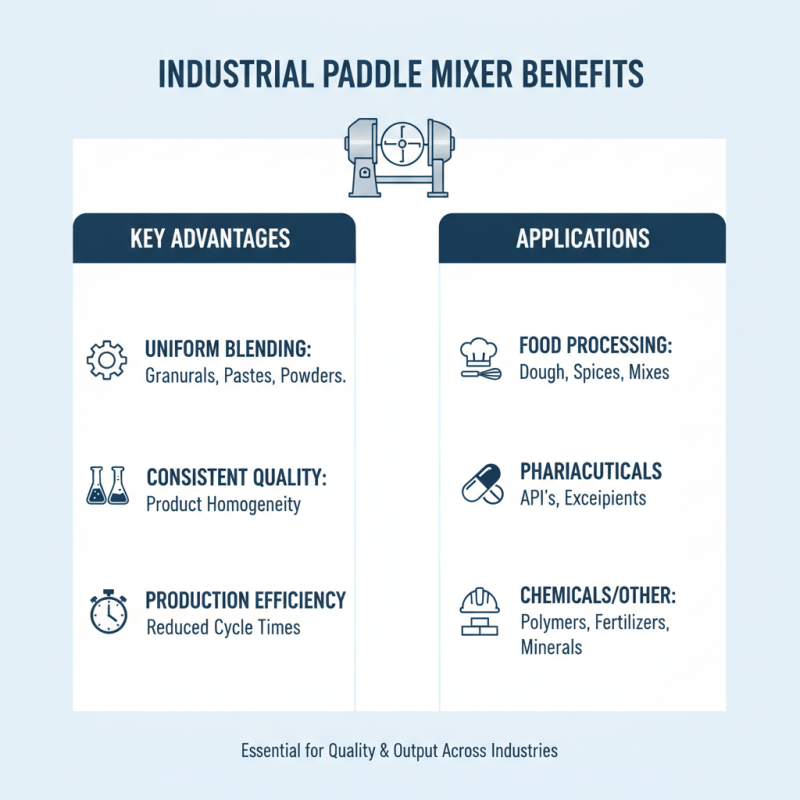
Industrial paddle mixers are essential tools in many sectors. They effectively blend granular materials, pastes, and powders. Their design allows for uniform mixing, which is crucial in industries like food processing and pharmaceuticals. A well-mixed product ensures consistent quality and efficiency in production processes.
The versatility of paddle mixers is noteworthy. They can handle various materials, from heavy slurries to lighter powders. This adaptability makes them ideal for construction, chemicals, and agriculture. Businesses benefit from increased productivity and reduced waste. However, selecting the right mixer can be challenging. Factors such as size and mixing speed need careful consideration. Each industry has unique requirements that demand thoughtfulness in equipment choice.
Reliability is another critical advantage of using paddle mixers. They tend to require less maintenance compared to other mixers. This reduction in downtime is valuable for businesses striving for operational excellence. Yet, operators must remain vigilant for wear and tear, which can affect performance. Regular checks can prevent more significant issues down the line and ensure optimal output.
Key Features to Look for in an Industrial Paddle Mixer
When selecting an industrial paddle mixer, several key features can significantly enhance its performance and efficiency. One important aspect is the design of the paddles themselves. Effective paddle shapes create a better mixing action, leading to uniformity in blending different materials. According to a report by the American Society of Mechanical Engineers, the right paddle configuration can improve mixing efficiency by up to 30%. This efficiency is essential in industries like food processing, where consistency is crucial for quality control.
Another critical factor to consider is the mixer’s construction material. Sturdy materials like stainless steel not only ensure durability but also comply with hygiene standards. A study conducted by the Food and Drug Administration highlighted that improper materials could lead to contamination, making the reliability of construction paramount. Furthermore, paying attention to the mixer’s horsepower is necessary. A powerful motor can handle larger volumes and tougher materials, saving time and energy in production processes.
Finally, consider the ease of maintenance. Some mixers are designed for quick disassembly, which can save valuable time during cleaning and servicing. A lack of attention to maintenance needs can result in prolonged downtimes. Being aware of these features allows businesses to make an informed choice, optimizing their operations and enhancing productivity in a competitive market.
How Industrial Paddle Mixers Improve Efficiency and Consistency
Industrial paddle mixers have become essential tools for various sectors. Their design allows for efficient mixing of powders, granules, and pastes. Studies show that these mixers can achieve a homogeneity level of up to 97%. This level of consistency is crucial for industries like food and pharmaceuticals, where accuracy can impact quality.
Efficiency is another key benefit of paddle mixers. According to a report from the Mixers and Blenders Association, industrial paddle mixers operate up to 30% faster than traditional blending methods. This speed can drastically reduce production times. However, not all mixers perform equally, and businesses must carefully evaluate their specific requirements to maximize efficiency.
Despite these advantages, not all operations utilize paddle mixers effectively. Some businesses experience inconsistent results due to incorrect setup or maintenance issues. Regular training for operators is necessary to ensure optimal performance. Additionally, investing in reliable equipment is crucial, as poorly designed mixers could lead to uneven mixing. Adopting industrial paddle mixers should be a well-considered decision, balancing efficiency with the potential for operational challenges.
Efficiency and Consistency of Industrial Paddle Mixers
Comparison of Industrial Paddle Mixers with Other Mixing Equipment
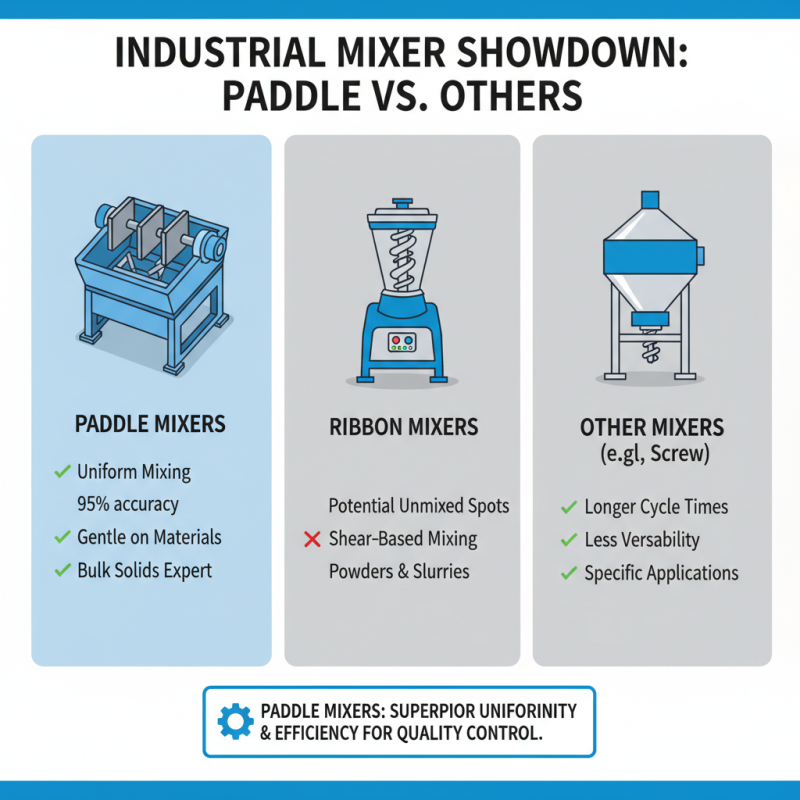
When choosing mixing equipment, the industrial paddle mixer stands out for its efficiency and effectiveness. It offers a unique design that allows for the thorough mixing of materials while minimizing degradation. Unlike ribbon mixers, which can leave unmixed spots, paddle mixers ensure uniformity, especially for bulk solids. According to industry reports, paddle mixers often achieve up to 95% mixing accuracy, a significant advantage for quality control.
In terms of energy consumption, paddle mixers are more economical. They require less power than traditional drum mixers, reducing operational costs. A recent study indicates that businesses can save up to 30% on energy usage by switching to paddle mixers. However, the initial investment can be higher. It’s crucial to consider long-term savings versus upfront costs.
It’s important to address the versatility of paddle mixers. They can handle a variety of materials, including powders, granules, and pastes. Yet, they may struggle with certain viscous materials, requiring adjustments or alternative equipment in those cases. While paddle mixers excel for many applications, they are not a one-size-fits-all solution. Business needs can differ, and careful evaluation is essential.
Common Applications of Industrial Paddle Mixers in the Market
Industrial paddle mixers play a crucial role in various industries. They are designed for efficient mixing of bulk materials, including powders, granules, and pastes. These mixers use paddle-shaped blades that move materials in a gentle yet effective manner. This design prevents damage to delicate materials while ensuring uniform mixing.
In the food industry, paddle mixers are often employed for blending ingredients in dough production. They achieve consistent results, which is vital for product quality. Similarly, in the construction sector, these mixers are used for combining dry materials like cement and aggregates. This creates a homogenous mix essential for concrete production. They are also suitable for the chemical industry, where precise mixing of various chemicals is required.
While paddle mixers are versatile, they may not be the best choice for all applications. For instance, materials with different densities may require specialized mixing techniques. Additionally, some users report challenges with maintaining consistent torque settings. Understanding these nuances is important in selecting the right equipment. A lack of proper research could lead to inefficiencies and increased costs in operations.
Why Choose an Industrial Paddle Mixer for Your Business Needs? - Common Applications of Industrial Paddle Mixers in the Market
| Application |
Industry |
Typical Materials |
Mixing Time |
Benefits |
| Food Production |
Food and Beverage |
Flours, Sugars, Spices |
5-10 minutes |
Consistent texture and uniformity |
| Construction Materials |
Construction |
Cement, Aggregates, Additives |
10-15 minutes |
Efficient mixing for large batches |
| Chemical Mixing |
Chemical Processing |
Powders, Liquids, Granules |
8-12 minutes |
Homogeneous mixtures for reactions |
| Pharmaceuticals |
Pharmaceutical |
Active Ingredients, Binders |
6-10 minutes |
Precision and quality control |
| Animal Feed |
Agriculture |
Grains, Vitamins, Minerals |
7-12 minutes |
Nutritional consistency and quality |