Why Use an IBC Tank Stirrer for Efficient Mixing? The question matters wherever liquids arrive in 1,000-liter containers and consistency affects production quality. An IBC Tank Stirrer can maintain uniform concentration, reduce settling, and support smoother transfer into filling or processing lines. Picture a powdered additive sinking beneath a syrup-like liquid. Without controlled agitation, the first outlet sample may differ from the last.
Industry data supports the broader need for efficient bulk handling. Grand View Research’s Intermediate Bulk Container Market Size, Share & Trends Analysis Report identifies strong demand for reusable and space-efficient liquid transport systems. However, storage alone does not guarantee product uniformity. The International Society for Pharmaceutical Engineering emphasizes controlled process conditions, traceability, and hygienic equipment design in pharmaceutical manufacturing. These principles also apply to food, cosmetics, coatings, and chemical processing.
The practical benefit depends on correct selection. Impeller type, motor speed, viscosity, fill level, and mixing time all influence results. A small propeller may suit low-viscosity water-based products but struggle with dense concentrates. Excessive speed can introduce air, foam, or unnecessary shear. That detail matters. EHEDG hygienic design guidance also highlights cleanability and reduced contamination risks for equipment used in sensitive production environments.
The answer is not always yes. Some products need recirculation, heating, or specialized high-shear equipment instead. Operators should test a representative batch before making a full-scale decision. Real conditions can expose weaknesses that specifications overlook. With documented trials, suitable materials, and appropriate safety controls, an IBC Tank Stirrer can turn passive container storage into a more reliable mixing stage.

Why Use an IBC Tank Stirrer for Efficient Mixing?
What Is an IBC Tank Stirrer and How Does It Work?
An IBC tank stirrer is a compact mixing device fitted through the container’s top opening. It usually includes a motor, drive shaft, and impeller. The impeller rotates inside the liquid. This movement creates circulation from the surface toward the lower corners of a 1,000-litre tank. Some models use electric power. Others use compressed air for demanding environments.
The process is simple, but not careless. A suitable impeller must match the liquid’s viscosity, density, and required mixing time. Low-viscosity water may need a different blade than syrup or suspended powder. Without internal baffles, an IBC can develop a strong vortex. That vortex may increase surface movement without improving the whole batch. It can also pull air into the product.
Energy selection deserves attention. The U.S. Department of Energy’s Industrial Motor Systems Market Assessment estimates that motor-driven systems consume about 63% of manufacturing electricity. An oversized stirrer can therefore create avoidable operating costs. DOE pumping-system guidance also identifies pumping as roughly one-quarter of industrial electricity use. These figures do not predict every mixing application, but they show why motor sizing matters.
In practical use, operators should inspect the shaft position, clamp security, grounding, and cleaning access. A short trial can reveal dead zones near the tank floor. That test is worth doing. Mixing is rarely perfect on the first attempt. Temperature, fill level, and powder loading can change performance, so the operating method may need revision.
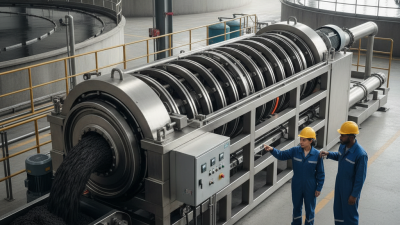
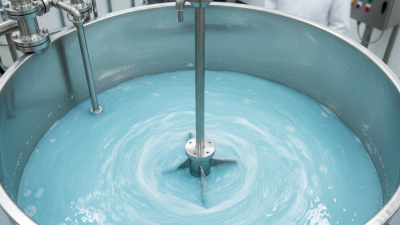
An IBC tank stirrer uses a motor-driven impeller to create axial and radial liquid movement inside an intermediate bulk container. This circulation helps distribute solids, maintain suspension, and improve temperature and concentration uniformity.
The chart shows calculated impeller tip speed for a 0.30 m diameter impeller at different rotational speeds. Tip speed is calculated as π × impeller diameter × rotational speed ÷ 60. Actual mixing performance depends on liquid viscosity, fill level, impeller design, and tank geometry.
Why Use an IBC Tank Stirrer for Efficient Mixing?
Efficient mixing matters because an IBC tank can develop concentration differences during storage. Heavier particles may settle near the bottom. Lighter materials can remain near the surface. A suitable IBC tank stirrer keeps the material moving through the container, helping each sample represent the whole batch.
This is not only a quality issue. The U.S. Department of Energy reports that motor-driven systems consume about 70% of industrial electricity. Therefore, an oversized mixer may increase energy costs without improving results. A correctly selected stirrer can deliver steady circulation with less unnecessary turbulence. Lower turbulence may also reduce foaming, splashing, and air entrapment.
Consistency matters.
The European Commission’s Best Available Techniques Reference Document for the Food, Drink and Milk Industries identifies process control and energy efficiency as important production priorities. In practical terms, operators should check viscosity, density, fill level, and mixing time before choosing equipment. A single impeller design will not suit every liquid. Our first assumption can be wrong.
For example, a thick syrup may need slow, high-torque movement. A thin solution may require faster circulation. Poor positioning can leave stagnant zones around the IBC walls or beneath the outlet. Regular sampling at different heights can reveal this problem. Hygienic design guidance from EHEDG also emphasizes cleanable surfaces and reduced product retention, especially where tanks handle sensitive materials.
Why Use an IBC Tank Stirrer for Efficient Mixing?
Key Benefits of Using an IBC Tank Stirrer
An IBC tank stirrer keeps materials moving throughout the container. This helps reduce settling, layering, and uneven concentration. During routine mixing, operators can achieve more consistent results without transferring liquid into another vessel. The enclosed tank design also supports cleaner handling and reduces unnecessary exposure. It saves time. It can also lower material waste. However, performance depends on liquid viscosity, fill level, and impeller position. A stirrer is not a magic fix.
Regular agitation is especially useful for coatings, cleaning solutions, agricultural liquids, and other formulated materials. Gentle movement can protect sensitive mixtures from excessive foaming. Stronger circulation may be needed when solids settle quickly. Experienced operators usually begin at a low speed, observe the surface, then adjust gradually. This approach supports safer, more controlled processing. Results can vary, and that deserves attention. A poorly matched stirrer may create dead zones instead of uniform flow.
Tips: Check the liquid’s viscosity before selecting equipment. Secure the stirrer firmly on the tank opening. Inspect the shaft, seals, and impeller before use. Start slowly to reduce splashing. Watch for unusual vibration or noise. Clean the equipment after each batch when contamination is possible. Record mixing time and speed. Small records often reveal better settings.
| Evaluation Dimension | Typical IBC Tank Stirrer Data | Key Benefit | Practical Mixing Result |
|---|---|---|---|
| Compatible Tank Volume | Common IBC sizes: approximately 600 L and 1,000 L | Supports batch mixing in standard intermediate bulk containers | A single stirrer can process large batches without transferring liquid to a separate mixing vessel |
| Mixing Speed Control | Variable-speed operation is commonly used; the actual speed depends on impeller design, viscosity, and solids content | Allows operators to match agitation intensity to the product | Gentle speeds help reduce foaming, while higher speeds improve dispersion and circulation when required |
| Homogeneity | Continuous circulation helps reduce concentration gradients inside the tank | Improves consistency throughout the batch | More uniform concentration, color, temperature, and suspended-solid distribution |
| Mixing Time | Often shorter than manual stirring; actual time varies with volume, viscosity, impeller geometry, and formulation | Reduces labor-intensive manual mixing steps | Improves batch-to-batch repeatability and can increase production efficiency |
| Suspension of Solids | Suitable for keeping many low-to-moderate-density particles suspended when the impeller is correctly selected | Helps limit settling during storage or processing | Supports more consistent delivery of suspensions, slurries, and particulate formulations |
| Space and Installation | Uses the existing IBC footprint and can be mounted through the top opening with suitable equipment | Requires less floor space than adding a separate process tank | Makes better use of limited production, warehouse, or staging areas |
| Material Compatibility | Polyethylene IBC liners are widely used for many aqueous and chemical products; compatibility must be checked for each formulation | Supports flexible use across different liquid-processing applications | Reduces the need for product transfers, provided chemical and mechanical compatibility are confirmed |
| Energy and Process Efficiency | Uses a dedicated motor and impeller rather than relying on manual agitation | Delivers repeatable mechanical energy to the batch | Helps maintain stable processing conditions and reduces operator effort |
| Operational Considerations | Performance depends on fill level, viscosity, density, solids loading, impeller diameter, motor power, and baffle arrangement | Encourages correct equipment selection before purchase | Proper sizing improves mixing quality while minimizing excessive shear, splashing, vortexing, and energy use |
Note: Performance figures and operating conditions are typical planning references. Final stirrer selection should be based on the actual liquid volume, viscosity, density, solids content, temperature, chemical compatibility, and required mixing time.
Choosing the right IBC tank stirrer starts with the material, not the motor size. Check viscosity, density, temperature, and the percentage of suspended solids. A thin liquid may mix well with a low-speed propeller. Thicker materials often need stronger torque and a suitable impeller shape. Match the shaft length to the container depth. The impeller should circulate liquid without striking the tank walls or bottom.
Tank capacity matters, but it does not tell the whole story. A 1,000-liter container may hold water-like liquid or a heavy compound. They require different mixing energy. In practical trials, operators should observe circulation near the corners and surface. Dead zones are easy to miss. Adjustable speed helps when the material changes during production. However, maximum speed is not always better. Excessive turbulence can create foam, heat, or unwanted air pockets.
Select wetted parts that resist the product and remain easy to clean. Review seal design, electrical protection, grounding, and applicable workplace requirements before installation. A secure frame prevents movement during operation. Test the stirrer with a partial load when possible. This can reveal vibration and poor flow earlier. One overlooked detail is cleaning access. A mixer that performs well but takes too long to clean may reduce real productivity. Reconsider the choice after observing actual use.
Why Use an IBC Tank Stirrer for Efficient Mixing?
An IBC tank stirrer can improve consistency without transferring liquid into another vessel. The rotating shaft reaches material throughout the container. This reduces stagnant zones, uneven concentration, and unnecessary manual handling. Select the stirrer according to liquid viscosity, tank volume, and required mixing time. A small unit may struggle with thick fluids. That mistake is easy to overlook.
Safe operation begins with a stable tank and a correctly fitted lid. Check the shaft, impeller, clamps, and electrical connections before every use. Keep hands, loose clothing, and tools away from moving parts. Ground the equipment when required by the site’s safety procedure. Start at low speed, then increase gradually while watching for vibration, splashing, or unusual noise. Stop immediately. Do not operate a damaged stirrer.
Maintenance should follow a written schedule, not memory. After use, isolate the power supply and prevent accidental startup before cleaning. Rinse compatible product residue from the shaft and impeller. Inspect seals for swelling, cracks, or leakage. Check bearings and fasteners regularly. Keep the motor dry. Even experienced operators sometimes clean the tank but neglect the underside of the impeller. That hidden residue can affect the next batch. Record inspections, repairs, and operating changes. These simple records support safer decisions and reveal small problems before they become expensive failures.