2026 How to Choose the Right Plastic Mixing Tank With Agitator?
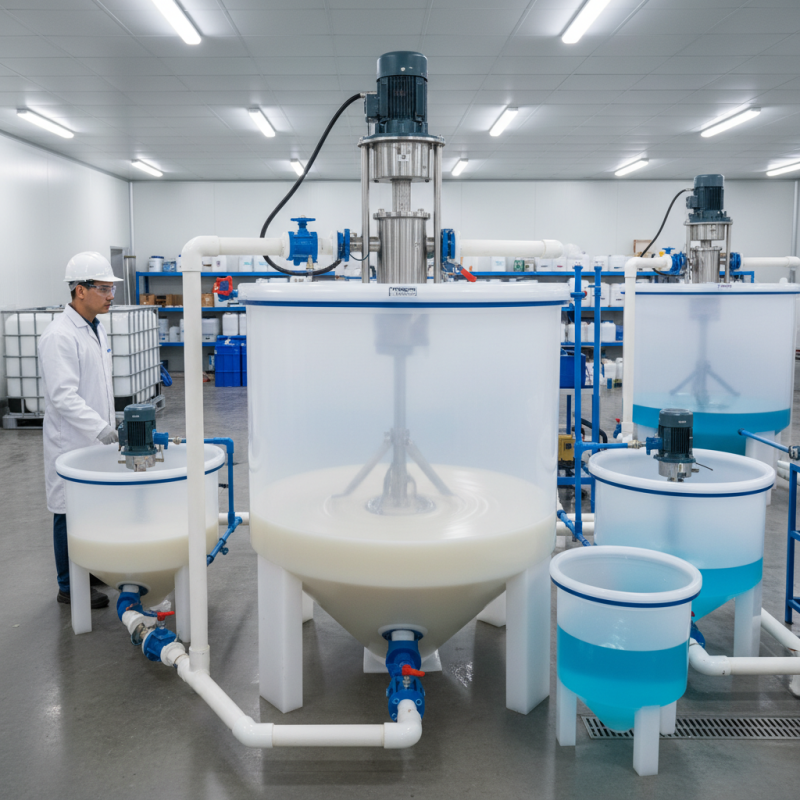
Choosing the right Plastic Mixing Tank With Agitator can be a complex task. The decision is crucial for various industries, including food processing and chemicals. An efficient mixing tank can enhance production quality significantly.
Consider the capacity of the tank. It should suit your production needs without being too large or too small. Look closely at the type of agitator used. Some designs work better for specific materials. You may find that a particular configuration isn't ideal for your application.
Also, think about the material of the tank itself. Plastic tanks can be lightweight and resistant to corrosion. However, they may not handle high temperatures well. Reflecting on these aspects helps in making a well-informed choice. A thoughtful selection process will ultimately lead to better mixing outcomes and operational efficiency.
Understanding the Purpose and Applications of Plastic Mixing Tanks
Plastic mixing tanks with agitators are widely used across various industries. These tanks facilitate the blending of liquids, powders, and granule materials. The chemical, pharmaceutical, and food sectors especially rely on them. A report from the Mixing Equipment Market forecasts a growth rate of over 6% from 2021 to 2027. This reflects the increasing demand for efficient mixing solutions.
Choosing the right mixing tank is critical. Consider factors such as tank size, material, and the type of agitator. Proper agitation ensures homogeneity. However, too much agitation can lead to unnecessary energy consumption. Misjudgment in these areas can hinder productivity. Various designs are available, including vertical and horizontal options. Each design has specific applications, making the choice crucial.
A recent study highlights that improper tank selection can result in a 10-20% increase in operating costs. It's vital to reflect on these decisions. Ensure an understanding of the mixing process. Evaluate specific needs before making a choice. Balancing performance and cost is not always straightforward. Different applications may require unique solutions, demanding careful consideration.
Factors to Consider When Selecting an Agitator Type for Your Tank
Choosing the right agitator type for your plastic mixing tank is crucial. The right choice affects efficiency and process quality. Various factors influence this decision, such as tank size, mixing speed, and material viscosity.
Consider the tank size. A larger tank requires a more robust agitator design. If the tank is smaller, a less powerful agitator may suffice. Always evaluate the viscosity of the materials you plan to mix. High-viscosity substances need a strong agitation strategy.
Tips: It's wise to consult experts when unsure. They can provide insights tailored to your specific needs. Focus on durability too. An agitator should withstand wear and tear over time.
Another aspect is the speed of mixing. Some processes need rapid mixing, while others benefit from gentler agitation. Adjusting speed can optimize results. Reflect on your requirements. Finding the ideal balance may take time, and that’s okay. Experimentation often leads to the best outcomes.
Evaluating Material Compatibility for Mixing Tanks and Agitators
Choosing the right material for a plastic mixing tank with an agitator is crucial.
Compatibility between the tank materials and the substances being mixed can greatly impact efficiency.
For instance, certain plastics can react negatively with specific chemicals.
This could compromise the integrity of the tank, leading to contamination of the mix.
Conducting a thorough assessment of potential materials is essential.
Look for factors like temperature resistance and chemical inertness.
While polyethene is common, not all grades are suitable. Some may leach under certain conditions.
Users should consider doing small tests before full-scale production.
Many overlook the importance of maintenance. Regular inspections can reveal early signs of wear or damage.
This is especially true when dealing with corrosive agents. Small cracks may develop over time, leading to leaks.
If not caught early, this can escalate into larger issues. Investing time in understanding material compatibility can save significant headaches later on.
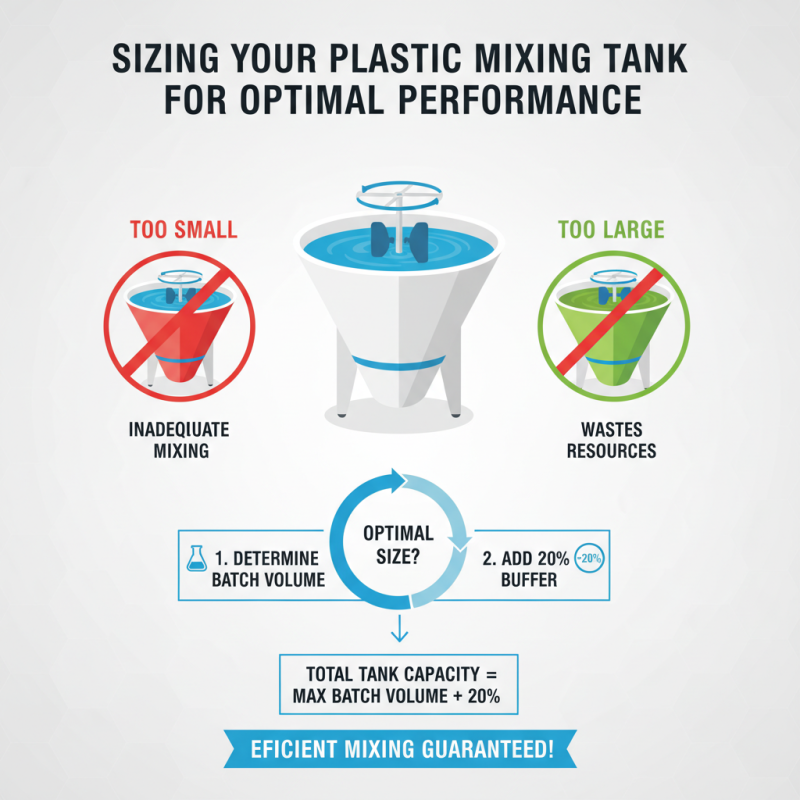
Sizing Your Plastic Mixing Tank for Optimal Performance
When selecting a plastic mixing tank, sizing is crucial. A tank that is too small can lead to inadequate mixing. Conversely, an oversized tank can waste resources. According to industry reports, optimal tank size is determined by the batch volume you require. Typically, a 20% buffer above your maximum batch size is recommended to ensure efficient mixing.
Consider the material viscosity. A thicker substance requires a larger tank to allow proper mixing dynamics. Research indicates that maintaining a tank height-to-diameter ratio of 1.5:1 often yields better results in blending than other dimensions. The geometry affects fluid flow and ultimately impacts the mixing efficiency.
Agitator design also plays a role in performance. The right impeller type can significantly improve mixing speed and effectiveness, but it needs to match tank size. Oversizing an agitator may lead to poor fluid movement. It's essential to balance mixing speed with energy consumption. Many users overlook energy costs in the long term. Finding the right size can be a challenging task, but it’s essential for optimal performance.
Maintenance Tips for Longevity of Plastic Mixing Tanks with Agitators
Maintaining plastic mixing tanks with agitators is crucial for their longevity. Regular maintenance can prevent costly breakdowns. According to industry research, 70% of mixing tank failures stem from neglect. Simple steps can extend the lifespan of your equipment significantly.
**Tip:** Clean your mixing tank after each use. Residue buildup can lead to corrosion. Use mild detergents and avoid harsh chemicals. Inspect the agitator regularly for wear and tear. In a survey, 60% of users reported improved performance after routine checks. Don’t wait for problems to arise.
Keep an eye on the seals and bearings. They require lubrication. Without it, friction increases, leading to failures. A clear schedule for maintenance can help. Some companies have reported a 30% reduction in repairs with a proactive approach. Remember, taking care of your tank requires diligence. Small neglects can turn into big issues.
2026 Plastic Mixing Tank Efficiency Analysis