How to Choose the Best Ibc Tank Mixer for Your Needs
Choosing the best IBC tank mixer to meet your specific needs can significantly impact the efficiency and effectiveness of your operations. As industry expert Dr. Michael Reynolds, a well-respected authority on mixing technology, states, "A well-chosen mixer can not only improve product quality but also enhance overall process efficiency." With a variety of options available, navigating the selection process can be daunting, but understanding the key factors involved can streamline your decision.
When selecting an IBC tank mixer, it is essential to consider the unique requirements of your application, including the type of materials to be mixed, the desired consistency, and the mixer’s operational capacity. Different mixers offer varied features that cater to specific needs, making it vital to evaluate their capabilities against your operational goals. By focusing on these considerations, you can ensure that you choose a mixer that not only meets your current requirements but also adapts to future challenges.
Moreover, the appropriate mixer can play a crucial role in maximizing productivity and minimizing downtime. As you embark on this journey to enhance your mixing processes, remember that investing time in selecting the right IBC tank mixer will ultimately yield substantial returns in terms of quality and efficiency.
Understanding IBC Tank Mixers: Types and Applications
When selecting an IBC tank mixer, it's essential to first understand the types available and their specific applications. IBC tank mixers generally fall into two main categories: portable mixers and stationary mixers. Portable mixers are designed for mobility, making them ideal for operations requiring flexibility and the ability to mix in various locations. These mixers are typically lighter and can be easily transported between different tanks, providing a convenient solution for small to medium-sized operations.
On the other hand, stationary mixers are more suited for large-scale industrial applications where the mixing process is continuous. These units are permanently installed and can handle larger volumes of material, providing a more consistent mixing action. Understanding the specific characteristics of these mixers, such as motor power, impeller design, and mixing speed, is crucial when determining the right type for your needs. Additionally, the intended application plays a significant role; for example, a food-grade application would require a different mixer than one used for chemicals, necessitating the use of materials that comply with safety standards relevant to the industry.
How to Choose the Best IBC Tank Mixer for Your Needs
| Type of Mixer |
Best Application |
Mixing Speed (RPM) |
Power Source |
Typical Capacity (Gallons) |
| Portable Mixer |
Small batches and on-site mixing |
50-500 |
Electric |
275 |
| Static Mixer |
Continuous mixing applications |
N/A |
N/A |
330 |
| High-Shear Mixer |
Homogenizing viscous liquids |
1000-3000 |
Electric or pneumatic |
330 |
| Blending Mixer |
Mixing powder with liquids |
200-800 |
Electric |
275 |
| Tank Mixer |
Larger IBC tanks and batches |
200-1200 |
Electric |
330 |
Key Factors to Consider When Selecting an IBC Tank Mixer
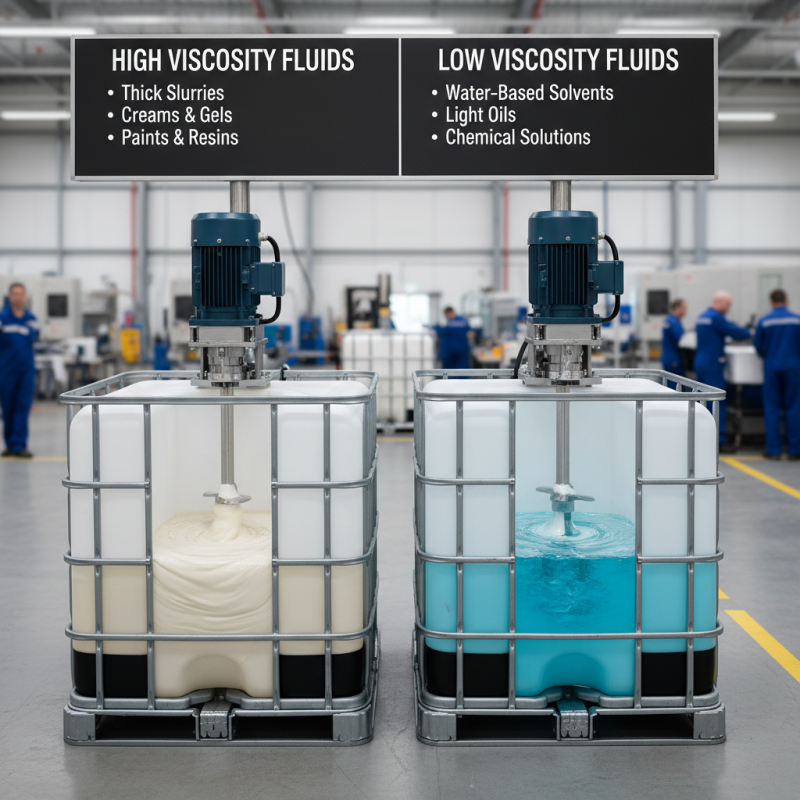
When selecting an IBC tank mixer, several key factors play a crucial role in ensuring that you choose the right equipment for your needs. One of the most critical considerations is the type of materials you will be mixing. The viscosity and density of the contents can significantly impact the performance of the mixer. Therefore, it's essential to evaluate whether you require a high-shear mixer for thick substances or a simpler mixer for lighter liquids. Understanding the properties of your materials allows you to select a mixer that can handle the specific requirements efficiently.
Another important factor to consider is the mixer’s power and speed settings. A versatile mixer that offers adjustable speed options can enhance your mixing processes, allowing you to achieve the desired consistency quickly and efficiently. Additionally, the size and design of the mixer must be compatible with the dimensions of your IBC tanks. Ensure that the mixer can fit into the tank comfortably without causing any mechanical issues. Lastly, consider the ease of maintenance and durability of the mixer, as these attributes will affect long-term reliability and operational costs. Prioritizing these factors will help you find the best IBC tank mixer that meets your specific mixing requirements.
Evaluating Mixing Efficiency: Importance of RPM and Torque
When selecting an IBC tank mixer, understanding the importance of RPM (Revolutions Per Minute) and torque is crucial in achieving optimal mixing efficiency. RPM directly influences the speed at which the mixer operates, affecting how quickly it can incorporate materials and create a homogeneous mixture. A higher RPM may enhance mixing speed, but it can also lead to increased shear forces, which might not be suitable for certain materials that are sensitive to agitation. Therefore, balancing RPM with the specific requirements of your materials is essential to avoid damage while achieving effective mixing.
Torque, on the other hand, plays a vital role in the mixer’s ability to overcome resistance offered by the contents of the tank. A mixer with adequate torque ensures that it can maintain a consistent mix even with high-viscosity liquids or those that contain solid particulates. If the torque is insufficient, the mixer may struggle to circulate the contents effectively, leading to incomplete blending and potential separation of materials. Therefore, when evaluating mixers for IBC tanks, consider both RPM and torque in conjunction—selecting a mixer that offers the right combination tailored to your specific mixing needs will ensure greater efficiency and effectiveness in your operations.
Mixing Efficiency of IBC Tank Mixers
Material Compatibility: Choosing the Right Mixer for Your Substance
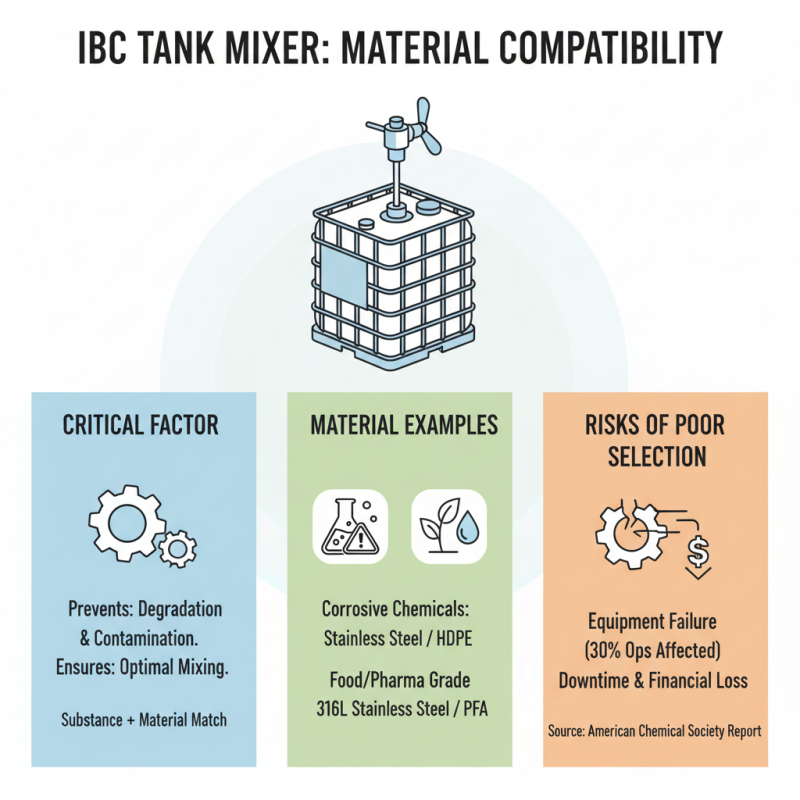
When selecting an IBC tank mixer, one of the most critical factors to consider is material compatibility. Different substances require specific materials to prevent degradation, contamination, and to ensure optimal mixing efficiency. For example, when mixing corrosive chemicals, a mixer made from stainless steel or high-density polyethylene (HDPE) is often recommended. According to a report by the American Chemical Society, improper material selection can lead to significant downtime and financial loss, with up to 30% of operations affected by equipment failure due to material incompatibility.
Furthermore, the viscosity of the substance also dictates the choice of mixer. For less viscous liquids, a high-speed mixer may suffice, while more viscous materials necessitate a low-speed mixer for effective blending without causing shear damage. Data from the Fluid Mixing Association suggests that mismatched mixer speeds and designs can reduce mixing efficiency by up to 40%. Thus, understanding the specific chemical properties and physical characteristics of the substances being mixed is essential for choosing the right IBC tank mixer, ensuring both performance and safety in industrial applications.
Cost Analysis: Balancing Initial Investment with Long-Term Benefits
When selecting an IBC tank mixer, understanding the financial implications of your investment is crucial. While the initial purchase price may seem high, it is essential to consider the long-term benefits. According to a report by the Mixing Technology Institute, the cost of mixing can represent up to 40% of total production costs in chemical processing and similar industries. Investing in a high-quality IBC tank mixer can improve efficiency and minimize energy consumption, ultimately reducing operational costs over time.
Additionally, a study by the Industrial Mixing Association highlights that integrating a well-designed mixer can enhance product quality and consistency, leading to higher customer satisfaction and retention. The return on investment (ROI) from upgrading or investing in a more effective mixer can result in savings of 15-25% on production costs, depending on the scale of operations and specific applications. By carefully analyzing the upfront costs against these potential long-term savings, businesses can make informed decisions that align with their operational goals while also optimizing performance in the long run.