What is an Agitator in Tank and How Does It Work?
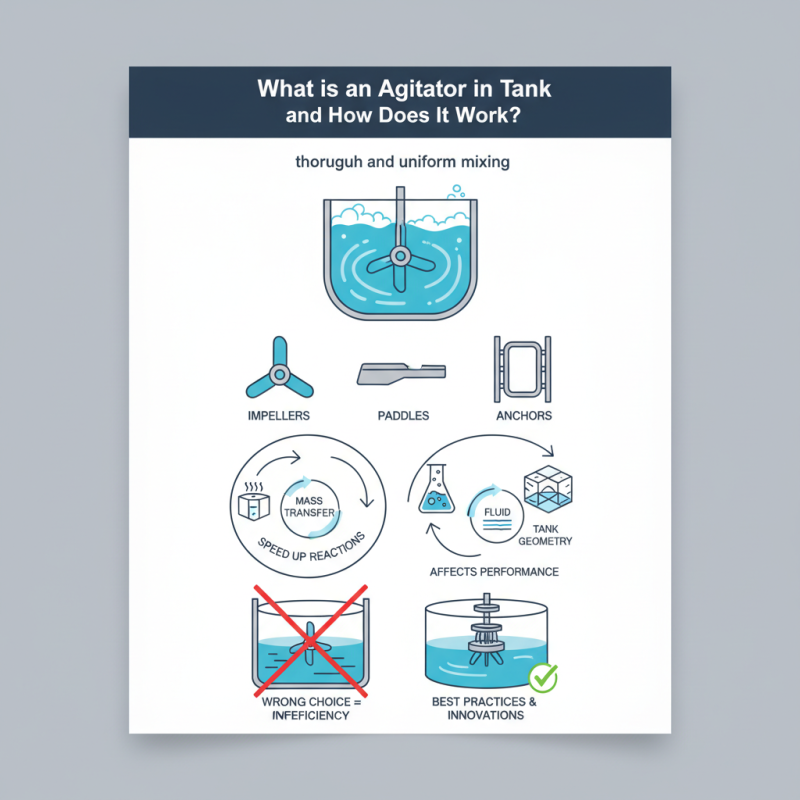
The role of an agitator in tank systems is crucial for many industrial processes. An agitator in tank ensures that the contents mix thoroughly and uniformly. These devices come in various designs, including impellers, paddles, and anchors, each serving a specific purpose.
Agitators can change the properties of liquids and slurries. A well-designed agitator enhances mass transfer and speeds up reactions. However, not all agitators perform well in every situation. Selection is vital.
Different factors may affect performance, such as fluid viscosity and tank geometry. The wrong choice can lead to inefficiencies. Understanding how an agitator in tank operates helps avoid such pitfalls. Examining trends and technologies can shed light on best practices and innovations in agitation.
Definition of an Agitator and Its Role in Tank Operations
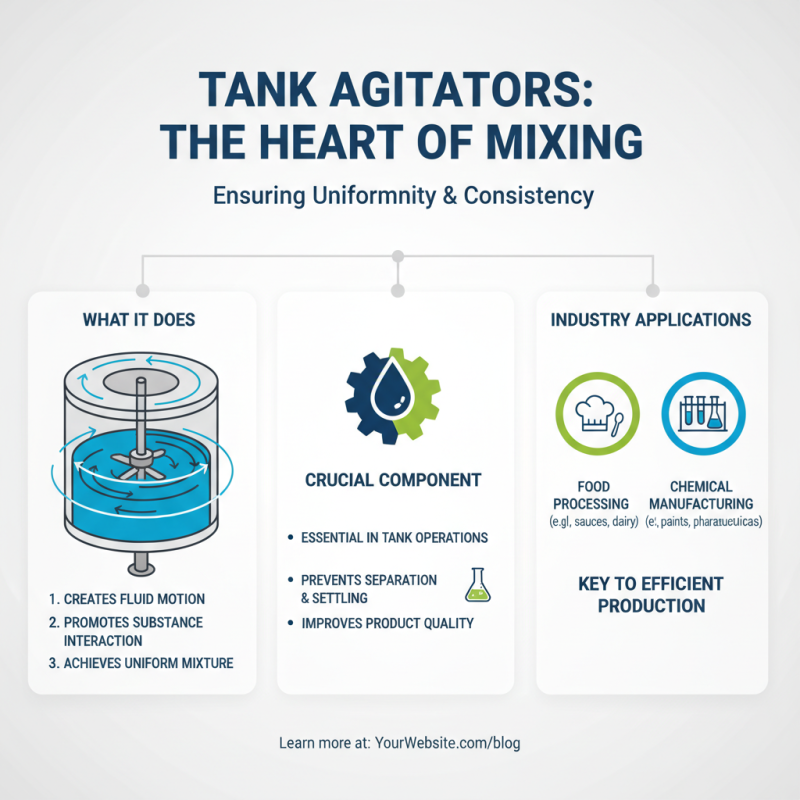
An agitator is a crucial component in tank operations. It is designed to mix materials effectively within the tank. This ensures uniformity and consistency in liquid mixtures. The agitator operates by creating fluid motion, which promotes interaction among different substances. Its role is essential in industries like food processing and chemical manufacturing.
The design of an agitator varies based on its purpose. Some agitators have blades that spin rapidly. Others rely on slow, gentle mixing to avoid damaging sensitive ingredients. The choice of agitator can significantly impact the quality of the final product. Often, operators must reflect on their mixing process. Are they maximizing efficiency and consistency? If not, adjustments might be necessary.
In practice, agitation is not foolproof. Improper speeds can lead to insufficient mixing or excessive shear. Operators must monitor the process closely. Sometimes, recalibrating the agitator’s speed or changing the design is needed. This continuous improvement is part of ensuring optimal tank operations. It's crucial to identify any shortcomings in the mixing process and address them promptly.
Types of Agitators Used in Industrial Applications
Agitators play a vital role in various industrial processes. They help mix, blend, and homogenize materials. Depending on the application, different types of agitators are used.
One common type is the propeller agitator. These are often used in liquids. They create a flow that mixes the contents effectively. Then, there are turbine agitators. These are suitable for larger tanks. They can handle both thin and thick fluids. Each type has its own advantages based on the viscosity and density of the materials involved.
Tips: Choose the right agitator for your project. Think about the material’s properties. Consider cost, too. Sometimes, simpler designs might work better.
Another option is the paddle agitator. These are ideal for mixing viscous materials. They have a wider surface area, which helps in blending. However, they can be less efficient for lighter liquids. The choice of agitator can lead to unexpected results. Poor mixing might cause product inconsistencies. Reflect on past projects. Was the selected agitator truly the best fit?
Types of Agitators Used in Industrial Applications
Mechanism of Action: How Agitators Function in Tanks
Agitators play a crucial role in tanks by enhancing mixing and ensuring uniformity. They often consist of blades or paddles attached to a rotating shaft. As the shaft spins, the blades stir the fluid. This action creates turbulence, promoting interaction among different components within the mixture. The design of the agitator influences the mixing efficiency.
Different types of agitators serve various purposes. Some are designed for delicate mixtures, while others are robust for more viscous materials. The speed of rotation is also significant. Too fast can lead to excessive shear, which might degrade sensitive substances. Conversely, too slow compromises mixing quality. Achieving the right balance requires careful consideration.
Proper maintenance of agitators is vital for their function. Regular checks for wear and tear help avoid operational inefficiencies. Sometimes, users overlook these details, leading to unexpected downtime. Additionally, the tank's shape and size can affect how the agitator performs. Each setup is unique, and the design might need adjustments based on specific requirements. Understanding these nuances is essential in optimizing agitation processes.
What is an Agitator in Tank and How Does It Work?
| Agitator Type |
Common Applications |
Mechanism of Action |
Typical Speed Range (RPM) |
Viscosity Handling (cP) |
| Propeller Agitator |
Mixing liquids, homogenizing |
Generates high shear forces |
100-2000 |
1-1000 |
| Turbin Agitator |
Chemical processing, wastewater treatment |
Utilizes a combination of axial and radial flow |
100-1500 |
1-8000 |
| Paddle Agitator |
Slurry mixing, heavy materials |
Low shear, gentle mixing |
40-600 |
100-20000 |
| Anchor Agitator |
High-viscosity fluids, pastes |
Covers the tank wall for effective mixing |
10-120 |
1000-50000 |
| Gear-Driven Agitator |
High torque applications |
Delivers consistent mixing power |
50-3000 |
1-100 |
Factors Influencing Agitation Efficiency in Mixing Processes
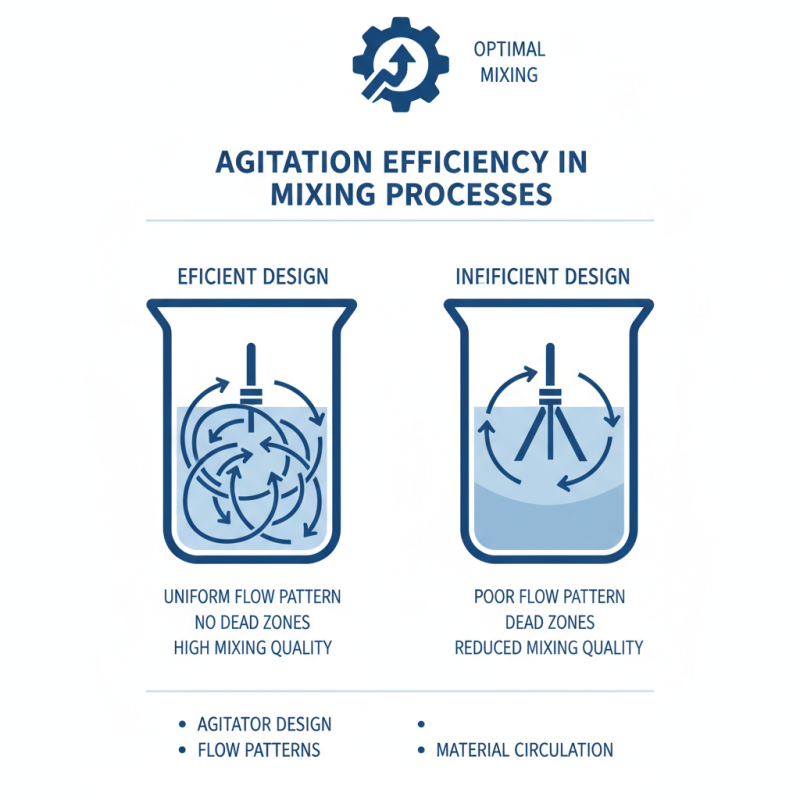
Agitation efficiency in mixing processes relies on several factors. One crucial aspect is the design of the agitator. Different designs create varying flow patterns. These patterns affect how materials move within the tank. A poorly designed agitator may lead to dead zones. These dead zones are areas where the fluid does not circulate properly. This inefficiency can diminish the overall mixing quality.
Another factor is the viscosity of the substances being mixed. Higher viscosity liquids resist flow and may not mix well. In such cases, more powerful agitators are required. The speed at which the agitator operates also plays a role. Too fast, and the materials may shear. Too slow, and mixing could be ineffective. Finding the optimal speed can be challenging, often requiring iterative testing.
Temperature also impacts agitation efficiency. Warmer liquids tend to flow better, improving mixing. However, heating can sometimes lead to unwanted reactions. It is essential to monitor temperatures closely. Furthermore, the presence of solids or particles complicates the mixing process. Solid concentrations can affect flow dynamics and require different strategies. Addressing these challenges requires thoughtful adjustments and ongoing evaluation.
Applications of Agitators Across Various Industries
Agitators play a crucial role in various industries, ensuring effective mixing and processing of fluids. In the chemical industry, they help blend reactants efficiently, enhancing the quality and uniformity of products. These machines promote reactions by ensuring that all components interact thoroughly. A well-designed agitator can significantly speed up processes, which is essential for production efficiency.
In the food industry, agitators are vital for manufacturing sauces, beverages, and dairy products. They help maintain consistent textures and flavors, improving product quality. However, challenges arise during scaling up production. Equipment that works well on a small scale may fail in a larger setting. This reflects a need for ongoing adjustments and tests.
Pharmaceuticals also heavily rely on agitators for mixing solutions and ensuring homogeneity in formulations. Small errors can lead to serious concerns, such as variations in dosage or potency. Thus, careful monitoring is essential to avoid costly mistakes. This highlights the importance of designing agitators that can adapt to different needs while maintaining efficiency and safety standards.