Choosing the right Low Speed Mixing Mixer is rarely a simple purchasing decision. Global buyers must evaluate viscosity, batch size, vessel geometry, temperature, and required shear. A mixer that performs smoothly in a 500-liter tank may struggle in a narrow 50-liter vessel. Small details matter. Impeller diameter matters. Motor torque matters.
James Y. Oldshue, a respected mixing engineer and author, wrote, “Mixing is the heart of many chemical process operations.” His observation remains practical today. Low-speed mixing supports controlled blending, gentle suspension, crystallization, and heat-sensitive processing. It can reduce splashing, limit air entrapment, and protect delicate materials. However, slower rotation does not automatically mean lower energy use or better product quality. Poor impeller selection can create dead zones beneath the shaft or near the tank wall.
This guide reviews seven Low Speed Mixing Mixer options for international buyers. The comparison considers drive reliability, torque capacity, wetted materials, maintenance access, control systems, and application flexibility. It also looks at practical factory concerns, such as cleaning time, seal replacement, noise, and spare-part availability. These factors often influence long-term value more than the initial quotation.
No shortlist is perfect. Processing conditions vary widely. A mixer suitable for adhesives may be unsuitable for food emulsions or mineral slurries. Buyers should confirm test data, request performance curves, and discuss the actual formulation with qualified suppliers. One point deserves caution: attractive specifications can hide limitations. Careful verification is essential. This review aims to provide a clear starting point, not a substitute for process trials or engineering judgment.
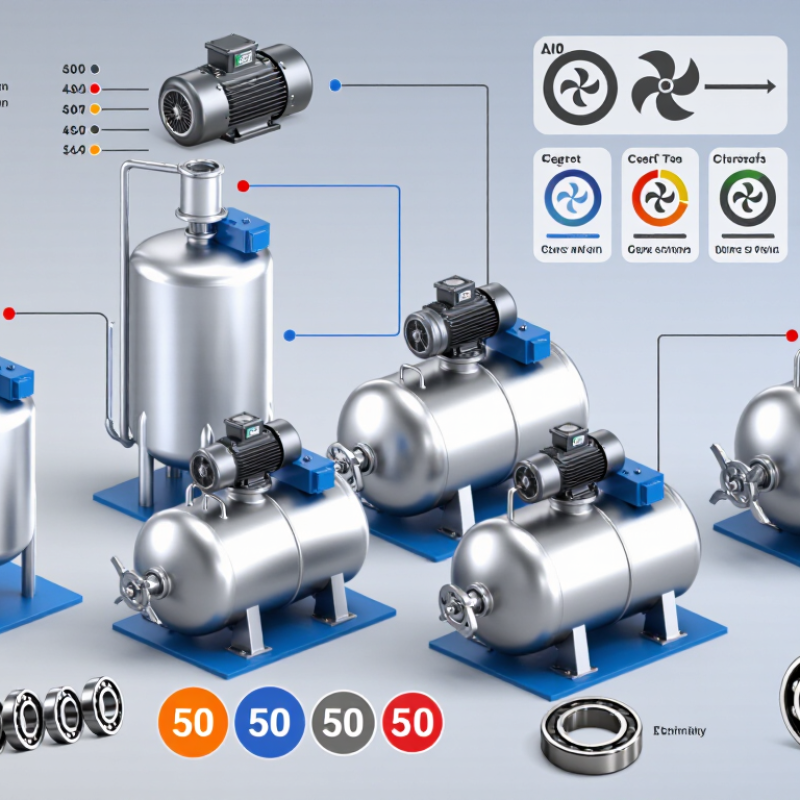
Low-speed mixing means moving material gently, usually at about 10 to 300 revolutions per minute. The exact range depends on viscosity, vessel size, and impeller design. Unlike high-speed mixing, it limits heat, foam, and unwanted air entry. This matters when working with creams, adhesives, gels, coatings, food ingredients, and other thick materials. A suitable mixer should deliver steady torque without stalling. In practical testing, the mixture should move through the vessel, not simply rotate around the shaft.
Low-speed mixers are common in chemical processing, personal care production, food preparation, construction materials, and wastewater treatment. Anchor, paddle, and helical impellers support different flow patterns. An anchor impeller can scrape material near the vessel wall, while a helical design may improve vertical circulation. Operators should check dead zones, cleaning access, shaft strength, and seal performance. A mixer that looks powerful on paper may perform poorly with cold or highly viscous material.
Tips: Test the real formulation before purchase. Measure viscosity at operating temperature, not room temperature alone. Start with a slow setting and increase speed gradually. Watch for surface ripples, rising temperature, or material collecting at the bottom. These signs often reveal poor circulation. I have found that a simple torque review can prevent expensive sizing mistakes. Still, laboratory results may not fully predict large-tank behavior. Scale-up needs careful review.
7 Best Low Speed Mixing Mixers for Global Buyers
How to Compare Mixing Performance, Capacity, and Materials
Low-speed mixers should be compared by torque, not revolutions alone. A 40-rpm unit may outperform a faster mixer when handling dense creams, adhesives, or mineral slurries. Reynolds number helps predict flow behavior, while shaft diameter and impeller shape influence torque demand. In practice, buyers should request test data using their actual formulation. Water testing can mislead.
Capacity needs careful attention. A vessel rated at 1,000 liters may not process that volume efficiently. Working capacity is often lower because powders need headspace and viscous products require circulation room. A 2024 Fortune Business Insights report valued the global industrial mixers market at about USD 2.56 billion in 2023, reflecting strong demand across food, chemical, and pharmaceutical production. That growth does not make every large mixer suitable.
Materials affect service life and product safety. Stainless steel grades should match acidity, chloride exposure, temperature, and cleaning chemicals. Surface finish matters too. Rough welds can trap residue. Grand View Research’s 2024 industrial agitators analysis identifies corrosion resistance and hygienic construction as major equipment selection factors. Buyers should compare seal design, bearing protection, and cleanability, not just tank volume. A useful mistake is choosing the thickest material automatically. It may increase weight, cost, and motor load without improving the process. Ask for viscosity ranges, batch records, and documented performance at minimum and maximum fill levels.
| Rank | Generic Mixer Type | Typical Speed Range | Working Capacity | Motor Power | Recommended Viscosity | Typical Impeller | Product Contact Materials | Mixing Performance | Best-Fit Applications | Key Selection Advantage | Typical Installation |
|---|---|---|---|---|---|---|---|---|---|---|---|
| 1 | Low-Speed Anchor Mixer Wall-scraping configuration | 10–80 rpm | 100–5,000 L | 1.5–30 kW | Up to approximately 100,000 mPa·s | Anchor with optional scrapers | 304 or 316L stainless steel; PTFE or polymer scraper options | Excellent wall heat transfer Low dead-zone operation when correctly fitted |
Lotions, creams, gels, adhesives, sauces, and high-viscosity food products | Strong control of viscous products and reduced product buildup on vessel walls | Top-entry, usually with a jacketed vessel |
| 2 | Helical-Ribbon Mixer High-viscosity bulk blending | 15–70 rpm | 200–10,000 L | 3–75 kW | Up to approximately 250,000 mPa·s | Single or double helical ribbon | Carbon steel, 304 stainless steel, or 316L stainless steel | Very high axial circulation Suitable for dense and semi-solid materials |
Sealants, polymer compounds, dough-like materials, powders with binders, and pastes | Efficient bulk movement at low rotational speed with comparatively gentle shear | Top-entry or horizontal vessel design |
| 3 | Pitched-Blade Turbine Mixer General-purpose liquid blending | 30–150 rpm | 200–20,000 L | 2.2–90 kW | Up to approximately 10,000 mPa·s | Four- or six-blade pitched turbine | 304 or 316L stainless steel; coated steel for non-corrosive service | Balanced axial and radial flow Good blend uniformity in low-to-medium viscosity liquids |
Water treatment chemicals, detergents, fertilizers, coatings, and process liquids | Versatile geometry for blending, suspension, and moderate solids incorporation | Top-entry with fixed or adjustable mounting height |
| 4 | Hydrofoil Impeller Mixer Low-shear circulation | 40–180 rpm | 500–50,000 L | 3–110 kW | Up to approximately 5,000 mPa·s | Three- or four-blade hydrofoil | 304 or 316L stainless steel; duplex steel for selected corrosive services | High pumping efficiency Low power per unit volume and limited shear |
Large storage tanks, water treatment, latex, emulsions, and heat-transfer fluids | Effective for large-volume turnover while helping minimize foaming and product damage | Top-entry, often with multiple impellers on tall tanks |
| 5 | Gate or Paddle Mixer Gentle close-clearance mixing | 5–60 rpm | 100–8,000 L | 1.1–45 kW | Up to approximately 150,000 mPa·s | Gate, paddle, or close-clearance frame | 304 or 316L stainless steel; abrasion-resistant alloys when required | Gentle and controlled Good for shear-sensitive and temperature-sensitive products |
Paints, pigments, personal-care products, pharmaceutical creams, and food fillings | Low-speed operation helps limit aeration, heat generation, and shear-related degradation | Top-entry with optional vessel scrapers or baffles |
| 6 | Static-Mounted Side-Entry Mixer Tank circulation solution | 30–250 rpm | 5,000–100,000 L | 4–160 kW | Up to approximately 3,000 mPa·s | Axial-flow propeller or hydrofoil | 304 or 316L stainless steel; mechanical seal materials selected for the liquid | Efficient tank turnover Suitable for maintaining suspension and temperature uniformity |
Bulk storage, wastewater, liquid fertilizers, fuel blending, and large process tanks | Lower headroom requirements and practical access for large-diameter tanks | Side-entry through a reinforced tank nozzle |
| 7 | Magnetic-Drive Low-Speed Mixer Sealless hygienic design | 20–120 rpm | 50–3,000 L | 0.75–22 kW | Up to approximately 20,000 mPa·s | Marine propeller, paddle, or small hydrofoil | 316L stainless steel; polished surfaces; ceramic or silicon-carbide bearing options | Clean and contamination-resistant Consistent circulation with no dynamic shaft seal |
Pharmaceutical liquids, sterile formulations, biotechnology, cosmetics, and high-purity chemicals | Sealless operation reduces leakage risk and supports closed, cleanable processing | Top-entry or bottom-entry, commonly integrated with a sealed vessel |
| Comparison basis: Typical industrial ranges are provided for preliminary equipment screening. Final mixer selection should be confirmed using actual product viscosity, density, solids concentration, tank geometry, temperature, operating pressure, required blend time, cleaning method, and applicable hygiene or electrical standards. | |||||||||||
Seven leading low-speed mixers help international buyers handle thick, delicate, or temperature-sensitive materials. Anchor mixers move close to tank walls, making them useful for creams and viscous coatings. Paddle mixers provide gentle circulation in liquids and semi-solids. Gate mixers suit wide vessels and reduce stagnant areas. Helical ribbon mixers create strong top-to-bottom movement in dense products. Planetary mixers reach difficult corners and support demanding batch work. Scraped-surface mixers limit wall buildup during heating or cooling. Folding-blade mixers can enter narrow openings, although their cleaning process may require extra attention.
Performance depends on more than motor speed. Buyers should check viscosity, batch volume, tank diameter, heating needs, and available power. A mixer running at 30 revolutions per minute may be ideal for one material but ineffective for another. Torque data is essential. So is shaft strength. I have seen equipment selections fail because teams trusted speed ratings without testing the actual product. That mistake can cause uneven texture, higher energy use, and delayed production.
Ask for material samples, load calculations, surface-finish details, and maintenance access before purchase. Confirm whether seals, bearings, and control systems suit the operating environment. Local service support also matters when a replacement part must cross borders. Stainless steel construction is common, but the correct grade depends on temperature and chemical exposure. No design is perfect. A trial batch often reveals problems that a specification sheet hides.
7 Best Low Speed Mixing Mixers for Global Buyers
For global buyers, the best low speed mixer is not simply the one with the highest torque. Anchor, paddle, turbine, gate, scraper, helical ribbon, and planetary designs each suit different viscosities and cleaning routines. Low speed still creates serious entanglement risks. Guards, lid interlocks, emergency stops, and lockable energy isolation deserve inspection before purchase. The U.S. Bureau of Labor Statistics reported 2.6 million nonfatal private-industry workplace injuries in 2023. Mixing equipment is only one part of that wider safety picture, but small design gaps can create large consequences.
Use ISO 12100 for risk assessment and IEC 60204-1 for electrical equipment requirements. For machinery sold in Europe, confirm applicable conformity obligations under Regulation (EU) 2023/1230 and local implementation rules. Other markets may require different electrical markings, documentation, or testing. Never assume one certificate covers every destination. Ask for wiring diagrams, material declarations, guarding details, and test records. Keep guards closed.
Maintenance should be practical, not theoretical. Inspect seals, couplings, gearbox oil, shaft alignment, and vibration at scheduled intervals. A clean shaft is easier to assess. The International Energy Agency has reported that electric motor systems consume roughly half of global electricity, making efficient drives and correct sizing important. Still, efficiency claims can be misleading without load data. I would request measured torque, batch viscosity, duty cycle, and speed range. A perfect checklist may still miss operator habits, washdown errors, or poor spare-parts access. That is where real site experience matters.
Typical operating-speed ranges for common low-speed mixer configurations. Actual selection should be verified against viscosity, solids loading, batch size, shear requirements, hazardous-area classification, and local regulations.
How to read this chart: Anchor, gate, helical-ribbon, and scraped-surface mixers are generally suited to viscous products and heat-transfer duties, while paddle and turbine mixers cover broader blending applications. Propeller mixers may be used at the upper end of this low-speed comparison when gentle circulation is required. For global projects, confirm guarding and emergency-stop provisions under ISO 12100 and ISO 13850, electrical requirements under IEC 60204-1, and hazardous-location compliance under the applicable regional standard.
Maintenance priority: Inspect seals, bearings, shafts, couplings, guards, and gearbox lubrication according to the equipment manufacturer’s duty cycle and the site risk assessment. The speed ranges shown are representative engineering ranges, not product specifications.
Choosing the right low speed mixer begins with the material, not the machine. Identify viscosity, density, solids content, and batch volume. A thin liquid may need a simple axial-flow impeller. Thick paste usually requires higher torque and a stronger drive system. Mixing speed alone can mislead buyers. A slow shaft may still deliver powerful mechanical force.
Tips: Request a torque curve, not only motor horsepower. Check the impeller diameter, shaft length, seal design, and wetted material. Confirm whether the mixer handles your largest and smallest batch. Ask for test data using a similar formula. Small differences can change the result.
Consider heat, foam, settling, and cleaning time during operation. A scraper or baffle may improve circulation, but it can also increase load. Stainless construction often supports demanding environments, though the correct grade depends on the process. Check electrical frequency, voltage, control-panel language, spare parts, and local service access before importing. These details are easy to overlook.
A reliable supplier should provide drawings, operating limits, maintenance instructions, and documented test procedures. Request a factory acceptance test when consistency matters. It is easy to over-specify equipment. I have seen buyers choose oversized motors, then struggle with unnecessary energy use and poor control. A modest pilot test can reveal more than a polished specification sheet. Be willing to revise the design. That is not weakness; it is sound engineering.