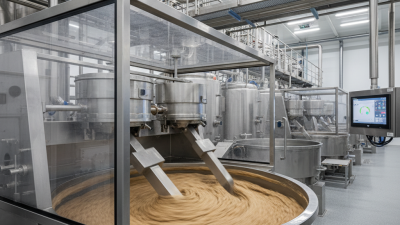
Choosing the right Paddle Wheel Impeller manufacturer requires more than comparing catalog prices. In 2026, buyers increasingly expect dependable performance, clear documentation, and responsive technical support. This guide introduces leading manufacturers and suppliers serving wastewater treatment, aquaculture, chemical processing, and industrial mixing applications. It focuses on practical evidence, not promotional claims.
A reliable supplier should explain impeller diameter, blade design, rotational speed, power requirements, and suitable tank conditions. Material options also matter. Stainless steel, coated carbon steel, and reinforced plastics perform differently in corrosive water and abrasive environments. During supplier evaluation, review laboratory data, factory quality controls, weld inspection records, and field references. Ask whether performance tests reflect your basin depth, fluid viscosity, and operating temperature. Small details can prevent expensive downtime.
Real installation experience often reveals what brochures omit. A wheel that performs well in a clean test tank may struggle with solids, uneven loading, or fluctuating water levels. Check bearing protection, shaft alignment, motor efficiency, spare-part availability, and maintenance access. Confirm delivery schedules and after-sales responsibilities in writing. Not every supplier provides the same level of engineering support.
This overview is not a final ranking. Market data, production capacity, and product designs can change during 2026. Some manufacturers publish limited technical information, which deserves careful review. Independent testing may still be necessary. The strongest choice balances verified performance, transparent communication, lifecycle cost, and application-specific advice. In practical terms, reliability should turn smoothly, operate quietly, and keep working when conditions become less than ideal.
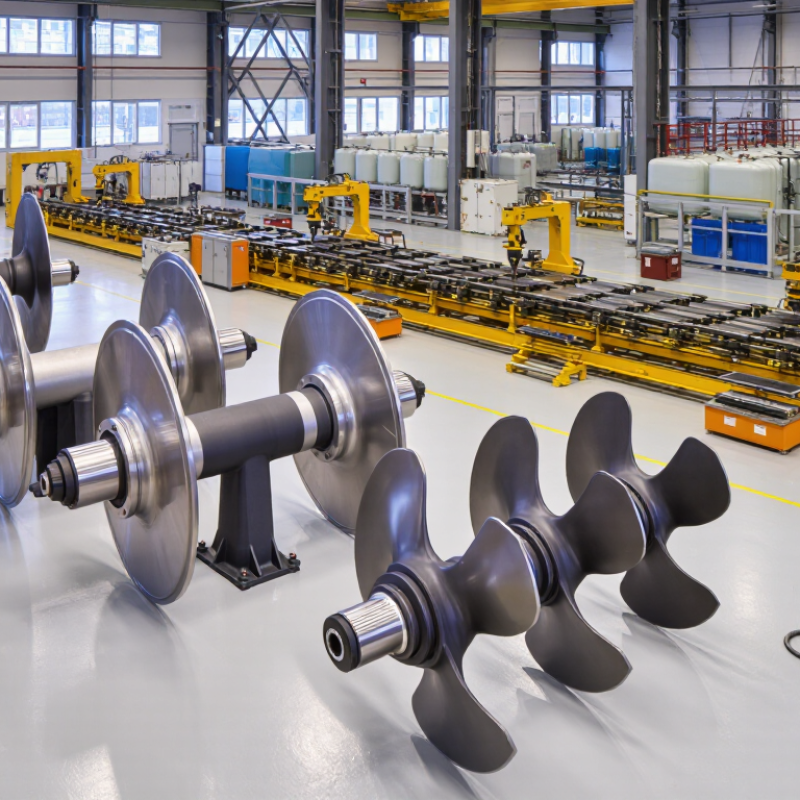
Paddle wheel impellers support controlled fluid movement in wastewater treatment, aquaculture, chemical processing, and industrial mixing. Their market scope covers low-speed aeration units, high-torque mixing wheels, and compact units for tanks with limited space. Open paddle designs move water efficiently, while enclosed or guarded models improve operating safety and reduce contact with debris.
Key purchasing data includes wheel diameter, paddle count, rotational speed, motor power, flow rate, oxygen transfer, and energy use. Stainless steel suits corrosive environments, while coated carbon steel may reduce initial costs. Engineers should also check shaft alignment, bearing protection, seal quality, and cleaning access. A supplier that provides load calculations, performance curves, material certificates, and service records offers stronger technical confidence.
Applications vary by tank depth and liquid density. Aquaculture systems often need gentle circulation, while wastewater basins may require stronger surface movement and oxygen transfer. Chemical mixers demand careful material compatibility. Field measurements can differ from catalog values. Temperature, sludge concentration, water level, and installation errors all affect performance. This is often overlooked. Comparing suppliers by measured efficiency, replacement-part availability, delivery reliability, and technical support gives a more realistic view of the 2026 market. A lower purchase price may become expensive when downtime, motor upgrades, or frequent paddle replacement are included.
Selecting paddle wheel impeller manufacturers and suppliers requires more than comparing catalog dimensions. The key metric is D/T, where D is impeller diameter and T is tank diameter. A practical range is 0.3–0.7. Smaller ratios reduce wall interaction, while larger ratios improve circulation in wide tanks. Paul, Atiemo-Obeng, and Kresta’s Handbook of Industrial Mixing identifies Re above 10,000 as a useful benchmark for turbulent mixing.
Re is calculated as ρND²/μ. For water at 25°C, with T = 1 meter, D/T = 0.5, and speed N = 2 revolutions per second, Re is approximately 560,000. That exceeds the target comfortably.
Tip speed is about 3.1 meters per second. NIST water-property data supports the density and viscosity values used in this estimate. Actual fluids may behave very differently.
Published power-number correlations in Perry’s Chemical Engineers’ Handbook help estimate shaft load and energy demand. However, a high Re does not guarantee uniform blending. Solids settling, viscosity changes, baffle design, and liquid height still matter. That shortcut is useful, but incomplete.
During equipment reviews, I would verify torque at startup, not only operating speed. A small clearance error can create a large circulation penalty. Manufacturer drawings should show D, T, liquid level, baffle width, and tested operating conditions.
When evaluating paddle wheel impeller manufacturers in 2026, qualification starts beyond a polished website. I ask for an active ISO 9001 certificate, its scope, issuing body, and expiry date. The scope should cover design, machining, welding, or assembly relevant to the supplied impeller. A certificate alone proves little. Audit findings and corrective-action records reveal how consistently the system works. This is where supplier conversations become useful.
For each wetted component, request the specified material grade, applicable standard, heat number, and mill certificate. Stainless steel, duplex alloys, and carbon steel behave differently under abrasion, chemicals, and cyclic loading. Material certificates should match part markings and purchase records. I also check whether hardness, chemical composition, and tensile results were independently verified. Small gaps matter. A stamped grade without traceability is not enough.
Test records should identify the impeller serial number, test date, technician, instruments, and acceptance criteria. Useful evidence may include dimensional inspection, balance results, weld inspection, runout readings, and performance tests under defined conditions. Ask how instruments are calibrated and whether failed tests remain visible in the quality file. Missing data does not always mean poor workmanship, but it weakens confidence. I have seen suppliers present excellent samples while leaving production controls unclear. That uncomfortable gap deserves a written explanation before purchase orders are released.
Choosing a paddle wheel impeller supplier requires more than comparing catalog prices. Power number provides a useful starting point for estimating torque and motor demand. However, it changes with Reynolds number, tank geometry, and liquid viscosity. Ask suppliers for test conditions, not isolated figures. Real data matters.
Tip speed affects shear, vortex formation, and particle suspension. A large impeller may deliver strong circulation at moderate speed, while a smaller wheel may need faster rotation. Check the actual diameter, rotational speed, and shaft location. Small errors matter. Measure it carefully. Suppliers should explain how efficiency was tested and whether the results came from water or a process liquid. Water-based data can mislead when handling dense slurries or heat-sensitive materials.
Customization should cover blade width, pitch, thickness, hub design, shaft connection, and corrosion-resistant materials. Experienced suppliers can review tank drawings and identify clearance risks before fabrication. They should also provide dimensional checks, balancing records, and material certificates where appropriate. Still, customization is not automatically better. More blades may improve pumping, but they can increase power consumption and cleaning difficulty. I have seen specifications that looked impressive yet ignored maintenance access. That deserves a second review. A reliable comparison weighs power number, tip speed, efficiency, fabrication quality, delivery control, and technical support together. Supplier claims need practical verification.
2026 Top Paddle Wheel Impeller Manufacturers and Suppliers
In 2026, selecting a paddle wheel impeller supplier requires more than comparing catalog prices. Real purchasing decisions begin with verified capacity, material records, warranty language, and delivery evidence. Ask how capacity is measured: kilograms per hour, tank volume, torque, or continuous duty. A supplier may advertise a large rating, yet your wet, dense product can demand more power. Request test data using a comparable load.
Tips: Send a complete duty profile before requesting a quotation. Include batch size, viscosity, operating temperature, shaft speed, cleaning method, and expected daily hours. For corrosive or hygienic service, confirm whether 316L stainless steel applies to the wheel, shaft, fasteners, and welds. Do not accept “316L option” as a vague checkbox. Require material certificates and surface-finish details.
Shorter lead time sounds attractive. Confirm drawing approval, fabrication, inspection, packing, and spare-part timing separately. A dependable warranty should define coverage for welds, bearings, seals, and workmanship, not only the motor. Ask whether labor and replacement shipping are included. Check how failures are investigated. This matters. I have seen projects delayed by unclear acceptance criteria, even when the impeller itself performed well. Supplier references, inspection records, and written responses provide stronger evidence than polished sales claims. Allow room for uncertainty, because the first capacity estimate may need correction after pilot testing.
2026 Purchasing Criteria: Capacity, 316L Options, Warranty, and Lead Time
The chart shows typical procurement-planning lead-time ranges by paddle wheel capacity and material selection. These reference values are intended for non-brand supplier screening; final capacity, metallurgy, warranty terms, and delivery dates should be confirmed in the formal quotation.